


 Trump Slams Iran Over Strait of Hormuz Oil Restrictions Amid Fragile Ceasefire
  U.S. Stock Futures Surge as Trump Announces Iran Ceasefire, Oil Prices Plunge
  Trump Suspends Iran Strikes for Two Weeks as Ceasefire Talks Begin
  U.S. Futures Dip as Iran Ceasefire Faces Early Challenges
  Asian Stocks Rally on Ceasefire Hopes and Bargain Buying
  Gold Surges Near 3-Week High as Trump-Iran Ceasefire Eases Geopolitical Tensions
  Asia FX Weekly Gains Hold Amid U.S. Inflation Data and Iran Ceasefire Uncertainty
  Asian Markets Retreat as Gulf Crisis Fuels Oil Surge and Inflation Fears
  Gulf Ceasefire Cracks Rattle Asian Markets and Push Oil Prices Higher
  Goldman Sachs, ANZ Cut Oil Forecasts Amid U.S.-Iran Ceasefire Hopes
  Oil Prices Crash Nearly 15% After Trump-Iran Ceasefire Deal
  Dollar Stabilizes Amid Fragile US-Iran Ceasefire as Markets Watch Hormuz Strait
  Oil Prices Rise Amid Strait of Hormuz Tensions and U.S.-Iran Talks
  U.S. Futures Slip as Iran Ceasefire Uncertainty and CPI Data Weigh on Markets
  U.S.-Iran Ceasefire: Fragile Truce Raises Hopes for Strait of Hormuz Peace Deal
  China Set to Exit Deflation Cycle in Early 2026, ANZ Analysts Say
  Japan Consumer Confidence Drops Sharply Amid Rising Fuel Costs and Middle East Tensions




Since the outbreak of the coronavirus pandemic, some countries have announced significant spending pledges to support a green recovery. Germany leads the way with a €40 billion (£36 billion) commitment to climate-related spending. The UK government’s plans, meanwhile, have centred on a £3 billion funding package, announced in July, which aims to improve the energy efficiency of homes and public buildings while creating jobs.
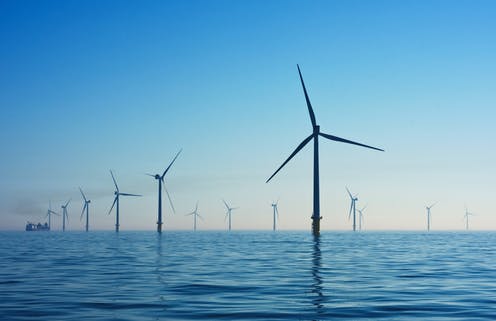
But the UK prime minister, Boris Johnson, has recently set out new plans to “build back greener” by making the UK the world leader in clean wind energy – creating jobs, slashing carbon emissions and boosting exports, as he put it. Some have called the speech a “lightbulb moment” (powered by renewables of course) signalling a new recognition at No 10 that climate action can benefit the environment and the economy.
The UK government was quick to highlight the 2,000 construction and 60,000 wider jobs that could be supported through the £160 million package announced on October 6 to improve ports and infrastructure and increase the use of UK supply chains in offshore wind developments.
But others have questioned whether the amount committed is substantial enough to truly ensure the use of UK supply chains and unlock economic value as desired. We agree: more sustained financial support and policy commitment will be needed to truly boost the competitiveness and capacity of UK supply chains in renewables.
Considering this, the greater purpose of the announcements is perhaps to reassure the private sector that the poster child of UK energy policy, offshore wind, will remain centre stage for many years to come. The confidence-boosting intention is also reflected in a new target to quadruple offshore wind capacity by 2030.
The ambition and the desire to unlock economic benefits couldn’t be clearer. But challenges lie ahead. More could be done to ensure that the UK seizes other economic opportunities emerging from the transition to net zero.
UK supply chains
The use of UK supply chains in renewable developments is an ongoing challenge and one that is likely to need more than £160 million to solve. As union representatives have argued, the use of UK supply chain capacity and jobs in renewables over the past two decades has been somewhat limited.
The UK’s energy auction mechanism, where developers compete to offer the lowest-cost electricity to market, has impressively driven down the costs of generating electricity through offshore wind in particular. But it has often come at the expense of domestic manufacturing. The Scottish government-backed BiFab yard, for example, recently missed out on a contract to manufacture turbine jackets for the Sea Green Offshore Wind Farm, with a cheaper yard in China picking up the work.
At the Centre for Energy Policy, our research demonstrates that greater net economic benefits will only materialise if UK supply chains are used. But enabling UK supply chains to evolve to service the delivery of low-carbon projects in the UK will require government intervention. Johnson’s announcement to support ports and infrastructure is a welcome first step, but building up UK supply chain capacity and competitiveness will require significant and sustained investment and political will.
Of course, a balance must be struck between ensuring local UK supply chains are used, which could help sustain high-quality jobs, incomes and GDP through the net zero transition, and providing low-cost electricity to UK consumers.
And so the use of centralised funding such as that announced by the prime minister, focused on building regional infrastructure, is sensible, but not quite enough.
The announcements made do show that the government is thinking about this in the right way and the measures could help improve competitiveness while protecting consumers from price increases. But it may be another ten years before we know if the continued financial and policy support, over and above what was announced by the prime minister, materialises. Only then will the desired benefits pay out in reality.
Beyond offshore wind
While the buzz around offshore wind is electric, the UK’s ambitious net zero targets demand that we accelerate our progress on all fronts. Expanding the capability of UK ports and infrastructure could also provide an opportunity to grow other emerging yet crucial offshore sectors such as carbon management services and hydrogen production and storage.
These sectors could see large quantities of the UK’s industrial CO₂ emissions permanently stored in deep geological formations below the seabed of the North Sea, or the widespread use of floating offshore wind farms to produce hydrogen fuel through electrolysis.
As well as the necessary role these technologies could play in meeting climate targets, growth in these sectors would create wider opportunities to use the skills and expertise of the UK’s existing offshore workforce. For example, our research shows that a growing carbon management sector could support more than 45,000 UK jobs by 2030, with potential to transition many existing workers from the oil and gas sector.
Over and above the need to deliver a socially equitable transition to net zero emissions – a just transition – retaining the quality of jobs and evolution of new career paths is crucial for the economy both today and over the coming decades. Particularly in current circumstances, where job losses should be at the forefront of every politician’s mind, these opportunities may become ever more attractive for policymakers balancing the need to reduce emissions while protecting the economy.
The UK government’s financial commitment to support ports and infrastructure alone may not be enough to secure the use of UK supply chains in offshore wind, let alone to encourage other net zero activities. But investing more today could be the strategic commitment needed to unlock jobs, wider economic prosperity and accelerate the UK on the path to net zero.







