


 U.S. Patriot Missiles Redeployed From South Korea Amid Middle East Conflict
  Pentagon Taps Wall Street Talent to Manage $200 Billion Defense Investment Fund
  Russian Drone Strikes Hit Kharkiv and Dnipro, Injuring Over 20 Civilians
  Trump Doubts Iran Mining Reports as Strait of Hormuz Tensions Escalate
  Iran Mines Strait of Hormuz: Crude Oil Prices Surge Amid Middle East Tensions
  Trump Administration Spent $5.6 Billion in Munitions in Opening Days of Iran Strikes
  Ukraine Strikes Russian Missile Component Factory in Bryansk Using British Weapons
  After the Iran war, Persian Gulf nations face tough decisions on the US – a former diplomat explains
  IEA Releases Record 400 Million Barrels of Oil Amid U.S.-Iran War
  U.S. Calls for Reassessment of International Aid to Taliban-Ruled Afghanistan
  Iran-U.S. Oil Tensions Escalate as Revolutionary Guards Threaten Strait of Hormuz Blockade
  Taiwan's MQ-9B SkyGuardian Drone Order Stays on Schedule Despite Middle East Conflict
  Trump Announces New U.S. Oil Refinery in Texas with Indian Energy Giant Reliance
  FBI Warns of Possible Iranian Drone Attacks on California Amid U.S.-Iran War
  Mexico's Electoral Reform Bill Fails in Congress as Coalition Fractures
  Trump Administration Launches Trade Investigations Against 16 Countries Over Industrial Overcapacity


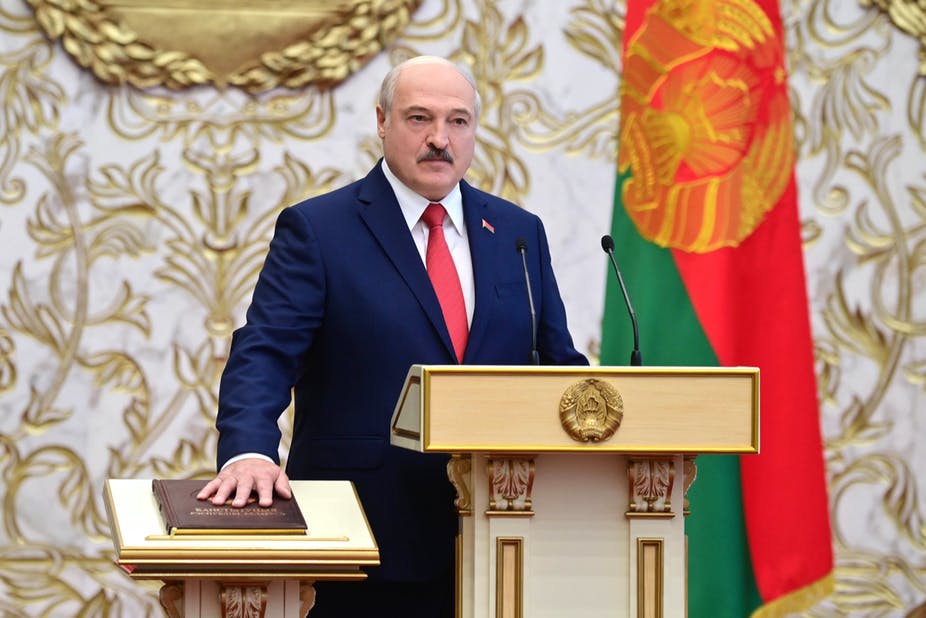
Two of Belarus’s most prominent opposition figures, Maria Kalesnikava and Viktar Babaryka, have spoken publicly after being released from prison following a deal brokered by the United States, saying they have no regrets about the actions that led to their incarceration. Their release marks one of the most significant political developments in Belarus since the mass protests of 2020.
Maria Kalesnikava, 43, was a central figure in the nationwide demonstrations that erupted after President Alexander Lukashenko claimed victory in a disputed presidential election, securing a sixth term in office. The protests were met with a harsh crackdown, including mass arrests and police violence. Kalesnikava was seized by authorities later that year and driven to the Ukrainian border, where she famously tore up her passport to avoid forced deportation. She was subsequently sentenced to 11 years in prison on charges including conspiracy to seize power.
Speaking at a news conference at an undisclosed location in Ukraine, Kalesnikava said she stood firmly by her past decisions. She emphasized that difficult moments require difficult choices and said she remained convinced she had supported the right cause. She added that she now hopes to focus on music, art, theatre, travel, and reconnecting with loved ones after years behind bars.
Viktar Babaryka, 62, a former banker who attempted to challenge Lukashenko in the 2020 election, echoed similar sentiments. Babaryka was imprisoned after announcing his candidacy and later convicted on charges widely viewed by international observers as politically motivated. He said he believed the opposition movement did not lose, arguing that moral strength and resilience were victories in themselves. Babaryka did not rule out returning to public life, saying he would consider serving Belarus again if the country needed him.
The release involved 123 prisoners in total, according to Belarusian opposition media. Of those freed, 114 were taken to Ukraine and nine to Lithuania. However, Babaryka noted that his son Eduard remains imprisoned, highlighting that many political detainees are still behind bars. The Viasna human rights group estimates that more than 1,200 political prisoners were held in Belarus before the latest release.
The agreement was negotiated by John Coale, an envoy for U.S. President Donald Trump, and reportedly included the prospect of limited sanctions relief for Minsk. The development has renewed international attention on Belarus’s political prisoners and ongoing human rights concerns.













