


 RBI Uses $10 Billion Currency Swaps to Drain Excess Rupee Liquidity
  RBA Set for September Rate Hike as Inflation Stays High
  Fed’s Hammack Says Bond Yield Surge Is Not Driven by Inflation Fears
  Fed Rate Hike Threatens Housing as U.S. Growth Leans on AI, Citi Says


 Add as a preferred source on Google
In response to the recent rise in currency volatility, Bank of Indonesia (BI) indicated at its August meeting that it would continue to ensure orderly market conditions through market intervention and, if needed, deploy macroprudential policy measures.
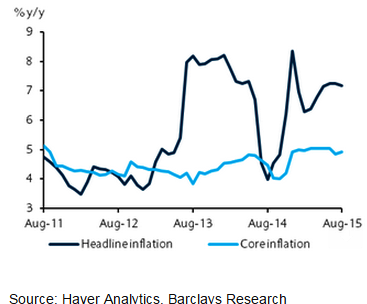
"Indonesian inflation is expected to stay above BI's target range in Q3 and gradually trend lower in Q4 on a lower base. In view of further upside risks for food as El Niño weather conditions develop in Q3, as well as growing concerns of stress on the currency, the central bank is likely to keep rates unchanged through 2015", says Barclays.
BI is expected to be reluctant to weaken the IDR in the near term to avoid adding to imported price pressures. During periods of stress, it could mount a more credible defence of the currency.
"While downward pressure on commodity prices have not subsided and China's growth remains modest, the recent cabinet reshuffle should give more impetus to the Jokowi administration's infrastructure push and drive growth in H2. The growth dividend from higher infrastructure spending will make a significant contribution from 2016 onwards, but will also keep growth in 2015 marginally above 5%", added Barclays.

- News

- Economy

- Central Banks
- Investing
- Research
- Roundups
- Digital Currency
- Insights
- Technical Analysis
- Technology
- Business
- Law
- Health
- Nature
- Fintech
- Science
- Topic
- Opinions
- ©Econometrics LLC . All Rights Reserved.
Bank of Indonesia to be on hold through 2015
Tuesday, September 1, 2015 6:40 AM UTC
Editor's Picks



- Market Data
Most Popular




