


 Amazon's "Transformer" Phone: Can It Succeed Where Fire Phone Failed?
  Citi Names Eric Farina and Rob Cascarino to Lead Global Infrastructure Financing Group
  Cyberattack on Stryker Triggers U.S. Government Warning Over Microsoft Intune Security
  U.S. Appeals Court Strikes Down FTC Order Against TurboTax "Free" Advertising
  Finnair Orders 18 Embraer E195-E2 Jets in Landmark Fleet Overhaul
  Elon Musk Announces Terafab: SpaceX and Tesla to Build Dual AI Chip Factories in Austin, Texas
  SpaceX IPO Filing Expected This Week as Valuation Could Surpass $75 Billion
  NVIDIA Resumes China AI Chip Production Amid $1 Trillion Revenue Forecast
  Super Micro Computer Shares Plunge After Co-Founder Charged in AI Chip Smuggling Case
  NVIDIA's Feynman AI Chip May Face Redesign Amid TSMC Capacity Crunch
  Samsung Bets Big on AI-Driven Chip Demand in 2025
  Sinopec Posts 36.8% Net Profit Drop in 2025 Amid Weak Petrochemical Margins and Energy Transition Pressures
  Amazon's AWS Could Hit $600 Billion in Revenue as AI Reshapes Cloud Growth
  Meta Ties Executive Pay to Aggressive Stock Price Targets in Major Retention Push
  Global Flight Cancellations 2026: Middle East Air Travel Chaos Explained
  Goldman Sachs Raises ECB Rate Hike Forecast Amid Persistent Energy-Driven Inflation
  Merck's $6 Billion Bid for Terns Pharma Signals Bold Oncology Push


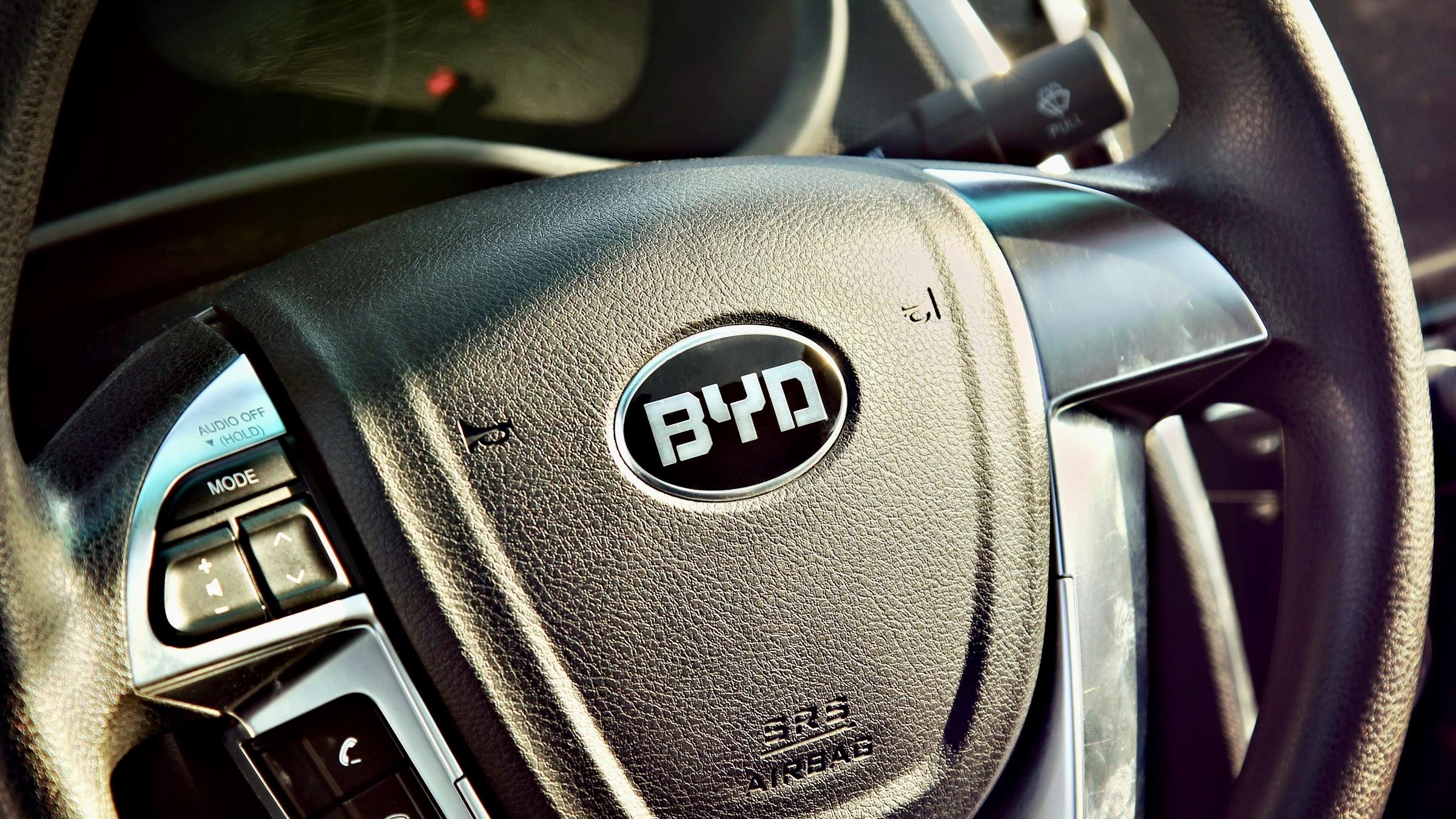
BYD shows resilience in the face of new EU tariffs on Chinese EVs, achieving significantly higher profits in Europe compared to China, recent studies indicate.
Following the announcement of increased tariffs by the European Union (EU) on Chinese electric vehicle (EV) imports a few days ago, BYD is subject to an additional 17.4% levy. Nonetheless, the market leader is anticipated to bounce back since BYD allegedly generates greater EV revenues in the European Union from models such as the Seal U compared to China.
Teslarati reports that although the EU has imposed fresh tariffs on Chinese EV imports, BYD appears unconcerned. According to analysts, the profits of Chinese carmakers from electric cars sold in Europe still outweigh those of domestic EU manufacturers.
Impact of EU Tariffs on Chinese EV Imports
Amidst its continuing investigation into possible subsidies, the European Commission levied additional taxes on EVs imported from China. Imports of certain Chinese EVs into Europe were subject to tariffs set by the Commission at 38%. Additional EV import charges from China will be applied to the existing 10% tariffs.
As an incentive for their cooperation with the EU's probe, three Chinese carmakers were granted exclusive duty rates. Additional tariffs received by BYD were the lowest at 17.4%. Total tariffs levied by BYD will approach 30%.
Rhodium Group (via CarNewsChina.com) claims that BYD's EU profitability will be unaffected by the approximately 30% tariff. To prove its claim, the group compared BYD's European and Chinese profits with the BYD Seal U.
Profit Comparison for BYD EV Models
Each BYD Seal U sold in Europe generates a profit of $15,400 for the Chinese carmaker. In contrast, BYD earns $1,400 for every Seal U device sold in China. What Chinese electric car manufacturers call the "EU premium" is BYD's substantial profit on each Seal U vehicle.
Rhodium Group said, "Our analysis of several other models sold in China and Germany indicates that even after a 30% duty, many Chinese EV models would still enjoy a strong EU profit premium."
Electrek elaborates that raising tariffs significantly would be necessary for the EU to decrease export incentives. Tariffs of 45–55% might be required to reduce earnings. On the other hand, it would have a greater negative impact on foreign automakers like Tesla and BMW, which export from China.
Economic Implications and Future Production Plans
According to BYD CEO Wang Chuanfu, Western countries are "afraid" of Chinese EVs last week. "If you are not strong enough, they will not be afraid of you," he continued.
According to Wang, the tariffs demonstrate how strong China's automotive sector is. Even if increasing tariffs could be a problem, BYD is prepared to start producing EVs later this year at its first European factory.
Photo: Mohammad Fathollahi/Unsplash













