


 Asian Chip Stocks Tumble as OpenAI Safety Pause Sparks AI Growth Concerns
  China Agrees to Buy 20 Million Tons of U.S. Coal
  Trump to Ease U.S. Fuel-Economy Standards
  Oil Prices Fall on U.S.-Iran Hormuz Deal Hopes
  BlackRock’s Rick Rieder Favors Bonds Over Stocks as Treasury Yields Surge
  Germany’s 2026 Growth Outlook Strengthens on Fiscal Spending
  UK Housebuilder Stocks Surge on New First-Time Buyer Loan Scheme
  RBA Set for September Rate Hike as Inflation Stays High
  China Consumer Stocks Near Decade Lows as AI Shares Surge
  Europe’s AI Data Centre Boom Strengthens Case for Nuclear Power


 Add as a preferred source on Google
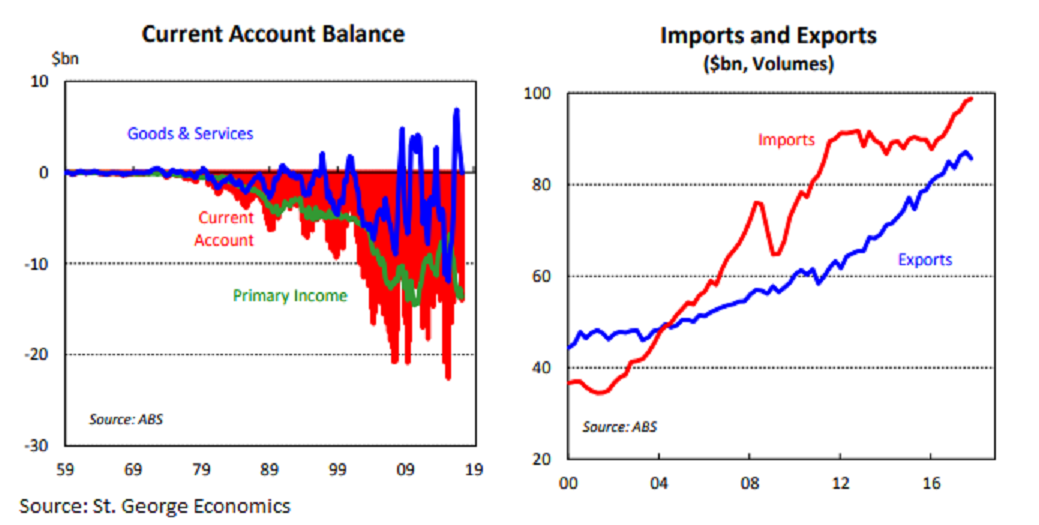
Australia’s current account deficit widened from a revised deficit of AUD11.0 billion in the September quarter to AUD14.0 billion in the December quarter, the largest deficit in over a year. The blow out in the current account deficit was mostly due to a turnaround in the goods and services balance from a surplus of AUD2.0 billion in the September quarter to a deficit of AUD117 billion in the December quarter.
Export volumes were negatively impacted by rural good exports, which fell 9.7 percent, and were affected by poor weather. Coal exports were also temporarily affected, but are expecting to rebound early this year. The combination of weaker export volumes and the lift in import volumes point to a 0.5 percentage point detraction from GDP growth in the December quarter.
"We remain comfortable with our forecast of 0.6 percent GDP growth in the quarter for an annual pace of 2.6 percent," St. George Economics commented in its latest research report.
It represents a moderate pace of growth, not far from the long-run trend. Business investment and public spending are expected to grow modestly and are expected to be the key drivers of growth in the coming year. They are drivers at a time when there are downside risks for consumer spending and as a downturn in dwelling investment takes hold.
Lastly, FxWirePro has launched Absolute Return Managed Program. For more details, visit http://www.fxwirepro.com/invest







