


 Asian Stocks Fall as Bond Yields and Oil Prices Surge
  US Dollar Hits Two-Month High as Aussie, Pound Slide
  Asian Stocks Rise as Bond Yields Ease Ahead of U.S. Inflation Data
  Oil Prices Steady as Middle East Crude Flows Recover
  FxWirePro: Daily Commodity Tracker - 21st March, 2022
  Wall Street Edges Higher as Treasury Yields Retreat
  Gold Prices Slip as High Treasury Yields Weigh on Bullion
  Gold Prices Fall Amid Rate Jitters; Copper Steady as China Stimulus Eyed
  US Treasury Bond Buybacks Fall Short Despite Expanded $6 Billion Cap


 Add as a preferred source on Google
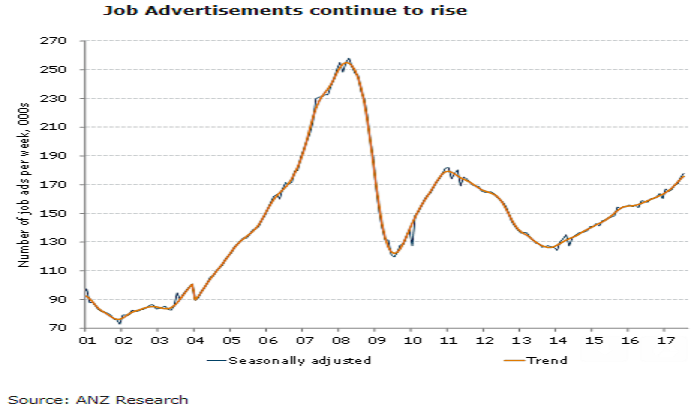
Australia’s ANZ Job Advertisements continue to trend up, rising 1.5 percent m/m in July in seasonally adjusted terms. Total job ads are now up 6.5 percent since the beginning of the year. Annual growth picked up from 10.5 percent in June to 12.8 percent this month.
In trend terms, Job Advertisements were up 1.0 percent m/m in July following a 1.3 percent rise in the previous month. The trend growth rate has averaged 1.1 percent m/m over the first seven months of the year, compared to 0.3 percent m/m over the same period a year ago.
Recent data has shown a clear improvement in labour market conditions consistent with elevated business conditions, profitability and capacity utilisation. In particular, the strength in full-time employment and a solid increase in hours worked (near 3.3 percent y/y) are quite encouraging.
"Broadly, forward indicators and survey based measures point towards near-term jobs growth in the order of 15-20k per month. Given the importance of the labour market and wage growth to the course of monetary policy, we will be closely watching the Q2 Wage Price Index number, out on August 16," said David Plank, Head of Australian Economics, ANZ Research.
Meanwhile, FxWirePro launches Absolute Return Managed Program. For more details, visit http://www.fxwirepro.com/invest







