


 X Challenges Australia’s Expanded Social Media Ban Enforcement Powers
  Exosens H1 Profit Beats Forecasts as Defense Demand Drives Growth
  GSK Unveils $2.52 Billion Cost-Cutting Plan to Accelerate Drug Pipeline
  Galp Shares Fall After Q2 EBITDA Miss Despite Profit Beat and Higher Dividend
  Zabka Shares Drop 10% as Seven & i Abandons Investment Plans
  Zhongji Innolight Raises $6.8 Billion in Hong Kong IPO as AI Demand Fuels Growth
  Unilever Raises 2026 Sales Outlook After Strong Q2 Volume Growth
  ASML, Applied Materials Slide as China DUV Chip Equipment Breakthrough Sparks Market Jitters
  TSMC Gradually Restarts Japan Chip Plant After Kumamoto Earthquake
  AstraZeneca Q2 Earnings Beat Forecasts as Oncology Growth Supports 2026 Outlook
  CXMT IPO Debut in Shanghai Puts $85.5 Billion Chipmaker in Spotlight
  TeamViewer Shares Fall Despite Profit Growth as ARR and Customer Base Decline
  Nvidia Eyes $250B Guarantee for OpenAI’s Massive Ohio AI Data Center Project
  SK Hynix Q2 Profit Hits Record as AI Memory Chip Demand Fuels Growth
  Standard Chartered Beats Profit Forecasts as First-Half Earnings Rise 9%
  BHP, Port Hedland Unions Fail to Reach Wage Deal as Negotiations Continue
  Meta CEO Zuckerberg Opposes U.S. Ban on Chinese AI Models, Warns Against Overregulation


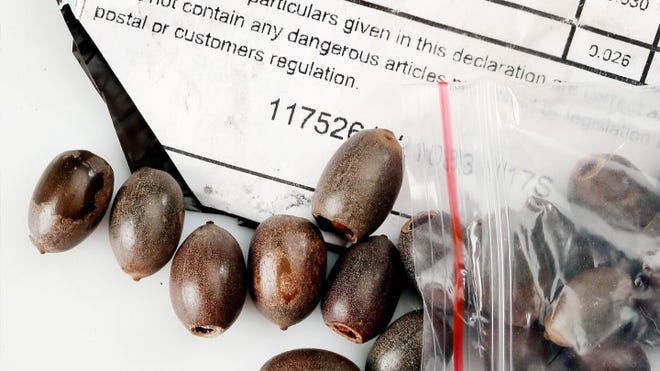
Amazon has barred foreign sales of seeds to the US after it found that mystery packets, mostly from China, were being shipped to Americans.
The retail giant's updated policy on plant and seed products prohibits the sale of seeds from outside the US or by non-US residents.
The new policy, updated on September 2, extends to both plants and plant products.
Sellers who don't comply with Amazon's policies could suffer cancellations or suspension of their accounts, banning from selling on the site, or forfeiture of payments.
It's uncertain if Amazon's seed ban will extend to other countries.
The mystery packages of seeds with postmarks from China were sent to US households beginning July.
Packages were mislabeled, with some specifying it contains jewelry or beads, but containing seeds.
It's still unclear who is sending the seed packets or why.
The US Department of Agriculture (USDA) believes the packages are a part of a "brushing scam" where sellers send unsolicited items to people and then post false customer reviews to boost sales.
The USDA says it has been working with China in investigating the mass shipment of seed packages and in determining how to stop unsolicited imports.
There were 321 different species of seed that have been identified coming from 8,507 packages that were sent to 50 states.
So far, no major problems have been found by experts examining the seeds from China.
But agriculture officials are discouraging those who receive the seeds from planting them, as these could be invasive species that destroy the environment.
Several agencies, including the Federal Bureau of Investigation, the US Postal Service, the Department of Homeland Security's Customs and Border Protection, and state agriculture departments, are also investigating the situation.







