


 Unitree Shares Plunge 45% After Blockbuster IPO, Raising China Tech Bubble Fears
  Countries Tighten Social Media Bans for Children
  PayPal Shares Sink as $50 Billion Takeover Bid Collapses
  HP Stock Drops 9% Despite Q3 Earnings Beat and Raised 2026 Outlook
  New Zealand Moves to Ban Social Media for Children Under 16
  Nvidia Options Price in $280 Billion Earnings Swing
  Xiaomi Unveils Xring O3 Chip for Flagship Foldable Phone
  U.S. Disrupts China-Linked Hacking Campaign Targeting Government Agencies
  Pinterest Stock Falls as CFO Julia Brau Donnelly Resigns
  SoftBank Eyes $20 Billion Bond Sale to Refinance OpenAI Loan
  BofA Names ASML Top Semiconductor Equipment Pick on Growth, Valuation
  Salesforce Shares Surge as AI Demand Powers Q2 Earnings Beat
  Samsung Shares Tumble 8% as $79 Billion Return Plan Disappoints
  Faraday Future Delivers First Robots in Middle East, Plans September Launches
  U.S. Probes Apex Logistics Over Nvidia AI Chip Shipments to China
  Google Changes EU Spam Policy Amid Antitrust Scrutiny
  Nvidia Pauses AI Cloud Financing Deals Amid Antitrust Concerns


 Add as a preferred source on Google
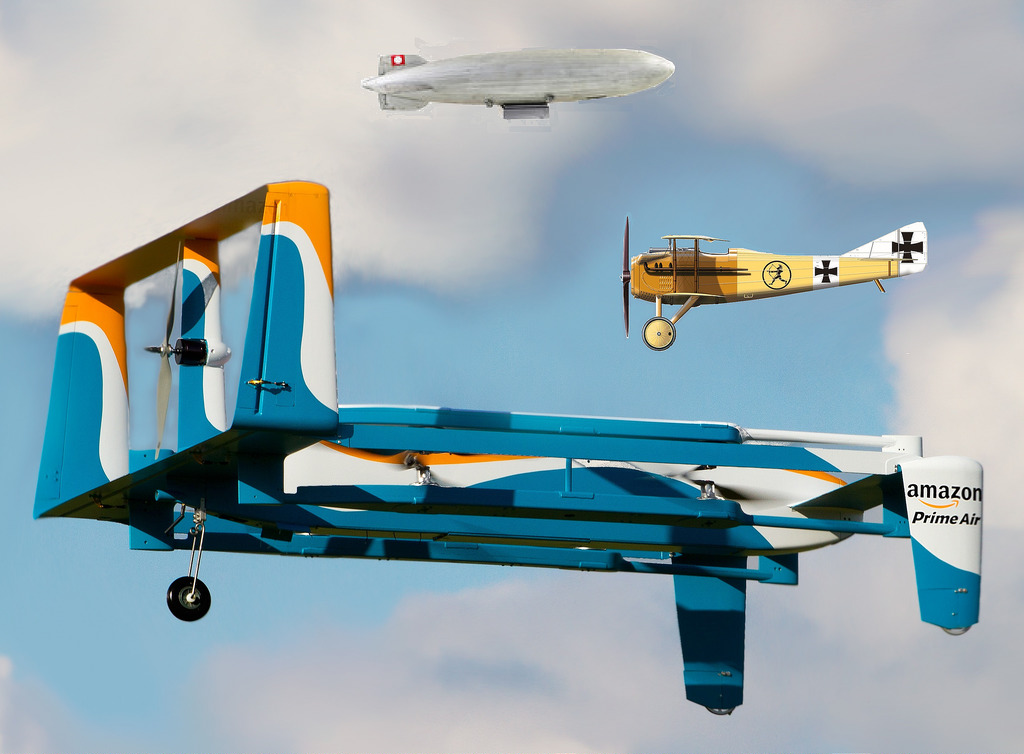
It’s no secret that Amazon has been trying to change the retail industry with its drone-delivery offers. However, a recent patent suggests that the company might be thinking about installing a self-destruct system in its drones. It’s not to inflict any kind of harm on anyone, either. Rather, it’s meant to be a safeguard against crashing drones.
According to the patent, the idea behind the technology is to essentially rig the drones so that they fall apart in mid-air in case they malfunction and are at risk of causing harm. By breaking apart, the drone is turned into several smaller, lighter pieces that will hopefully do less damage than an intact UAV.
“During the flight operation, the fragmentation controller develops a fragmentation sequence for one or more of the components based on the flight path, the flight conditions, and terrain topology information, among other factors. The fragmentation controller can also detect a disruption in the flight operation of the UAV and, in response, direct fragmentation of one or more of the components apart from the UAV,” the patent reads.
One of the first publications to spot the patent was The Verge, which notes that this is a preferable alternative to having to deal with a whole drone falling from the sky. This also serves to address one of the biggest concerns that the public has when it comes to the prevalence of deliveries using drones. There is always that question of what would happen if a drone carrying a heavy package were to malfunction.
It’s worth pointing out that there’s no guarantee that Amazon would actually implement this new patent. The filing was basically just a means for the retail giant to have the rights to such a technology. There have been a lot of patent filings in the tech industry that eventually came to nothing.







