


 Israel Expands Gaza Restricted Zones, Raising Concerns for Civilians and Aid Access
  Russia Downs Over 50 Drones Near Moscow Ahead of Victory Day Ceasefire
  US Revises UN Resolution on Iran Strait of Hormuz Attacks Amid Russia-China Opposition
  Judge Delays SEC Settlement With Elon Musk Over Twitter Stock Disclosure Case
  China Banks Halt New Loans to Sanctioned Refineries Amid U.S.-Iran Oil Crackdown
  U.S. Fast-Tracks $8.6 Billion Arms Sales to Middle East Allies Amid Rising Tensions
  Trump Administration Releases New UFO Files and Apollo Mission Records
  Rubio Approves $25.8 Billion Weapons Sale to Middle East Allies
  Trump Invites Top CEOs Including Nvidia, Apple, Boeing to China Summit With Xi Jinping
  U.S.-China Beef Trade Deal Hopes Rise Ahead of Trump-Xi Summit
  Senate Stablecoin Bill Sparks Clash Between Banks and Crypto Industry
  TikTok Nears $400 Million Settlement With Trump Administration Over Child Privacy Lawsuit
  Trump Administration Dismisses Entire National Science Board, Raising Concerns Over Scientific Independence
  Russian LNG Shadow Fleet Expands Amid Arctic LNG 2 Sanctions
  Panama Defends Port Takeover Amid U.S.-China Tensions and Canal Dispute
  U.S. Sanctions Former DR Congo President Joseph Kabila Over Rebel Support
  Google Secures Pentagon AI Deal for Classified Projects


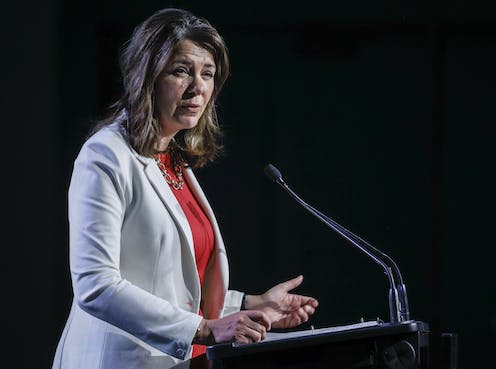
Alberta Premier Danielle Smith has announced a province-wide referendum this fall that will ask residents whether the provincial government should limit the number of new international students, temporary foreign workers, and asylum seekers entering Alberta. The move has intensified the national conversation around Canadian immigration policy and provincial authority.
Immigration in Canada is largely managed by the federal government in Ottawa. However, Smith’s proposal signals Alberta’s intent to push for greater provincial control over immigration levels. The announcement comes at a sensitive time for Canadian unity, as Prime Minister Mark Carney works to strengthen ties with western, resource-driven provinces and address ongoing Alberta separatism concerns.
Smith linked the proposed referendum to Alberta’s economic challenges. The province is preparing for a significant budget deficit, partly due to falling global oil prices and declining resource royalties. She also pointed to Alberta’s rapid population growth as a contributing factor. According to Statistics Canada, Alberta’s population surpassed 5 million in 2025, increasing by more than 600,000 people over the past five years. The province currently has the fastest population growth rate in Canada.
In a televised address, Smith argued that rapid immigration has placed pressure on healthcare, education, housing, and social services. She stated that the influx of newcomers has strained classrooms, emergency rooms, and support systems across the province.
While other provinces are also experiencing immigration-driven growth, an ATB Financial analysis suggests Alberta stands out due to strong interprovincial migration. Many Canadians have relocated to Alberta in search of affordable housing and economic opportunities.
If approved, the referendum could pave the way for legislation limiting access to provincially funded programs, such as healthcare and education, to Canadian citizens, permanent residents, and individuals holding an “Alberta-approved” immigration status. The outcome could significantly reshape the province’s approach to immigration and its relationship with the federal government.







