


 Malaysia Begins Deportation of 1,500 Myanmar Nationals
  Russian Drone Strikes Kill Nine Across Ukraine, Hit Kyiv Science Academy
  US Troops Set to Complete Iraq Withdrawal as Iran Influence Grows
  China Says U.S. Shares Responsibility for AI Governance
  Iran Warns US Against Renewed Attacks as Hormuz Tensions Rise
  Pope Leo Urges Europe to Pursue Peace Through Compromise
  Senate Democrats Say Tether USDT Helps Iran Evade Sanctions
  UK PM Burnham Signals Social Care Tax Changes, Questions Heathrow Expansion
  Judge Blocks Trump Election Conditions on Counterterrorism Grants
  Rubio Warns Cuba to Change Course as US Pressure Mounts
  Iran Holds Firm on Hormuz Reopening Terms Despite Trump Rejection
  Trump Denies Offering Iran Sanctions Relief for Nuclear Concessions
  China, US Extend Trade Truce Through January 10 After Trump-Xi Summit
  Swiss Voters Reject Stricter Neutrality Rules in Referendum
  UN Experts Urge US to Halt Third-Country Migrant Deportations
  UK Police Arrest Five in RAF Fairford Terror Probe
  White House Blames Democrats as CLARITY Act Stalls


 Add as a preferred source on Google
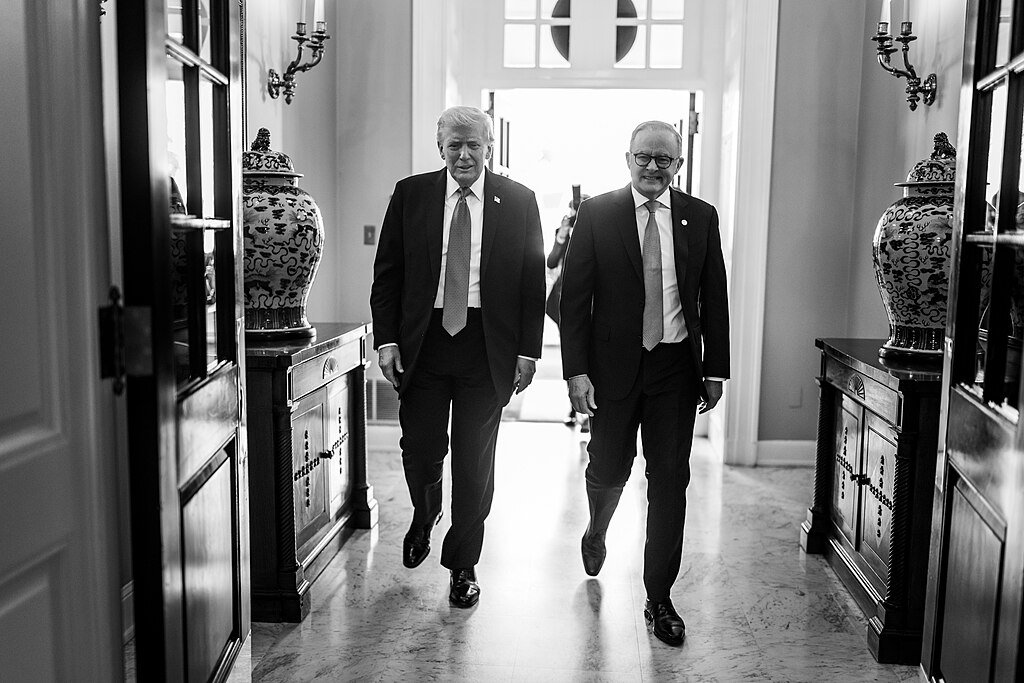
Australian Prime Minister Anthony Albanese said the AUKUS defence pact remains “full steam ahead” following a lengthy phone call with U.S. President Donald Trump, as Canberra also pushes Washington for a complete exemption from U.S. tariffs.
Speaking to reporters in Canberra on Friday, Albanese said Australia and the United States had reviewed progress on AUKUS, the trilateral security partnership involving Australia, the U.S. and Britain. He said both leaders agreed the agreement continues to deliver benefits for all three countries.
AUKUS is Australia’s biggest defence project, with Canberra committing A$368 billion ($260 billion) over three decades. The program includes investments in U.S. and British submarine production and plans to strengthen Australia’s nuclear-powered submarine capabilities.
Under the agreement, U.S.-commanded Virginia-class submarines are expected to be based in Australia from next year. Australia is also scheduled to acquire several Virginia-class submarines beginning around 2030, while Australia and Britain will eventually construct a new generation of AUKUS nuclear-powered submarines.
Established in 2021, AUKUS is widely viewed as part of broader Western efforts to address China’s expanding influence in the Indo-Pacific. Beijing has criticized the partnership, warning it could intensify a regional arms race.
Pentagon policy chief Elbridge Colby, who led a U.S. review of AUKUS last year, said Washington was encouraged by the progress made since the review concluded. Colby previously raised concerns about whether U.S. submarine production could meet both American and Australian requirements.
Albanese described his conversation with Trump as productive and substantial. He said Trump agreed to consider Australia’s request for a full exemption from the United States’ 12.5% tariffs. Canberra argues its trade deficit with Washington, driven by imports of American machinery, technology and aircraft, supports its case for an exemption.
The leaders also discussed the Iran conflict and Australia’s recent defence agreements with Papua New Guinea and Fiji. Albanese reiterated Australia’s desire for an end to the Middle East conflict while maintaining that Iran must not acquire nuclear weapons.







