


 GSK Unveils $2.52 Billion Cost-Cutting Plan to Accelerate Drug Pipeline
  Russia Charges Telegram Founder Pavel Durov With Facilitating Terrorism, Seeks International Arrest
  Starbucks Stock Jumps as Q3 Earnings Beat, Sales Growth Drives Higher 2026 Outlook
  Arm Holdings Q1 Earnings Beat Estimates, Strong Q2 Outlook Fails to Lift ARM Stock
  Toyota First-Half Global Sales and Production Decline on Weak China Demand, RAV4 Transition
  Meta Stock Drops After Earnings Miss as AI Spending and Legal Costs Weigh on Profit
  TeamViewer Shares Fall Despite Profit Growth as ARR and Customer Base Decline
  Seagate Stock Jumps as AI-Fueled Earnings Beat and Strong FY2027 Outlook Impress Investors
  Samsung Q2 Profit Surges on AI Memory Chip Demand, Forecasts Strong Second Half
  Unilever Raises 2026 Sales Outlook After Strong Q2 Volume Growth
  X Challenges Australia’s Expanded Social Media Ban Enforcement Powers
  Sika Raises 2026 Sales Outlook After Strong First-Half Results Beat Expectations
  Microsoft Stock Jumps as Azure Growth, AI Revenue Beat Expectations
  SK Hynix Q2 Profit Hits Record as AI Memory Chip Demand Fuels Growth
  Sony Eyes $1.3 Billion Tamron Acquisition as Lens Maker Reviews Offer
  World game at war: why some European nations have threatened a World Cup boycott


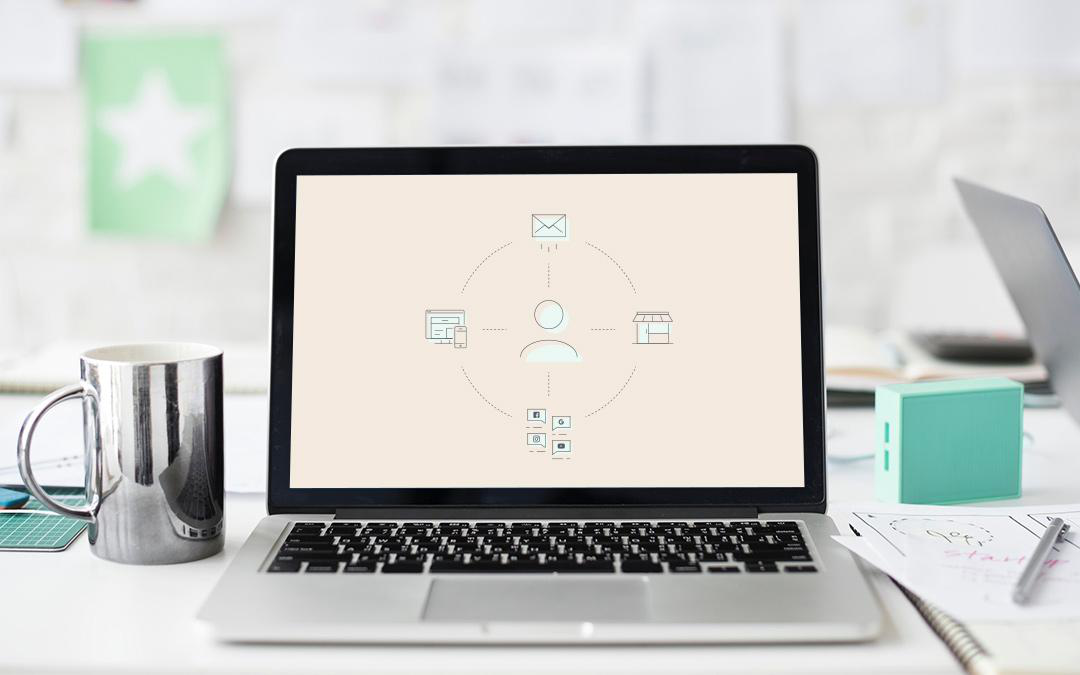
First things first, how can your ecommerce store benefit from an omnichannel marketing strategy?
Placing your customer at the core of all marketing operations is the fundamental principle of omnichannel marketing. When you do this, customers will experience a smooth and unified experience across every channel of your brand.
What does this mean for your ecommerce store? Quite simply, more customers, spending more money!
Let's delve into 4 best practices you can implement right now to launch a successful omnichannel marketing strategy.

#1 Find out everything you can about your customer
If your ecommerce store is to deploy a truly successful omnichannel marketing strategy, you need to know everything possible about your customer, and act on it.
How does it feel to be your customer?
It is highly valuable to examine your customer interactions and evaluate their overall experience for yourself.
Imitate the customer journey and test all your processes. Was it a really great journey; from searching out a product, through to final purchase? If not, make the necessary changes to fix things.
Make this a regular habit and you will gain a much deeper understanding of your customer and how it feels to go through your buying journey.
What do your customers say about you?
It is vital to know what your customers really think about your brand; so you need to be asking for feedback wherever appropriate.
We’ve all been asked for feedback before when completing a purchase online. You should be collecting feedback following a customer purchase too. You’ll also obtain useful reviews for your products; most of us trust online reviews as much as our friends.
But why stop there? If your customer asks a question, or reaches out for support, you can also ask for feedback at this point, and gain even more insight into your customer’s thoughts.
#2 Always measure your data to fine-tune your marketing machine
You want your omnichannel marketing strategy to go for gold and bring you tangible results. If you measure everything you do, and react upon what you find, it will prove to be a winning formula.
Let’s say you measure the results of your last email campaign. The data tells you that your male customers were most receptive to the email you scheduled for a Sunday morning.
You can react accordingly for future campaigns to be smarter about what you send and how you send it.
By tinkering with your messaging and how it is rolled out, your marketing machine will be fine-tuned to deliver optimum results.
#3 Remember that one size does not fit all
Just as not everyone buys the same black shirt in the same skinny-fit cut, not all your customers should be receiving exactly the same marketing messages.
The method for applying this strategy is called segmenting.
It will allow you to send specific and tailored messages to just the right people, and at the most suitable time.
You would place someone who has never clicked on any of your email links within a different segment to the people that regularly click-through. Then tailor the messages sent to each of the segments accordingly.
Makes sense, right?
Another example; you compile a list of customers that bought a pair of shoes last month. You could send them an email offering a half-price pair of socks as a reward for reviewing those shoes.
#4 Give every person in your company the same hymn sheet
For omnichannel marketing to be a success, the whole company must be fully on-board and singing from the same hymn sheet.
As well as your sales and marketing people, customer support also needs to be engaged with the strategy.
Full participation and the sharing of data between everyone, and every team, will make for a seamless omnichannel marketing strategy.
Last year, H&M spent $20M on one particular online strategy; any ideas what they invested in? You guessed it, Omnichannel.
Of course, you don’t need to be a millionaire. You can start utilizing Omnichannel marketing tools today and build new levels of success for your ecommerce store.
Your brand will be more cohesive, your campaigns more effective and you’ll have more customers, spending more money.
This article does not necessarily reflect the opinions of the editors or management of EconoTimes.







