

 Menu
Menu

 Search

- News

- Economy

- Central Banks
- Investing
- Research
- Roundups
- Digital Currency
- Insights
- Technical Analysis
- Technology
- Business
- Law
- Health
- Nature
- Fintech
- Science
- Topic
- Opinions
- ©Econometrics LLC . All Rights Reserved.

Conrad Hamann
Associate Professor of Architectural History, RMIT University
Conrad Hamann is Associate Professor of Architectural History at The School of Architecture and Urban Design, RMIT University. He has written widely on architecture by Maggie Edmond and peter Corrigan, including the monograph Cities of Hope, Oxford, 1993, revised and extended for Thames and Hudson, 2012.

Less 
Conrad Kickert
Associate Professor of Architecture, University at Buffalo
Conrad Kickert studies the evolving relationship between urban form, urban life and the urban economy. He has a background in urbanism and architecture from the TU Delft (Netherlands) and holds a PhD in architecture from the University of Michigan. He has worked as an urban researcher and designer for various design offices, property developers and non-profit organizations in The Netherlands, the United Kingdom and the United States.
Dr. Kickert has authored award-winning articles and books on the interrelation between cities, their evolution, and their economy, including articles for the Journal of Urban Studies and the London School of Economics, an Oxford University bibliography, the recent monograph "Dream City - Creation, Destruction and Reinvention in downtown Detroit" with MIT Press and upcoming books on urban retail and street-level architecture. Among others, his work has been supported by the National Endowment for the Arts, the Ax:son Johnson Foundation, UBER, the Haile/US Bank Foundation and the Mellon Foundation.
Less

Conrad Nunnenmacher
PhD Research Fellow in Innovation, Economics, Governance and Sustainable Development, United Nations University
Conrad Nunnenmacher is a PhD Fellow at United Nations University-MERIT in Maastricht. He conducts empirical research on the unforeseen side effects of development interventions, examining their impact on local communities and the environment using earth observation and survey microdata. Conrad holds an MSc in Public Policy and Human Development with specialization in Social Protection Policy from Maastricht University. His main research interests include development economics, social protection, and geospatial science.
Less

Conrad Sanderson
Research Scientist & Team Leader, CSIRO
My work covers 3 main research streams and their associated application areas: (1) artificial intelligence and machine learning (including deep learning), (2) AI ethics and Responsible AI, (3) high performance numerical computing (mathematical software).
Less

Conrad Wasko
ARC DECRA Fellow in Hydrology, University of Sydney
Conrad Wasko is an ARC DECRA Fellow at the University of Melbourne. Conrad has over ten years experience in both consulting and research.
His research has won him numerous awards including the MSSANZ Early Career Research Excellence Award and the Lorenz G. Straub award for best PhD thesis globally in water engineering. He has contributed to the current national guidelines on flood estimation and his current research focuses on understanding the effects of climate change on hydrology and specifically extreme events.
Less

Constance Crompton
Associate Professor and Canada Research Chair in Digital Humanities, L’Université d’Ottawa/University of Ottawa
I am a white, queer, able-bodied settler and Canada Research Chair in Digital Humanities. I direct the University of Ottawa’s Labo de données en sciences humaines/The Humanities Data Lab. I am a member of several research project teams: Lesbian and Gay Liberation in Canada, Linked Infrastructure for Networked Cultural Scholarship, the Implementing New Knowledge Environments Partnership, and the Transgender Media Portal. I am the co-editor of two volumes, Doing Digital Humanities and Doing More Digital Humanities, with Ray Siemens and Richard Lane (Routledge 2016, 2020).
Less
Constance De Saint Laurent
Assistant Professor of Sociotechnical Systems, Department of Psychology, National University of Ireland Maynooth
I am a social psychologist and lecturer in Socio-technical systems at the National University of Ireland, Maynooth. I work on social thinking and the impact of technology and societal changes on people and organisations. This has included research on social media, artificial intelligence, misinformation, collective memory, and representations of immigration.
Less
Constance Gikonyo
Corporate Law Lecturer, University of Nairobi
Dr Constance Gikonyo teaches law at the University of Nairobi. She's also an adjunct lecturer at the Strathmore University. With effect from 20 April 2023, she has been serving as a member of the Capital Markets Tribunal. Her research focuses on areas of maritime law, anti-money laundering, asset forfeiture and the connection between money laundering and aspects of transnational organised crime. Further research interests are in illicit financial flows related to wildlife crimes and criminal justice strategies to combat wildlife crime. The areas of the blue economy and fisheries and research methodology.
Less
Constance McDermott
Senior Fellow in Forest Governance and Leader of Ecosystems Governance Group, University of Oxford
Profile
Constance McDermott chairs the ECI's Ecosystems Governance Group (formerly the Forest Governance Group).
Her research, described in detail on the Ecosystem Governance pages, addresses the linkages among diverse local, regional and global priorities for sustainable forest management. It examines both "new" and "old" institutions of forest governance, from market-based initiatives such as forest and carbon certification to sovereign state-based and traditional community-based approaches, to better understand how dynamics of trust and power shape environmental and social policies and facilitate or inhibit desired outcomes. Her methods range from locally focused case studies to large-scale comparative research examining cross-institutional and cross-boundary interactions.
McDermott's work at ECI and the Oxford Centre for Tropical Forests includes an emphasis on the integration of forest governance into the global climate regime. Recent research directions include the examination of Reduced Emissions from Deforestation and Degradation (REDD) initiatives, and the role of both pre-existing and new forest institutions for addressing REDD-related environmental and social mandates.
Before beginning at Oxford in April 2009, McDermott worked for five years at the Yale School of Forestry and Environmental Studies where she served as Associate Research Scientist and Program Director of the Program on Forest Policy and Governance. She has conducted research and applied work in multi-stakeholder processes, forest and green building certification, intergovernmental forest-related governance, and international development in North and Central America, South Asia, and globally.
Research Interests
Within the theme of comparative governmental and inter-governmental policy, McDermott addresses the effects of market globalization on domestic forest policy, and the conflicts and synergies between trade and conservation oriented objectives within inter-governmental processes. For example, McDermott is lead author of the book, Global Environmental Forest Policy, together with co-authors Professors Benjamin Cashore (Yale University) and Peter Kanowski (Australian National University). The book compares environmental forest policies in twenty countries worldwide, and serves as a launching point for research on the role of government regulation in addressing REDD-related climate objectives.
McDermott's work on trade-based initiatives includes the study of the impacts of wood products trade with the US and China on forests of the Amazon, Borneo, Chile, Congo, Mekong, and Russian Far East. Outputs from this work include a framework for establishing a "results-based" approach to prioritize the engagement of producers and traders in wood product sourcing initiatives.
The certification of forests and forest products, and related initiatives (for example, green building, forest carbon certification) are another focal point as new forms of non-state governance designed to balance stakeholder interests both "vertically" (i.e. from the local to global level) and "horizontally" (i.e. across diverse interest groups). McDermott's research in this area includes the study of trust and distrust among stakeholders in shaping certification standards and uptake. Outputs include the development of policy tools for evaluating the use of certified wood in green building.
Less

Constantin Colonescu
Associate Professor of Economics, MacEwan University
Teaching experience: European Economic Integration • Macroeconomics • Microeconomics • Development Economics • International Trade • Game Theory • Industrial Organization • Supervising Student Research Projects • Mathematical Economics • Econometrics
Research interests: Income inequality, Compounded markups in complex markets, public attitudes toward political ans social issues, Economic integration.
Recent publications:
Colonescu, C. (2018). Using R for Principles of Econometrics. Second Edition. Creative Space.
Colonescu, C. (2022). Using Python for Principles of Econometrics. Kindle Direct Publishing.
Colonescu, Constantin. (2022) Measures of Populism in the CHES 2017 Dataset. Athens Journal of Social Sciences, Vol. 9, Issue 2, 177-196. DOI: 10.30958/ajss.9-2-5
Colonescu, C. (2021). Price Markups and Upstreamness in World Input-Output Data. Economics and Business 9, 71–85. Acta Universitatis Sapientiae. http://www.acta.sapientia.ro/acta-econ/C9/econ9- 04.pdf
Colonescu, Constantin (2021) Compounded Markups in Complex Market Structures. Athens Journal of Business and Economics Vol 8, pp. 1-14. https://www.athensjournals.gr/business/2021-4433-AJBE-ECO-Colonescu-03.pdf
Less
Constanza Toro Valdivieso
Postdoctoral Researcher in Molecular Biology, University of Cambridge
Constanza's first degree is in veterinary medicine, but after a few years of small animal clinical experience, she decided to transition into academia. Now, she is a scientist interested in combining molecular biology and bioinformatics with studying wild populations from non-invasive samples.
She recently completed her PhD at the University of Cambridge. Her research focused on exploiting a range of molecular techniques to develop a non-invasive method to study a poorly-studied endemic pinniped. More specifically, she used faecal samples to look at heavy metal exposure, host genetics and the faecal microbiome of the Juan Fernández fur seal, a poorly studied endemic pinniped from the Juan Fernández archipelago.
She closely collaborates with Fundación Endémica, a local NGO that works to promote scientific development and ensure scientific discovery becomes available to the community of the Juan Fernández archipelago.
Less
Cooper Malanoski
PhD Candidate in Geology, University of Oxford
Cooper Malanoski is a Ph.D. candidate at Oxford University studying the impact of climate on extinction and paleobiogeographic patterns.
Less
Corey Angst
Professor of IT, Analytics, and Operations, University of Notre Dame
Corey Angst conducts research on the transformational effect of IT, societal impacts of technology usage, and how (or if) IT creates value. Much of his existing work is set in the U.S. healthcare context, where he has investigated the diffusion and use of disruptive healthcare innovations and the relationship to patient satisfaction, privacy and security of medical information, financial performance of hospitals, and quality of care. His recent work is examining ethical questions related to the informed consent process used in the healthcare industry. He is also interested in ethical questions associated with the design, deployment, use and societal impacts of artificial intelligence.
Less
Corey Hebberd
Kaiwhakahaere Matua, Te Rūnanga a Rangitāne o Wairau Trust, Indigenous Knowledge
Less

Corinna Jenkins Tucker
Corinna Jenkins Tucker, Ph.D., C.F.L.E., is the Senior Project Director of the Sibling Aggression and Abuse Research and Advocacy Initiative (SAARA) at the Crimes Against Children Research Center and Professor Emerita, Human Development and Family Studies Department at the University of New Hampshire. Her primary research interests include sibling relationships, parenting, and mental health. She has a particular interest in sibling aggression and abuse experiences across the lifespan.
Less

Corinne Sandwith
Professor of Literature, University of Pretoria
I am Professor in the Department of English at the University of Pretoria in South Africa. I am the author of World of Letters: Reading Communities and Cultural Debates in Early Apartheid South Africa (2014) and co-editor with Rebecca Fasselt of The Short story in South Africa: Contemporary Trends and Perspectives (2022). I have published widely in the fields of African print cultures, book history and South African intellectual history.
Less

Cornelia Koch
Senior Lecturer in Law, University of Adelaide
After completing a German undergraduate law degree at the University of Würzburg and a period in private legal practice, Cornelia Koch pursued postgraduate studies at the University of Queensland where she obtained a Master of Comparative Law and a Juris Doctor degree. She joined the Adelaide Law School at the University of Adelaide as an academic in 2002. Her research has been published in Europe, the USA and Australia. Cornelia is admitted to legal practice in Queenland and the ACT, but does not hold current practicing certificates.
Less
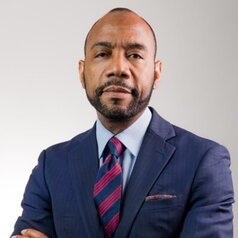
Cornell William Brooks
Professor of the Practice of Public Leadership and Social Justice, Harvard Kennedy School
Cornell William Brooks is Hauser Professor of the Practice of Nonprofit Organizations and Professor of the Practice of Public Leadership and Social Justice at the Harvard Kennedy School. He is also Director of The William Monroe Trotter Collaborative for Social Justice at the School’s Center for Public Leadership, and Visiting Professor of the Practice of Prophetic Religion and Public Leadership at Harvard Divinity School. He is the former president and CEO of the National Association for the Advancement of Colored People (NAACP), a civil rights attorney, and an ordained minister.
Professor Brooks is the recipient of the Harvard Kennedy School Innovations in Teaching Award. Through the Trotter Collaborative, his social justice advocacy clinical class has enabled students to do pioneering policy work with mayors across the U.S. and abroad; nonprofits from the Lawyers Committee for Civil Rights Under Law to Black Voters Matter; as well as organizations from the Religious Action Center of Reform Judaism to the National Council of Churches.
Prior to coming to HKS, Professor Brooks was the visiting professor of social ethics, law, and justice movements at Boston University’s School of Law and School of Theology. He was a visiting fellow and director of the Campaign and Advocacy Program at the Kennedy School’s Institute of Politics in 2017. Professor Brooks served as the 18th president of the NAACP from 2014 to 2017. Under his leadership, the NAACP secured 12 significant legal victories, including laying the groundwork for the first statewide legal challenge to prison-based gerrymandering. He also reinvigorated the activist social justice heritage of the NAACP, dramatically increasing membership, particularly online and among millennials. Among the many demonstrations from Ferguson to Flint during his tenure, he conceived and led “America’s Journey for Justice” march from Selma, Alabama to Washington, D.C., over 40 days and 1000 miles.
Prior to leading the NAACP, Professor Brooks was president and CEO of the New Jersey Institute for Social Justice, where he led the passage of pioneering criminal justice reform and housing legislation, six bills in less than five years. He also served as senior counsel and acting director of the Office of Communications Business Opportunities at the Federal Communications Commission, executive director of the Fair Housing Council of Greater Washington, and a trial attorney at both the Lawyers’ Committee for Civil Rights Under Law and the U.S. Department of Justice. As a DOJ trial attorney, he secured a record-setting settlement for housing discrimination victims and filed the first government case alleging housing discrimination against a nursing home. Professor Brooks served as judicial clerk for the Chief Judge Sam J. Ervin, III, on the U.S. Court of Appeals for the Fourth Circuit.
Professor Brooks holds a J.D. from Yale Law School, where he was a senior editor of the Yale Law Journal and member of the Yale Law and Policy Review, and a Master of Divinity from Boston University’s School of Theology, where he was a Martin Luther King, Jr. Scholar. Professor Brooks has a B.A. from Jackson State University. He is the recipient of several honorary doctorates including: Boston University, Drexel University, Saint Peter’s University and Payne Theological Seminary as well as the highest alumni awards from Boston University and Boston University School of Theology. Professor Brooks is a fourth-generation ordained minister in the African Methodist Episcopal Church.
Less
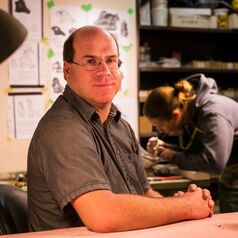
Corwin Sullivan
Associate professor, Vertebrate Palaeontology, University of Alberta
Corwin Sullivan is the Philip J. Currie Professor of Vertebrate Palaeontology at the University of Alberta, and a curator of the Philip J. Currie Dinosaur Museum. He has a keen interest in exploring patterns of structural and functional change on the evolutionary line to birds, and investigating the Cretaceous vertebrate fauna of northern Alberta.
Less
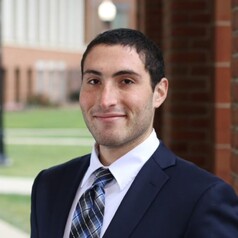
Cory Haltman
Ph.D. Candidate in Marketing, The Ohio State University
Cory Haltman is a Marketing Ph.D. Candidate specializing in consumer behavior at The Ohio State University’s Fisher College of Business. Cory’s research interests include psychological response marketing communications and promotions, political ideology as a driver of consumer behavior, and consumer welfare. Cory’s research has been recognized with the Best Paper award at the Indiana University Haring Doctoral Symposium and the Brenda M. Derby Memorial Research Award for Best Student Paper at the Marketing and Public Policy Conference. He also won first place presenting his work at The Ohio State University's Hayes Graduate Research Forum.
Cory holds a B.S. in Marketing and a B.A. in Psychology from Stony Brook University. Prior to starting the doctoral program at Ohio State, Cory worked as a research scientist for the marketing research firm NPD Group (now Circana) and in research and development at the advertising agency McGarryBowen (now dentsuMB). At Ohio State, Cory has taught two semesters of undergraduate marketing research and received the 2024 Fisher College of Business Ph.D. Student Excellence in teaching award.
Less

Cosmo Howard
Associate Professor School of Government and International Relations, Griffith University
Less
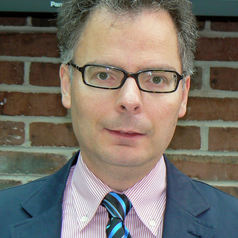
Costas Milas
Professor of Finance, University of Liverpool
Prof Costas Milas is an expert on Monetary Policy issues (such as interest rate setting behaviour) related to the UK, US and Eurozone economies, respectively. He is also an expert on debt policies pursued by the Eurozone peripheral economies (Greece, Italy, Ireland, Spain and Portugal).
He holds an MSc (Economics and Finance) and a PhD (Economics) degree from Warwick University. He also holds a BSc (Statistics) from the Athens University of Economics and Business. Before joining Liverpool in 2011, he worked for the Universities of Warwick, Sheffield, Brunel, City and Keele.
Less

Courtney Lindsay
Senior Research Officer, Global Risks and Resilience, ODI
Courtney Lindsay is a researcher whose interests lie broadly in the political economy of development in Small Island Developing States (SIDS). His research interests include trade and industrial policy in SIDS; micro-, small- and medium-enterprise development and private sector competitiveness; small states' strategies for norm entrepreneurship and norm advocacy; and resilience, sustainability and climate change adaptation in SIDS.
Prior to joining ODI, Courtney spent almost 10 years working as a researcher and project manager, designing, executing, and managing private sector development projects across the English-speaking Caribbean.
Courtney holds a PhD from the University of the West Indies, St Augustine campus. His dissertation focused on small states and policy space in global trade politics, where he examined how small, upper-middle to high-income developing countries respond to policy space constraints at the World Trade Organisation.
Less
Courtney Ryder
Dr Courtney Ryder is an ECR injury epidemiologist, Aboriginal academic and Discipline Lead for Injury Studies in the College of Medicine and Public Health at Flinders University. Her research is leading new ways of working with Indigenous Data through knowledge interface methodology and Indigenous Data sovereignty to change the deficit discourse surrounding Aboriginal and Torres Strait Islander health statistics, particularly in injury.
Ryder has made a substantial contribution to scholarship through building high-impact cross-disciplinary education teams as a previous Teaching Program Director (TPD) of Public Health at Flinders University. Ryder was also involved in establishing a Community of Practice in Indigenous Knowledge which supports staff across the University. With over a decade’s experience in higher education, Ryder is viewed as a leader transforming student learning in Cultural Safety and Aboriginal health. Work which has been recognised nationally and internationally, through keynote addresses, congress papers, good practice case studies, teaching innovation and scholarship awards and a Churchill Fellowship.
Outside of teaching and research, Ryder sits on a range of committees:
South Australian Public Health Council
Indigenous Engineering Group Executive (Engineers Australia)
Human Genetics Society of Australasia (HGSA) Indigenous Genomics Steering Committee
Ryder is an advisory group member for Sex and Gender Policies in Medical Research, Nasal Oxygen Therapy After Cardiac Surgery, and Safer Pathway Project. She is a Research Fellow with The George Institute for Global Health, and Senior Lecturer at the School of Population Health UNSW.
Less

Courtney C Walton
Academic Fellow & Psychologist, Melbourne School of Psychological Sciences, The University of Melbourne
Dr Courtney Walton is a Registered Psychologist and researcher at the University of Melbourne, with expertise in mental health, particularly as applied to sport, exercise, and performance contexts. To date, Courtney has published over 70 peer reviewed scientific articles and book chapters.
Less
Courtney W. Mason
Professor and Canada Research Chair, Rural Livelihoods and Sustainable Communities, Thompson Rivers University
Courtney Mason is a Professor and Canada Research Chair in Rural Livelihoods and Sustainable Communities. He is cross appointed between Natural Resource Science and the Tourism Management Departments at Thompson Rivers University. Courtney's research examines rural and Indigenous land use development with a focus on tourism economies and park or protected area management. He is the author of Spirits of the Rockies: Reasserting an Indigenous Presence in Banff National Park (U of Toronto Press, 2014) and the co-editor of A Land Not Forgotten: Indigenous Food Security and Land-Based Practices in Northern Ontario (U of Manitoba Press, 2017).
Less
Craig Beall
Senior Lecturer in the Neuroscience of Energy Homeostasis, University of Exeter
Less


- Market Data




