

 Menu
Menu

 Search

- News

- Economy

- Central Banks
- Investing
- Research
- Roundups
- Digital Currency
- Insights
- Technical Analysis
- Technology
- Business
- Law
- Health
- Nature
- Fintech
- Science
- Topic
- Opinions
- ©Econometrics LLC . All Rights Reserved.
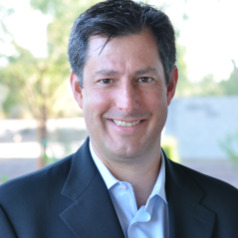
Charles Max Katz
Director of the Center for Violence Prevention and Community Safety, Arizona State University
Charles Katz is the Watts Endowed Family Chair of the School of Criminology and Criminal Justice and Director of the Center for Violence Prevention and Community Safety. His work focuses on police transformation and strategic responses to crime. He regularly collaborates with police organizations to develop comprehensive strategic plans to diagnose and respond to problems related to crime and violence. Dr. Katz is currently working with the Phoenix Police Department on a Bureau of Justice Assistance project evaluating its early intervention system and serves as the principal investigator of the Arizona Violence Death Reporting System (AZ-VDRS) sponsored by the CDC.

Less 
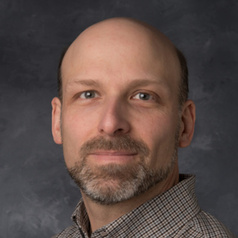
Charles O. Stanier
Professor of Chemical and Biochemical Engineering, University of Iowa
Charles O. Stanier, Ph.D., is a professor of chemical and biochemical engineering. He has expertise in air pollution, atmospheric carbon dioxide, ultrafine atmospheric particles, aerosol health effects and organic aerosol chemistry. His research areas include environmental aerosols - chemistry and climate effects, computer simulation and modeling of aerosols and air pollution, health effects of airborne contaminants, and energy conservation, greenhouse gases and decarbonization.
Less
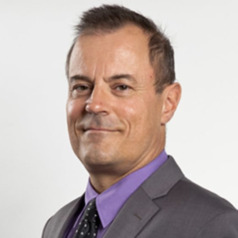
Charles-Philippe David
Président de l'Observatoire sur les États-Unis de la Chaire Raoul-Dandurand et professeur de science politique, Université du Québec à Montréal (UQAM)
Charles-Philippe David is Full Professor of Political Science, President of the Centre for United States Studies, as well as the Founder of the Raoul Dandurand Chair of Strategic and Diplomatic Studies (which he directed from 1996 to 2016) at the University of Québec at Montréal. He was elected a Fellow of the Royal Society of Canada in 2001. He has been appointed in 2017-2018 the Rotary Chair in Peace Studies at the University of Lille in France. He was recipient of the Jean Finot Award of the Institute of France in 2003. He was first to receive, in 2012, the George Vanier distinguished award from the Royal Military College of Canada, for his scholarly contribution to the advancement of strategic and security studies. Dr. David received his PhD from Princeton University in 1986 (under the supervision of Robert S. Gilpin). From 1985 to 1995, he taught at the former Canadian Military College in Saint-Jean sur Richelieu. Professor David is a specialist on American foreign policy decision-making, nuclear strategy, security studies, armed conflict and peace missions. He has published several books in English, includingNational Security Entrepreneurs and the Making of American Foreign Policy (McGill‑Queen's University Press, 2020), Hegemony or Empire? The Redefinition of U.S. Power under George W. Bush (Ashgate, 2006), The Future of NATO (McGill‑Queen's University Press, 1999) and Foreign Policy Failure in the White House (University Press of America, 1993). A dozen other books have been published in French and translated in Spanish, Portuguese, English and mandarin. He has also published numerous articles in journals such as Policy & Politics, Security Dialogue, The Canadian Journal of Political Science, The Journal of Crisis Management, International Journal, Diplomacy & Statecraft, Defense and Security Analysis, The American Journal of Canadian Studies, Contemporary Security , the Journal of Borderland Studies, and European Security. Dr. David is a frequent television commentator on Radio-Canada on crises, conflicts, security, defense and peacekeeping issues. He has taught many courses and lectured to a wide variety of audiences in Canada, the United States and Europe. He has been Visiting Professor at a dozen universities in France (Paris, Lyon, Grenoble, Lille, Nice, Montpellier), and the United States (UV, UVA, UCLA, Duke, Woodrow Wilson International Center for Scholars, Tampa, Georgia Tech). He is the only Canadian scholar to have been nominated three times as Senior Fulbright Scholar (UCLA, Duke and Norwich).
Less
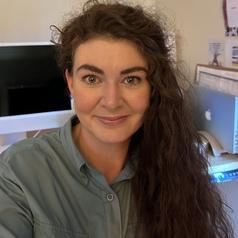
Charley Geddes
Research technician, CSIRO
Charley Geddes is a research technician at CSIRO and an honours student at CQU.
Less
Charlie Frowd
Professor of Forensic Psychology, University of Central Lancashire
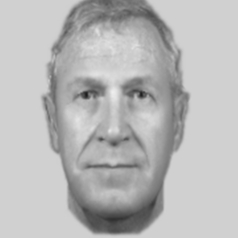
Charlie teaches on various courses within forensic psychology at University of Central Lancashire (UCLAN). He is the main lead for the award-winning EvoFIT composite system that is sold to police forces in the UK and overseas.
Using the EvoFIT system, witnesses choose from a selection of faces that bear a resemblance to an assailant. A composite image of the suspect is "evolved" over time.
Charlie's research focuses mainly on the construction and identification of these facial composite images. He supervises students at undergraduate and postgraduate level and has published over 70 peer-reviewed papers.
He is a Chartered Scientist, a Chartered Psychologist and an Associate Fellow of the British Psychological Society.
Less
Charlie Hunt
Assistant Professor of Political Science, Boise State University
Charlie received his bachelor's degree in political science from Brown University in 2011, and his PhD in 2019. He specializes in American politics, and more specifically in Congress, elections, and political representation. His first book, "Home Field Advantage: Roots, Reelection, and Representation in the Modern Congress" is now available at University of Michigan Press. Here is also the author of the Substack "You Are Here", which investigates the intersection of place and location with politics, poetry, and culture.
Less
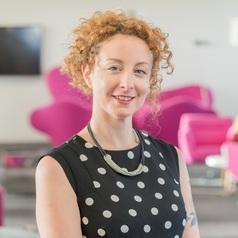
Charlie Pratley
Senior Lecturer in Museum Studies, Nottingham Trent University
Charlie is a Senior Lecturer in Museum Studies, specialising in knowledge exchange, community co-production and employability. On the MA in Museum and Heritage Development, Charlie leads modules in Purpose, Planning and Development and Working in Museums and Heritage. She is also responsible for student placements.
As a Teacher-Practitioner within NTU, Charlie is currently working with colleagues to develop impactful projects between communities, academia and creative industries. She is responsible for supporting knowledge exchange practice through her role on the Research and Innovation Committee and the Institute for Knowledge Exchange Conference committee.
Charlie currently has a Trent Institute of Teaching and Learning grant with a cross-disciplinary team of colleagues to develop a framework for inclusive curricula co-creation with students, a graduate and National Trust.
Charlie co-supervises PhD theses involving heritage practice elements, particularly knowledge exchange or co-production with communities.
Less
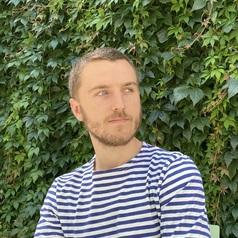
Charlie Taverner
Research fellow, history, Trinity College Dublin
Charlie Taverner is a historian of food and cities. He has a PhD from Birkbeck, University of London and currently works as a research fellow at Trinity College Dublin, as part of the ERC-funded FoodCult project, exploring the history of food and drink in early modern Ireland. His first book, Street Food: Hawkers and the History of London, was published by OUP in 2023.
Less
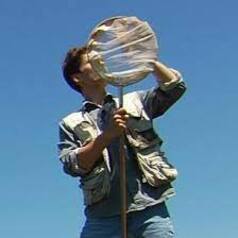
Charlie C. Nicholson
Researcher in Biology, Lund University
Charlie Nicholson is a community and landscape ecologist seeking to understand 1) how biodiverse communities provide ecosystem services and 2) how these species and services are affected by the way we manage and use land. To do this, he combines field-based experiments with economic valuations, ecological models, and theory to unpack the tradeoffs that characterize complex socio-ecological systems.
He earned a PhD with Taylor Ricketts at the University of Vermont where he investigated how agricultural landscapes and management affect ecosystem services and agricultural yields. He followed this with postdoctoral work with Neal Williams at the University of California Davis and with Maj Rundlöf at Lund University. He is now a researcher at Lund University working on pollination ecology, landscape ecotoxicology and ecological modeling in agricultural landscapes. Together with Jessica Knapp, he is part of a team that aims to develop pesticide risk assessment for bees at landscape scales.
Less
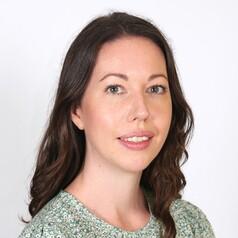
Charlotte Booth
Research Fellow in Quantitative Social Science, UCL
Charlotte completed her PhD in Experimental Psychology at the University of Oxford, where she studied adolescent mental health problems in relation to cognitive biases and negative life experiences. She now works at the UCL Centre for Longitudinal Studies, investigating a range of developmental and life course outcomes in relation to structural inequalities, using rich longitudinal data from multiple British birth cohort studies.
Less
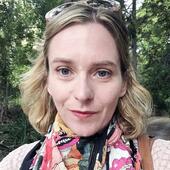
Charlotte Chalklen
Course Coordinator, Media Law and Ethics, University of South Australia
Less
Charlotte Codina
Lecturer, Orthoptics, University of Sheffield
I qualified as an Orthoptist in 2003 and have practised at hospitals in the UK including Moorfields Eye Hospital, Sheffield Teaching Hospitals Foundation Trust, Sheffield Childrens Hospital Trust in the UK and in the Kwazulu Natal region of South Africa. In 2008 I completed my PhD which explored the effects of profound congenital deafness on the visual system.
Since 2008 I have been a lecturer in Orthoptics and enjoy teaching a broad range of topics for the BMedSci Orthoptics degree and have completed the University of Sheffield certificate in learning and teaching, making me a fellow of the Higher Education Academy. In 2013 I took the position of Programme Leader for the MMedSci (Vision and Strabismus) course by distance learning and enjoy teaching and supporting students from all over the UK and around the world in this role.
My research interests include adaptations of and plasticity within the whole of the visual system from the cortex to the retina. My PhD explored the effects of profound congenital deafness and experience with British Sign Language on the visual system of children and adults.
So far I have investigated visual plasticity in response to profound deafness, autism, ADHD and visual vertigo. I am particularly interested in the development of peripheral vision and the development and management of amblyopia.
Less
Charlotte Coleman
Deputy Head of the Sheffield Institute of Social Sciences, Sheffield Hallam University
Dr Charlotte Coleman is a Forensic Psychologist whose main research focus is the prevention of youth violent crime, working on programmes that reduce the risk of becoming a victim or an offender. Charlotte has experience of working on both large and small evaluations using a range of methodologies. For example large scale YEF funded RCTs to reduce school exclusions and to improve familial relationships through therapeutic interventions, and small scale qualitative IPE evaluations of local domestic abuse programmes aimed at reducing controlling and coercive behaviours in young people. She has extensive experience in working with the police and other agencies, undertaking activity related to violence and youth crime/behaviour. For example, she sits on the Evidence Based Policing panel for South Yorkshire Police and is involved in ongoing research with police forces and Violence Reduction Units around anti-knife crime messaging, the impact of Covid 19 on policing domestic abuse, youth organisations around crime and reducing exploitation risk and recidivism, and working with schools to evaluate interventions designed to prevent offending behaviour.
Charlotte completed her PhD in Children’s Eyewitness Testimony and therefore has theoretical and practical experience of generating reliable information from children and young people in interviews and working with vulnerable children. She also has expertise and experience in research methods and analysis, both quantitative and qualitative, and draws upon both academic and professional experience of analysing and working with data.
Less
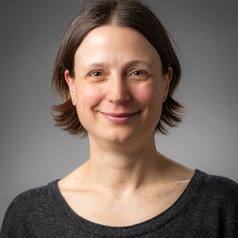
Charlotte Dodson
Senior Lecturer in Drug Discovery, Department of Life Sciences, University of Bath
I'm a biophysicist and Senior Lecturer in Drug Discovery at the University of Bath. A chemist and biologist, my research is interdisciplinary and my team works at the interface of the biological and physical sciences. We use the best technique we can find to answer our scientific question, and are currently using single molecule fluorescence spectroscopy to measure changes in the conformation of protein drug targets with the ultimate aim of using our results to improve drug discovery.
Less
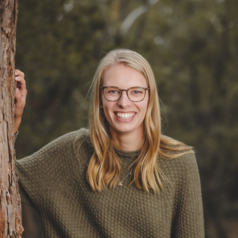
Charlotte Earl-Jones
PhD Candidate, University of Tasmania
Charlotte Earl-Jones is a social scientist researching the emotional significance of climate change for young people across Australia, and how this impacts their intergenerational relationships and experiences of their futures. She is a Westpac Future Leaders Scholar and current PhD Candidate at the University of Tasmania, in the School of Geography, Planning and Spatial Sciences.
Less
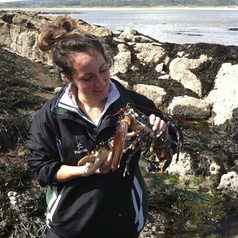
Charlotte Eve Davies
Charlotte's research focuses on the impacts of parasites and disease on marine populations. Since beginning her studies in 2008, Charlotte has traveled extensively, working with collaborators in the USA and Canada, gaining valuable experience in a range of disease detection methods and learning more about marine management strategies. Her doctorate at the Department of Bioscience, Swansea University (UK) focused on determining the health status of commercially important European crustacean populations; susceptibility to disease, the effects of invasive species and how fisheries closure can impact the health of crustaceans. Her current position at the Reef Systems Unit in Puerto Morelos, Mexico, investigates the effects of crustacean disease on coral reef health. She is passionate about the integration of fishermen and marine scientists for the betterment of fisheries management and a sustainable future.
Less
Charlotte Farewell
Research Assistant Professor of Public Health, University of Colorado Anschutz Medical Campus
Less
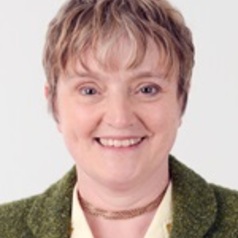
Charlotte Gascoigne
Principal Research Fellow, Cranfield University
Dr Charlotte Gascoigne is a Principal Research Fellow working on an ESRC-funded research project at Cranfield University about part-time working after the pandemic. She has over 20 years’ experience as a researcher and consultant in flexible working. Her PhD explored how managers and professionals craft their part-time working arrangements. In 2021, she completed a nine-month research project for the CIPD: ‘Flexible working – lessons from the pandemic’. Previously, as Director of Research and Consultancy at the Timewise Foundation, she led research on flexible and part-time working, concentrating particularly on how jobs at different levels are designed in sectors including retail, social care, construction, nursing and teaching, and creating impact through partnerships with employer organisations and government departments.
Less
Charlotte Gauthier
Étudiante au doctorat, Université du Québec à Chicoutimi (UQAC)
Je suis étudiante au doctorat et mes recherches portent sur les habitudes migratoires du flétan de l'Atlantique dans le golfe du Saint-Laurent. Mon approche consiste à utiliser les éléments chimiques présents dans leurs os d'oreille comme marqueurs de suivi, ce qui me permet de reconstituer l'histoire de la vie des flétans, y compris leurs mouvements et leur croissance. En plus de mes recherches, je participe à divers programmes de sensibilisation visant à éduquer et à informer le public sur divers projets et sujets scientifiques. J'ai une passion particulière pour l'utilisation de l'art comme moyen de communication de mes intérêts scientifiques, en captant l'attention des gens et en rendant des concepts complexes plus accessibles et plus engageants.
Less
Charlotte Hopkins
Senior Lecturer, School of Environmental Sciences, University of Hull
Dr Hopkins is a Senior Lecturer in Marine Conservation at the University of Hull. Trained in Conservation Science, she has a broad interest in wildlife conservation, with a particular focus on the marine environment. She is particularly interested in understanding human perceptions of nature and wildlife and how these can be incorporated into conservation, wildlife management and sustainable use. Her current research aims to understand how we can better protect and restore ecosystems as part of the REWILD research cluster. Dr Hopkins leads the Ocean Literacy research cluster at the University of Hull and is a core member of the British Ecological Society English Policy Group.
Less
Charlotte Johansson
PhD researcher, Neuropathology of Alzheimer's, Karolinska Institutet
Charlotte is a PhD student at Karolinska Institutet since 2017. Her research is focusing on the clinical, genetic and neuropathological nature of familial Alzheimer’s disease. She is also a member of the Caroline Graff Group of translational genetics of neurodegenerative diseases, which researches inherited forms of dementia, alongside other inherited neurodegenerative conditions. Charlotte is organizing and assessing participants in the Swedish Familial Alzheimer Disease study, which is a longitudinal prospective observational study that has been ongoing at Karolinska Institutet since the 1990´s.
Charlotte gained her degree in medicine in 2011 at Lund University and finished her specialization in geriatrics in 2018. She is currently working as a geriatrician at Karolinska University Hospital, Sweden.
Less
Charlotte Lassaline
PhD Student, University of Adelaide
Charlotte Lassaline is a PhD student focused on invasive species
Less
Charlotte Lloyd
Royal Society Dorothy Hodgkin Research Fellow and Lecturer in Environmental Chemistry, University of Bristol
My research is driven by a passion to address key questions surrounding the origins and fate of human and agricultural wastes, particularly in relation to their delivery from land to water bodies. This interest has grown out of my MSci degree in Geography, PhD and postdoctoral research in the fields of catchment hydrochemistry and molecular organic geochemistry.
My research to date has combined biogeochemical and hydrological approaches and has investigated the molecular composition, transformation and transport of organic matter by water and sediment flows. My Royal Society Dorothy Hodgkin Research Fellowship focuses on important emerging scientific questions concerning the fate and transport of plastic-derived compounds and plastic degradation products in agriculture. Using a combination of cutting-edge chemical analytical techniques in conjunction with data modelling provides exciting opportunities for the exploration of agriculture's impact on our environment.
More broadly I have research interests in the transport and fate of pollution, (including plastics and bioplastics) and nutrients in the terrestrial environment.
Less
Charlotte Markowitsch
PhD candidate in popular music studies, RMIT University
As a second year PhD candidate at RMIT University, Charlotte is researching the status of rock in Australian popular culture. While Charlotte’s work has previously investigated blues appropriations in contemporary popular rock music, her current research explores the rock canon and what positions rock to become understood and upheld as “the best of all time”. She is proud to be a member of the Music Industry Research Collective (MIRC).
Less
Charlotte Milne
PhD Candidate, Institute for Resources, Environment and Sustainability, University of British Columbia
Less
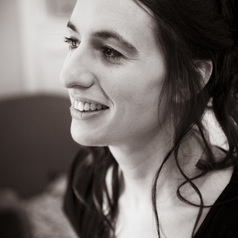
Charlotte O'Brien
Senior Lecturer in Law, University of York
I've been awarded an ESRC 'Future Research Leader' grant, with which I'm PI on the EU Rights Project, www.eurightsproject.org.uk - working with EU migrants, Citizens Advice Services, and other advice agencies around the country, providing an advice and advocacy service while conducting an ethnography on the administrative and legal problems encountered. I have documented the effects of the recent welfare changes targeting EU migrants.
The project was described by reviewers as 'groundbreaking', 'tremendously innovative', 'strikingly original' and said 'the applicant’s background makes her possibly the only person of her generation in a position to credibly offer the opportunity to develop this methodology in this kind of context: access to civil justice, in supranational contexts’.
Having volunteered and worked in Citizens Advice Bureaux for over thirteen years, and specialised in EU legal research for eleven years, I have practical as well as academic expertise in UK welfare law, EU law, (particularly EU social law - welfare, free movement, citizenship and equal treatment), human rights law, equality and non-discrimination law (especially disability), the rights of carers, and child poverty.
I've been appointed an 'analytical expert' on the EU Commission's Free Movement and Social Security Coordination network, producing reports and giving litigation advice and suggestions to the Commission. I am also joint cases editor for the Journal of Social Security Law.
My work has been published in key international journals, such as the European Law Review, the Common Market Law Review, the Maastricht Journal of International and Comparative Law, and the Journal of Social Welfare and Family Law.
I've communicated about my research through various media, including the Today Programme on Radio 4, BBC Inside Out, and BBC Breakfast. I have given various public talks, including at the YorkTalks 2016, https://youtu.be/Iz-dY3g-ZAI and in an Open Course lecture series on Law, Government and the Public, 2015.
My PhD in Law (Liverpool) was funded by the AHRC, and focussed on free movement, equal treatment and EU citizenship; during this I took part in two research projects on retirement migration funded by the Spanish Ministry for Employment & Social Affairs and Age Concern. These looked at the access to welfare services for post-retirement EU migrants, particularly UK nationals abroad. My LLM (Leeds) research involved study of the attempts to produce an EU constitution. My work is inherently interdisciplinary; my first degree was a BA in Social & Political Sciences, (Cambridge).
Less
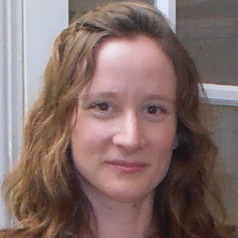
Charlotte Taylor
Professor of Discourse and Persuasion, University of Sussex
I am mainly interested in how people use language for persuasive purposes. My recent work has researched how emigration and immigration in the UK have been framed over the last 200 years and I am currently working on a project investigating the rhetorical uses of nostalgia.
Less
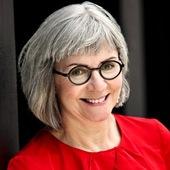
Charlotte Wildman
Senior Lecturer in Modern British History, University of Manchester
Dr Charlotte Wildman is Senior Lecturer in Modern British History within the School of Arts, Languages and Cultures at the University of Manchester. Dr Wildman’s research focuses on class, gender, and cities in twentieth century Britain and focuses on two key areas: 1. the experience of ‘deviant’ women and children and the role of the home and family life in facilitating non-violent offences. 2. providing new insights into the history of new North, especially Liverpool and Manchester and challenging entrenched stereotypes about these cities as sites of urban decay. My current research offers a new historical account of working-class experiences of social and economic inequalities through the first study of non-violent offences undertaken by women and children in urban neighbourhoods in England and N. Ireland, 1918-1979. It seeks to understand the range of ‘everyday’ minor illegal activities committed by women and children that became designated criminal through local and national processes.
Dr Wildman is also committed to engaging with public audiences and is on the Board of Trustees for Manchester Histories, a charity that works with disadvantaged communities and school children in Greater Manchester. She has also collaborated with the Pankhurst Centre and their heritage volunteers; delivered public workshops; and made numerous contributions to broadcast media including Sky News and BBC breakfast. She also works to engage policy makers and stakeholders with research including on topics such as poverty, benefit fraud, and women’s offending.
Less
Charlotte A. Kukowski
Postdoctoral Research Fellow in Climate Change Mitigation, University of Cambridge
Charlotte A. Kukowski is a Postdoctoral Research Associate at the Cambridge Social Decision-Making Lab (Department of Psychology) and the Conservation Science Group (Department of Zoology), University of Cambridge. Charlotte received a Ph.D. in Psychology from the University of Zurich (2022). Her current research investigates how physical and social environments facilitate and obstruct changes in high-carbon behaviours, particularly meat consumption. In adjacent lines of work, Charlotte examines links between the feasibility of behaviour change and policy support, climate and health inequality, climate misinformation, and self-regulation.
Less
Charlotte Jönsson Sparrenbom
Associate Professor, Geosciences, Lund University
Charlotte J. Sparrenbom is an associate professor and researcher at the Department of Geology, Lund University. She works with focus on groundwater and the occurrence, distribution and fate of organic and inorganic contaminants. Of particular interest are changes in groundwater quality over time, investigation methods, monitoring, remediation and protection of our water resources.
Less
Charmaine C. Williams
Dean and Professor of Social Work, University of Toronto
Professor Charmaine C. Williams joined the Factor-Inwentash Faculty of Social Work in 2002. On January 1, 2023, she was appointed Dean for a five-year term. Professor Williams is also holds the Sandra Rotman Chair in Social Work.
Dean Williams’ research focuses on health equity issues affecting various populations, including racial minority women, LGBTQ communities, and families affected by mental illness. As a social worker in the mental health care system, Dr. Williams worked with individuals, families and groups, and was also active in organizational change initiatives directed at increasing access for racial and ethnic minority populations. She has extensive experience developing and delivering professional education in the areas of anti-racism, cultural competence, mental health and addictions. Recent activities include serving on the expert panel for the Mental Health of Black Canadians Initiative at the Public Health Agency of Canada and serving on the Anti-Racism Advisory Panel that developed the Toronto Police Service’s race-based data collection policy. She is PI for the SSHRC funded project “United we stand, divided we falter: Advancing a family-centred agenda for research on caregiving.”
Prior to taking on the role of Dean, Williams was the Vice-Dean of Students at the School of Graduate Studies, University of Toronto. She has also held positions as the Anti-Racism and Cultural Diversity Officer (2003-2004), the Associate Dean Academic for Social Work (2009-2014), and the Provostial Advisor on Access Programs (2014-2015).
Less


- Market Data




