

 Menu
Menu

 Search

- News

- Economy

- Central Banks
- Investing
- Research
- Roundups
- Digital Currency
- Insights
- Technical Analysis
- Technology
- Business
- Law
- Health
- Nature
- Fintech
- Science
- Topic
- Opinions
- ©Econometrics LLC . All Rights Reserved.
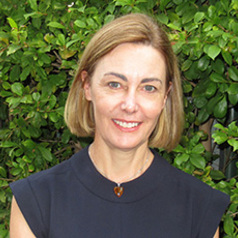
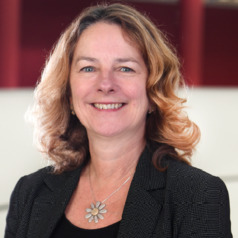
Carolyn Dunford
Reader in Occupational Therapy, Brunel University London
I am a Reader in Occupational Therapy at Brunel University London and have been an occupational therapist for 35 years, specialising in working with children/youth and their families. I have a varied clinical and academic background having worked in the NHS for many years as an occupational therapy clinician/researcher. Other roles include Head of Therapy and Research at The Children’s Trust, Charity and Senior Lecturer at York St John University.
My PhD was on outcomes and effectiveness of occupational therapy for children with developmental coordination disorder. My current research interests focus is on implementing evidence-based practice to promote the best outcomes for children and young people and families. I am the founder of the community of practice known as Mind the Gap supporting clinicians to deliver evidence based interventions and closing the research to practice gap.

Less 
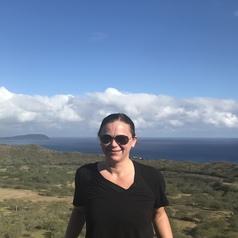
Carolyn Greene
Associate Professor, Criminology, Athabasca University
Dr. Carolyn Greene is an Associate Professor in the Criminal Justice Program at Athabasca University. She holds a Bachelor of Arts degree (Criminal Justice and Public Policy) from the University of Guelph, a Master of Arts degree (Criminology) from the University of Toronto and completed her Ph.D. (Criminology) at the University of Toronto.
Currently, her research is focussed on three SSHRC-funded studies examining immigrant perceptions of police in Canada; experiences of invasive policing practices in Toronto; and community perceptions of and experiences with safe consumption services in Edmonton, Calgary., and Lethbridge. Her research interests are broadly focused within policing, youth justice operations/policy, reintegration, and perceptions of and experiences with criminal justice institutions, including those who work within them. Dr. Greene's research has been published in national and international journals, including Crime and Delinquency, the International Journal of Drug Policy, the British Journal of Criminology, Feminist Criminology, and the Canadian Journal of Criminology and Criminal Justice.
Less

Carolyn James
Emeritus Professor in the School of Philosophical, Historical and International Studies, Monash University
I am an historian of late medieval and early modern Europe. My research has focused particularly on Italy and has included studies of the political, cultural and economic roles of women in mercantile settings during the fourteenth century and in the princely states of the Italian peninsula during the fifteenth and sixteenth centuries.
Less
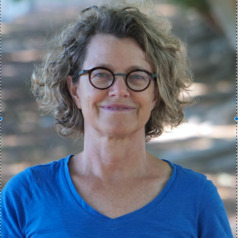
Carolyn Whitzman
Carolyn Whitzman is Professor in Urban Planning at the University of Melbourne. She is the lead researcher for Transforming Housing and lead editor of 'Melbourne: What Next? A discussion on creating a better future for Melbourne' (Research Monograph No. 1, Melbourne Sustainable Society Institute, University of Melbourne, 2014), 'Building Inclusive Cities: Women’s Safety and the Right to the City' (Earthscan, 2013), author of 'Suburb, Slum, Urban Village: Transformations in a Toronto Neighbourhood 1875-2002' (University of British Columbia Press, 2009) and 'The Handbook of Community Safety, Gender, and Violence Prevention: practical planning tools' (Earthscan, 2008), and the co-author of 'Safe Cities: guidelines for planning, design, and management' (Van Nostrand Reinhold, 1995). She has also published numerous peer-reviewed scholarly publications, book chapters, and reports on partnerships for social justice in the city, with particular emphasis on the supporting the rights of women, children and people with disabilities to access affordable housing, public transportation, social services, and public space.
Less
Carolyn Yule
Associate Professor of Sociology, University of Guelph
Carolyn Yule's research uses a combination of quantitative and qualitative methods to examine how life course events and processes shape stability and change in criminal behaviour. She also investigates how criminal court decisions shape the lives of criminal justice involved individuals.
Less
Carolyn Elizabeth Lister
Principal Scientist in Food and Health Information, Plant & Food Research Rangahau Ahumāra Kai
Less
Carolyn S. Burt
Convergence Research Coordinator, Department of Fish, Wildlife, and Conservation Biology, Colorado State University
I am the project coordinator for a Growing Convergence Research NSF award: A Novel Biodiversity approach for sustainable transformation of urban light. This research project tests the prediction that improved ecological forecasts coupled with community engagement will accelerate sustainability transformation using proliferation of artificial lights at night (ALAN) as a testbed system.
Less
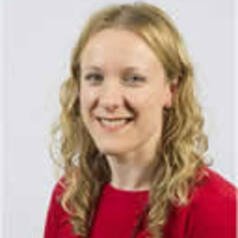
Caron Carter
Senior Lecturer in Chilhood and Early Years Education, Sheffield Hallam University
I am a researcher and teacher in the field of Early Childhood Education. Prior to joining Sheffield Hallam University in 2007, I was an Early Years Teacher in a Nursery Infant School and a Primary School for over ten years. Five of these years were as a Deputy Headteacher and one as an Acting Headteacher. During this time, I had leadership responsibilities including English and Inclusion. These experiences together with post-graduate study for the National Professional Qualification for Headship and an MA in Early Childhood Education from Sheffield University inspired me to apply to Sheffield Hallam University for a lectureship in 2007. In 2013 I completed my PhD under the supervision of Professor Cathy Nutbrown. My research interests focus on children's friendships. Much of my work has involved looking at ways to develop a listening culture for the voice of the child to be heard and providing opportunities for children to exercise their agency. A critical element of his activity is ensuring that my research impacts on school practice. I am currently researching how schools support children's friendships and also the impact of the Covid-19 Pandemic on well-being and friendships. I am also part of a team from Sheffield Hallam University researching for Save the Children on a project entitled 'Children's Communities'. This is looking at improving outcomes for children in specific areas including, school readiness, friendship, play, transitions. Previous roles include: Acting Headteacher in a Sheffield Infant School Deputy Headteacher in two Sheffield Nursery Infant Schools Assistant Headteacher in a Sheffield Primary School Class teacher in a Sheffield Primary School
Less
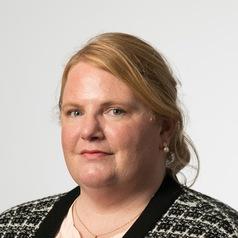
Caron Gentry
Professor Vice-Chancellor, Faculty of Arts, Design and Social Sciences, Northumbria University, Newcastle
Caron E. Gentry is the Pro Vice-Chancellor for the Faculty of Arts, Design, and Social Sciences at Northumbria University. Prior to joining Northumbria she was a professor in the School of International Relations at the University of St Andrews and served as Head of School.
Her main research area focuses on gender and terrorism. Her books include (with Laura Sjoberg) Mothers, Monsters, Whores (Zed 2007), (with Laura Sjoberg) Beyond Mothers, Monsters, Whores (Zed 2015), and Disordered Violence (Edinburgh University Press 2020). Her work is published in numerous journals and edited volumes.
Additionally, Professor Gentry works on feminist political theology, particularly on querying what feminist Christian realism can be in International Relations. Her books in this area include Offering Hospitality (University of Notre Dame Press 2013) and This American Moment (Oxford University Press 2018). She is currently looking at the meaning of hope and what it offers to current socio-political dilemmas.
Less
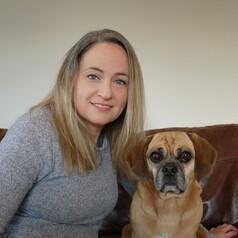
Carri Westgarth
Chair in Human-Animal Interaction, University of Liverpool
I am Professor of Human-Animal Interaction at the University of Liverpool in the Department of Livestock and One Health, School of Veterinary Science. I lead the Westgarth Anthrozoology Group and founded and lead the Merseyside Dog Safety Partnership. My research focuses on dog bite prevention, dog walking, canine obesity, canine ageing.
I am also a Full Member of the Association of Pet Behaviour Counsellors and occasionally teach dog training classes on the Wirral.
My PhD was conducted from 2005-2008 in the University of Liverpool Veterinary Epidemiology Group and was entitled "Contact between dogs, and between dogs and people".
Less
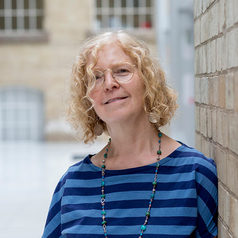
Carrie Paechter
Professor of Childhood, Youth and Family Life, Nottingham Trent University
Role
Carrie is the Director of the Nottingham Centre for Children, Young People and Families. Working with people in the School of Social Sciences and across NTU, she is seeking to devise new ways of working with local communities to improve people’s lives in Nottingham and beyond.
Career overview
Carrie began her career as a mathematics teacher and worked in various London comprehensive schools before moving to King’s College London to research interdisciplinary coursework. She subsequently taught at King’s and the Open University, before moving to Goldsmiths, University of London. At Goldsmiths her roles included being the inaugural Dean of Goldsmiths Graduate School and then Head of Educational Studies. She joined Nottingham Trent University in July 2017.
Research areas
Carrie’s research is focused around questions of identity and childhood. She is particularly interested in what it means to be a gendered, embodied child and how this is understood by children themselves.
Other research foci include: LGBTQI+ parented families and schools; spatiality and schooling; power/knowledge, gender and curriculum; ideas about legitimacy, especially within communities of practice; online learning in divorce and similar life events.
Less
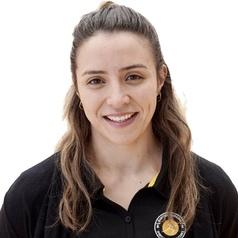
Carriera Joy Lamoureux
Master Student in Sport Management, Brock University
Carriera Lamoureux is the Director of Special Projects at the Manitoba Aboriginal Sports & Recreation Council (MASRC) in Winnipeg, and a current MA student in the Sport Management program at Brock University. With the MASRC, Carriera has the privilege of celebrating Indigenous sport excellence and is largely responsible for the education initiatives that respond to the TRC’s 87th Call to Action. Carriera is also the co-author of A History of Excellence; a book project designed to highlight and honour the contribution Indigenous peoples continue to make to the world of sport in Manitoba. In her free time, Carriera coaches a varsity girls basketball team at a local high school in Winnipeg, and is a national level basketball referee.
Less

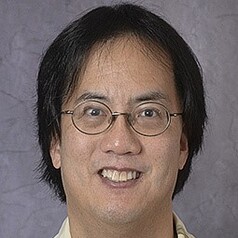
Cary Mock
Professor of Geography, University of South Carolina
Cary Mock is a climatologist with research interests in historical climatology and environments, synoptic climatology, and extreme weather events such as hurricanes, atmospheric rivers, and snowstorms. He is also interested on how historical data supplement high resolution paleoclimatology records for the past several centuries. His historical weather and climatology research covers most of North America and is particularly strong for the Southeast USA, the West Coast, and Utah. But his research has also expanded internationally and includes typhoons in East Asia, storms and sea ice in the Western Arctic, weather and climate of Belize and Bermuda, and Kona storms and hurricanes in Hawaii.
Less

Caryn Coatney
Lecturer, Journalism, University of Southern Queensland
Dr Caryn Coatney is a Journalism Lecturer at the University of Southern Queensland. She has been an investigative news journalist in Australia and internationally and worked in many fields of communication extensively. Dr Coatney has a PhD (Journalism), Master of Arts (Research and Coursework - Journalism), and Bachelor of Arts (Honours in both English Literature and History). Her journalism research has won global awards and has appeared in numerous journals and publications. She also published the book, John Curtin: How He Won Over The Media, after completing a Fellowship at the Australian Prime Ministers Centre in the Museum of Australian Democracy at Old Parliament House, Canberra.
Less
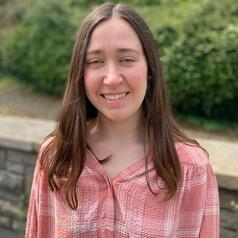
Casey Bryce
Senior Lecturer, School of Earth Sciences, University of Bristol
Casey Bryce is a geomicrobiologist and biogeochemist at the University of Bristol. She studies the role of microorganisms in the environment to better understand how they influence the Earth system. In particular she combines methods from geochemistry, microbiology and molecular ecology to understand microbial communities in peatlands. She studies how these microbial communities change during peatland disturbance, for example during thawing of permafrost, drainage or restoration. She uses this information to better constrain how changes in peatlands will impact greenhouse gas emissions, and to design strategies for monitoring and improving peatland recovery.
Less

Casey Fiesler
Associate Professor of Information Science, University of Colorado Boulder
Associate Professor Casey Fiesler researches and teaches in the areas of technology ethics, internet law and policy, and online communities.
At University of Colorado Boulder she is also a Fellow in the Silicon Flatirons Institute for Law, Technology, and Entrepreneurship and holds a courtesy appointment in Computer Science. Her work on technology ethics, ethics education, and broadening participation in computing has been funded by Mozilla's Responsible Computer Science Challenge, the Omidyar Network, and the National Science Foundation, including an NSF CAREER grant. Her research has also been covered everywhere from The New York Times to Teen Vogue, and she is a prolific public scholar who is passionate about educating the public about technology ethics and policy, whether it's in an op-ed or on TikTok (@professorcasey).
Fiesler holds a PhD from Georgia Tech in Human-Centered Computing and a JD from Vanderbilt University Law School.
Less
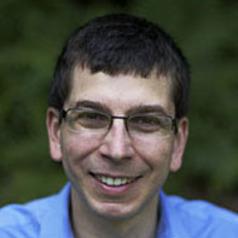
Casey Greene
Professor of Biomedical Informatics, University of Colorado Anschutz Medical Campus
Casey is the Chair of and a Professor in the Department of Biomedical Informatics and the founding Director of the Center for Health AI. His lab develops machine learning methods that integrate distinct large-scale datasets to extract the rich and intrinsic information embedded in such integrated data. This approach reveals underlying principles of an organism’s genetics, its environment, and its response to that environment. Extracting this key contextual information reveals where the data’s context doesn’t fit existing models and raises the questions that a complete collection of publicly available data indicates researchers should be asking. In addition to developing deep learning methods for extracting context, a core mission of his lab is bringing these capabilities into every molecular biology lab through open, transparent science conducted by a diverse team of researchers. Before starting the Integrative Genomics Lab in 2012, Casey earned his Ph.D. for his study of gene-gene interactions in the field of computational genetics from Dartmouth College in 2009 and moved to the Lewis-Sigler Institute for Integrative Genomics at Princeton University where he worked as a postdoctoral fellow from 2009-2012. The overarching theme of his work has been the development and evaluation of methods that acknowledge the emergent complexity of biological systems.
Less
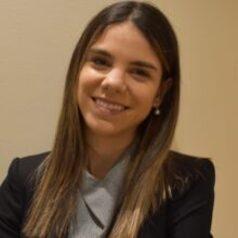
Casey Haining
Research Fellow, Australian Centre for Health Law Research, Queensland University of Technology
Casey is a research fellow at the Australian Centre for Health Law Research, Queensland University of Technology and the Melbourne School of Population and Global Health, University of Melbourne. She is an interdisciplinary researcher with qualifications in biomedicine, population health and law. She has a strong research interest in all aspects of health law. She is particularly interested in end of life, abortion, genetics and conscientious objection.
Less
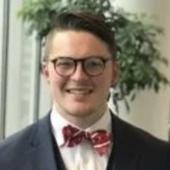
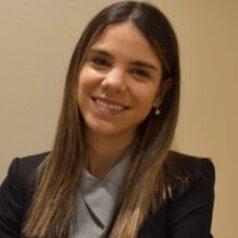
Casey Michelle Haining
Research Fellow, Australian Centre for Health Law Research, Queensland University of Technology
Casey is a research fellow at the Australian Centre for Health Law Research, Queensland University of Technology and the Melbourne School of Population and Global Health, University of Melbourne. She is an interdisciplinary researcher with qualifications in biomedicine, population health and law. She has a strong research interest in all aspects of health law. She is particularly interested in end of life, abortion, genetics and conscientious objection.
Less

Casey W. Adrian
Research Support Specialist, Bronfenbrenner Center for Translational Research, Cornell University
Less

Caspar Donnison
Research Associate, School of Biological Sciences, University of Southampton
I am an environmental scientist and economist at the University of California, Davis, and the University of Southampton, United Kingdom. My research
focuses on the climate mitigation role of biomass resources in substituting fossil fuels and in sequestering carbon in long-term storage.
I hold a PhD from the University of Southampton in the application of environmental science and environmental economics to the role of bioenergy in industrial decarbonisation, specifically of the novel technology bioenergy with carbon capture and storage (BECCS). I am a member of the Industrial Decarbonisation Research & Innovation Centre (IDRIC), and explore the land-use scenarios and sustainability of using bioenergy to achieve industrial decarbonisation.
Less
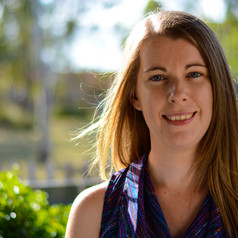
Cassandra Cross
Cassandra is currently a Senior Lecturer with the School of Justice, Queensland University of Technology. She joined QUT in 2012, from the Queensland Police Service, where she worked in research and policy roles. Since 2008, Cassandra has focused her research on various aspects of online fraud, including the policing of online fraud, the prevention of online fraud, and the need to support victims who experience online fraud. In 2011, she was awarded the Donald Mackay Churchill Fellowship, which enabled her to travel to the UK, USA and Canada to examine how these jurisdictions respond to online fraud.
She is has just completed a national project with colleagues aimed at improving the reporting experiences and support services available to online fraud victims. This project interviewed 80 victims of online fraud across Australia who reported losses over $10K to the Australian Competition and Consumer Commission. The findings from this research are due for release shortly.
Cassandra contributes to Project Sunbird, which is a collaborative project targeting online fraud between the West Australian Police and Department of Commerce. She is also the author of the training package entitled "Seniors Online Security", which was developed by the Carindale Police Citizens Youth Club, and is a regular speaker at seniors groups across Australia, educating them about online security. Recently, she was elected to the Board of Directors, for the Queensland Police Citizens Youth Welfare Association (QPCYWA).
Less
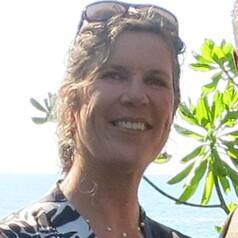
Cassandra Rigby
Adjunct Senior Research Fellow, James Cook University
Cassie has extensive experience in shark fisheries, research, conservation and management (>25 years) with a focus in recent years on CITES, IUCN Red List assessments, and global and Pacific shark conservation. Cassie is currently the IUCN SSC Shark Specialist Group SSG Red List Authority Coordinator, co-ordinating and drafting global Red List assessments. Since her PhD, on deepwater chondrichthyans life history, Cassie has been actively engaged in shark conservation issues, contributing to ecological risk assessments of South Pacific and South Indian Ocean deepwater sharks to high seas fishing, compiling risk summaries of all Australian sharks and rays, developing WWF tools to improve shark management (the Rapid Assessment Toolkit and the Shark and Ray MPA Guide), and producing a Preliminary Recovery Plan for Scalloped Hammerheads in the Indian Ocean. Cassie has trained Pacific countries and Indonesia to undertake Non-Detriment Findings (NDF) of CITES listed sharks and rays, and has prepared NDFs for Australian recently listed CITES species which were listed at the 2022 CITES Conference of the Parties, where Cassie was the SSG CITES representative providing scientific advice on carcharhinid, guitarfishes and hammerhead listing proposals to governments, NGOs and Parties.
Less
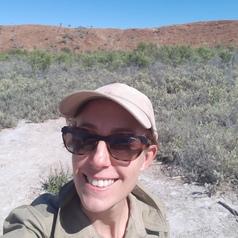
Cassandra Rowe
Research Fellow, James Cook University
Cassandra is a palaeoecologist, with a background in botany and geography, specialising in the use of pollen and charcoal to reconstruct past environments. Her research interests include the action of climate change and fire dynamics on ecosystem variability, and human-landscape relationships on vegetation pattern, with emphasis on tropical savanna environments, mangrove and island flora. Cassandra has wide experience working across northern Australia, extending into southern lowland Papua New Guinea.
Less
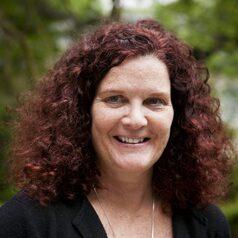
Cassandra Runyon
Professor of Geology & Environmental Geosciences, College of Charleston
Ph.D. - University of Hawai'i at Manoa
M.S. - Southern Illinois University - Carbondale
B.S. - SUNY Fredonia
A.S. - Corning Community College
I have been at the College of Charleston since 1995.
I am also the Director for NASA South Carolina Space Grant and EPSCoR programs. And the current Vice Chair for the National Council of Space Grant Directors.
Less
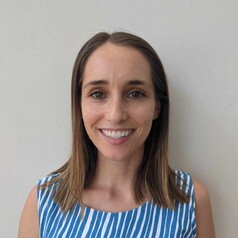
Cassandra Wright
Senior Research Fellow in Alcohol and other Drugs, Menzies School of Health Research
Dr Cassandra Wright is a public health researcher, with qualifications in health promotion, public health and epidemiology. She holds an Australian Research Council Discovery Early Career Research Award on alcohol policy in the Northern Territory. Her work at Menzies is specifically focused on priority populations, including Aboriginal and Torres Strait Islander people. She is a Senior Research Fellow on the LEARNT study, which examines the impacts of Banned Drinker Register, Minimum Unit Pricing and other policy interventions in the Northern Territory.
Prior to her appointment at Menzies, she worked at the Centre for Alcohol Policy Research in Melbourne as a Research Fellow. She completed her PhD at the Burnet Institute (enrolled through Monash University). Her PhD focused on interventions to reduce alcohol consumption among young people.
Dr Wright has research expertise in alcohol; young people’s health; digital interventions; sexual health and health promotion programs. She uses mixed research methods and frequently uses participatory approaches to research and developing health promotion activities. She is an experienced evaluator and has led evaluations on programs ranging from local-level prevention activities to state-wide health programs.
She is the Northern Territory Representative for the Australasian Professional Society for Alcohol and other Drugs (APSAD).
Less
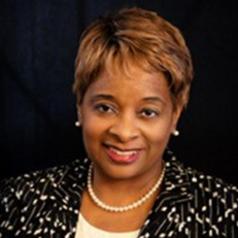
Cassandra Jones Havard
Professor of Law, University of South Carolina
Cassandra Jones Havard joined South Carolina Law as a professor of law in Fall 2022 after serving on the faculties of the Temple University Beasley School of Law and the University of Baltimore School of Law. She teaches courses in banking, financial services regulation, entrepreneurship, venture capital financing, corporate, and commercial law. Her current scholarship focuses on the intersection of financial services regulation, systemic risk, and consumer welfare and race. She has written numerous articles and book chapters on these topics and others.
At the University of Baltimore, Jones Havard was the director of the Charles Hamilton Houston Scholars Program, a pipeline program for undergraduates who are members of under-represented groups in the legal profession. She received the Saul Ewing Excellence in Transactional Teaching Award in 2015 and 2020; a University of Iowa Innovation, Business, & Law Prize in 2020; and she was recognized as one of Maryland’s Top 100 Women in 2018.
Jones Havard is a graduate of Bennett College. She earned the juris doctorate degree at the University of Pennsylvania School of Law, where she was editor-in-chief of the Black Law Journal. After law school, Jones Havard clerked for the late Hon. A. Leon Higginbotham on the U. S. Court of Appeals for the Third Circuit and served as a counsel for the Federal Deposit Insurance Corporation, a trial attorney for the U.S. Department of Justice, and an attorney-advisor for the U.S. Department of Transportation.
Less
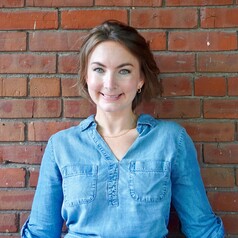
Cassia Johnson
PhD Candidate, Earth and Environmental Sciences, University of Exeter
Cassia is an interdisciplinary geologist and social scientist; or a 'social earth scientist'. She currently works as a policy analyst, and is a doctoral candidate (University of Exeter), focusing on the intersections of small-scale mining, innovation, and sustainability, using qualitative research methodologies. Prior to her PhD, she spent two years as a Quaternary geologist working with public and private sectors in surficial mapping, mineral exploration, geohazards, water resources, and policy review. She has a decade of multi-faceted experience in mineral exploration. She is an accredited geologist (P.Geo) holding a Bachelor of Science (High Hons) (University of Saskatchewan), and a Masters of Earth and Environmental Science (University of Waterloo). Cassia was born and raised on Treaties 4 and 6 in Saskatchewan, and is based out of Victoria, British Columbia; the unceded territories of the Lkwungen (Songhees and Esquimalt) Peoples. Cassia is a lover of nature, and spends her spare time surfing, skiing, running, and taking it all in with adventure blogging and photography.
Less


- Market Data




