

 Menu
Menu

 Search

- News

- Economy

- Central Banks
- Investing
- Research
- Roundups
- Digital Currency
- Insights
- Technical Analysis
- Technology
- Business
- Law
- Health
- Nature
- Fintech
- Science
- Topic
- Opinions
- ©Econometrics LLC . All Rights Reserved.
Sean Gouglas
Professor, Digital Humanities, University of Alberta
Sean Gouglas is a Professor in Digital Humanities in the Faculty of Arts. Dr. Gouglas' research focuses on the relationship between universities and the computer game industry in Canada, especially as it relates to curriculum and technology transfer.

Less 
Sean Hannah
Chair in Business Ethics, Professor of Management, Wake Forest University School of Business, Wake Forest University
Less
Sean Irving
Senior Research Officer, University of Essex
Dr Sean Irving works on the intellectual history of ‘competition’. He is particularly interested in market competition, having published work on FA Hayek, ordoliberalism, and the Virginia School. He is exploring how the ranking and rating of companies and states has enabled competition to become a principle of global order.
Less
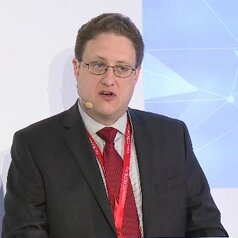
Sean Lawson
Professor, Communication, University of Utah
Sean Lawson is Professor of Communication and Director of the Edna Anderson-Taylor Communication Institute at the University of Utah. His research focuses on the relationships among science, technology, and security. In particular, he focuses on the intersections of national security and military thought with new media, information, and communication technologies (ICTs).
He is the author of four books. Most recently, he is co-author with Robert W. Gehl of Social Engineering: How Crowdmasters, Phreaks, Hackers, and Trolls Created a New Form of Manipulative Communication (MIT Press, 2022). He is also author of the book, Cybersecurity Discourse in the United States: Cyber-Doom Rhetoric and Beyond (Routledge, 2020). He is also the author of Nonlinear Science and Warfare: Chaos, Complexity, and the U.S. Military in the Information Age (Routledge, 2014). He is co-author (with Professor Marouf Hasian and Dr. Megan McFarlane) of The Rhetorical Invention of America’s National Security State (Lexington, 2015).
Less
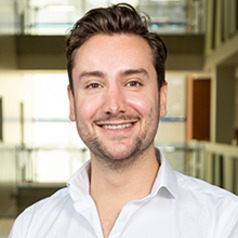
Sean Mangion
PhD Candidate, University of South Australia
Sean Mangion is a PhD candidate at the University of South Australia, researching in the field of skin therapeutics. He is also a medical student at the University of Sydney.
https://www.researchgate.net/profile/Sean-Mangion
Less
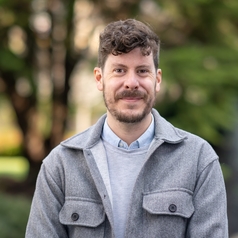
Sean Mulcahy
Research Officer, La Trobe University
Sean Mulcahy is a Research Officer at the Australian Research Centre in Sex, Health and Society.
Previously, he worked on research projects addressing parliamentary scrutiny, native title, legal history and LGBTIQA+ rights at the Victorian Ombudsman, the Australian Law Reform Commission, Melbourne Law School, First Nations Legal and Research Services, Victoria Law School and the Victorian Local Governance Association.
Sean completed a joint PhD in the School of Law at the University of Warwick and the Centre for Theatre and Performance at Monash University, where he also held appointment as a teaching associate in Performance Studies. His doctoral research examined the performance of law through a study of courts and law from the perspective of contemporary theatre and performance research and practice. His work has been published in the Canadian Journal of Law and Society, Law and Humanities and Law Text Culture. He also produces the Performing Law podcast: soundcloud.com/performinglaw
Less
Sean O'Byrne
Associate Professor, Deputy Head of School (Research), School of Engineering and Information Technology, UNSW Canberra, UNSW Sydney
Sean O'Byrne is an Associate Professor and Deputy Head of School (Research) in the UNSW Canberra School of Engineering and Information Technology.
Research Experience
Hypersonics and re-entry physics
Sensors for hypersonic flight testing
Laser spectroscopy
Tuneable diode laser absorption spectroscopy
Laser-induced fluorescence
Laser-enhanced ignition in high-speed diffusive flames
Laser-based sensors for emissions monitoring, engine diagnostics
Thermal and chemical nonequilibrium in hypersonic flows
Aviation safety - laser pointer attacks on pilots
Teaching Experience
Research-led, project-based teaching
Courses taught include - Hypersonics, Microcontroller-based instrumentation
Additional Experience
NRC Postdoctoral fellow
NASA Langley Reserach Center, Hampton, VA, USA (2002-2003)
New South Global Postdoctoral Fellow, UNSW@ADFA, Canberra Australia (2004-2006)
Consulting Interests
Industrial application of laser-based diagnostics
Gaeous mixing and pollutant dispersion measurement
Hypersonic technologies and their applications
Less
Sean O'Donnell
Professor of Biodiversity, Earth and Environmental Science and Biology, Drexel University
Sean O’Donnell has been teaching and doing research at the university level since 1996. His current research focuses on relating brain evolution and brain plasticity to ecology and behavior; evolution and development of animal thermal physiology; complex social and ecological group interactions; and the evolution of body shape and size. His study subjects include diverse social insects and arthropods (bees, ants, wasps, termites, and social spiders), and Neotropical birds. He collects data mainly in the Neotropics, with additional field work in Israel. Sean’s teaching interests span ecology, evolution and animal behavior, including tropical field courses. He regularly works as an expert science consultant with natural history film crews on location.
Less
Sean Prager
Associate Professor and Entomologist, University of Saskatchewan
My research interests are in the broad topic of insect ecology. Within that context, I conduct both fundamental and applied research on a variety of arthropod taxa. My primary fundamental interests are in the ecology and evolution of adaptive traits. I am particularly curious about traits that are associated with choices. This research has examined topics such as social polymorphisms, oviposition behaviors, mate choice, and host choice of parasitioids and herbivores. My applied research generally focuses on ecologically sustainable and sound methods of managing insect pests, especially disease vectors. In that context, I often focus on implications for Integrated Pest Management. Ideally, I strive to combine my two lines of inquiry and apply knowledge of ecological traits to develop management strategies.
Less
Sean Tucker
Professor, Faculty of Business Administration, University of Regina
Sean Tucker’s primary area of research is occupational health and safety. Current projects focus on change in young worker safety behaviours across time, the influence of executive leadership on frontline employee safety behaviours and injuries, and predictors of young worker injury under reporting. His other research interests relate to industrial relations, specifically employer responses to unionization and labour law reform in Canada.
Less
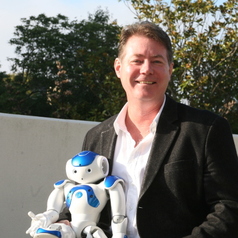
Sean Welsh
Professionally, I spent 17 years working in software engineering for organisations such as British Telecom, Telstra Australia, Fitch Ratings, James Cook University and Lumata. Academically, I have recently returned to university to do a doctoral thesis on robot ethics. The working title is "Moral Code: Programming the Ethical Robot." To date, I have given 3 conference papers on programming ethics into robots.
Less
Sean J Gammon
Reader in Leisure and Tourism Management, University of Central Lancashire
Dr Sean Gammon has been writing and researching in sport tourism for twenty-five years; writing and managing the first undergraduate degree programme on the subject. Sean’s research interests mostly focus on sport tourist experiences, though more recently he has been exploring the breadth and significance of sports heritage in generating tourism. In addition to his work in sport tourism, he continues to contribute to the field of leisure studies, primarily focussing on the health-giving properties of leisure states of mind, as well as the use of leisure in education. Sean also supervises PhD and DBA programmes on numerous topics connected to leisure, heritage, leadership, sport and tourism.
Less
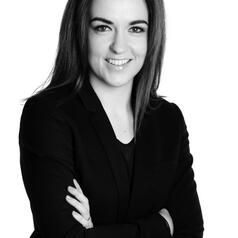
Seána Glennon
Doctoral Fellow, Constitutional Law, L’Université d’Ottawa/University of Ottawa
Seána is a doctoral candidate at the Sutherland School of Law, University College Dublin, Ireland, researching in the areas of constitutional law and deliberative democracy. Her doctoral thesis, submitted in December 2023, focuses on the role of citizen deliberation in democratic processes, and examines the impact of the Irish Citizens’ Assembly on the landmark reform of Ireland’s abortion law.
Seána is a recipient of the 2019 UCD Sutherland School of Law doctoral scholarship. She is a graduate of Trinity College, Dublin (LL.B) and the University of Toronto, Canada (LL.M), and held a visiting fellowship at Osgoode Hall Law School, York University, Toronto from 2022-2023. Prior to embarking on an academic career, Seána practised as a lawyer in a large international law firm in Dublin, specialising in public and administrative law. She is qualified as a solicitor in Ireland, England and Wales.
Seána is currently a Fellow at the University of Ottawa Public Law Centre, where she will commence her postdoctoral fellowship this year.
Less
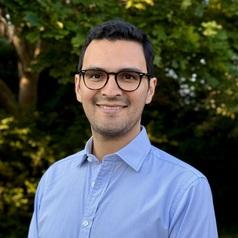
Sebastian Bonilla
Associate Professor of Materials, University of Oxford
Sebastian is an engineer and researcher with a background in Electrical and Electronics Engineering from Universidad de los Andes, Colombia. His career includes internships at CERN and Asylum Research, an MPhil in Micro and Nanotechnology from the University of Cambridge, and a Doctorate in Materials Science at Oxford, focusing on silicon solar cell technology. Postdoctoral work, supported by fellowships like the EPSRC and the Royal Academy of Engineering, contributed to the field of silicon photovoltaics. His research on nanolayer electronic materials has impacted solar cell efficiency globally.
As an Associate Professor of Materials at Oxford, with a Tutorial Fellowship at St Anne's College, Sebastian works on electronic interface materials for solar photovoltaic and optoelectronic devices. He leads the Interface and Electronic Materials Laboratory, securing over £4.8m in funding for research that links academic and industrial applications. His work, recognized for its impact, has been featured in journals and PV-Magazine.com and earned the Philip Leverhulme Prize in Engineering. As a Europe Fellow at the International Strategy Forum by Schmidt Futures, Sebastian contributes to discussions on sustainable energy and technology.
https://interface.materials.ox.ac.uk/
Less
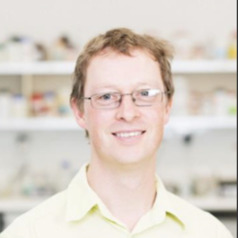
Sebastian Furness
ARC Future Fellow, School of Biomedical Sciences, The University of Queensland
Sebastian is from Adelaide and received his BSc(Hons) and PhD. from the University of Adelaide, where he worked on the Aryl Hydrocarbon receptor in the lab of Murray Whitelaw. He then did postdoctoral research on haematopoitic stem cell differentiation in Kelly McNagny’s lab at the Biomedical Research Centre at the University of British Columbia before joining Patrick Sexton to work on G protein-coupled receptors at Monash University .
Sebastian is now an ARC Future Fellow developing his own research program in the School of Biomedical Sciences at the University of Queensland. He remains an adjunct member of MIPS DDB as well as CCeMMP.
Sebastian has honours and PhD positions for motivated students who have a strong desire to assume ownership of a project and work independently.
Less
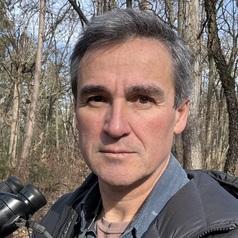
Sebastian Irazuzta
PhD candidate, Biology, McMaster University
I am a doctoral student working on native bee diversity, ecology, and restoration. My main focus has been on bee assemblages of old field sites and a restored tallgrass prairie at McMaster university. Over three years I completed the first long term survey of the Hamilton bee fauna. My statistical approach using Hill numbers provides a robust and statistically powerful method of assessing and comparing the many facets of diversity for species rich communities.
Less
Sebastián Mauro
Associate professor, Universidad de Buenos Aires
Sebastián Mauro is an Associate Researcher at the National Research Council (CONICET) and an Associate Professor at the University of Buenos Aires (UBA), Argentina. He holds a PhD on Social Sciences from University of Buenos Aires. Sebastián Mauro works in the field of political sociology, and his research interests include subnational politics, multi-level party organization and social mobilization.
Less
Sebastian Messer
Senior Lecturer in Architecture, Northumbria University, Newcastle
Sebastian studied at the Mackintosh School of Architecture, Glasgow and at the Bartlett, University College London graduating in 1998. After completing a Diploma in Professional Practice and Management at the University of Newcastle, he registered as an Architect in March 2000.
Following graduation, Sebastian was employed by John Potter Architect in Newcastle upon Tyne, a practice specialising in Expert Witness and Litigation services, Building Pathology and in research and development consultancy. His projects included designing, supervising and filming of a research project into airtight construction at the Building Research Establishment (BRE), Garston, for DuPont de Nemours Buildings Products Division.
In April 2004 Sebastian joined Ian Belsham Associates Limited, a commercial architecture practice based in Gateshead, Tyne and Wear, becoming an Associate in July 2006. He was project architect for a variety of projects ranging from a contemporary extension to a Grade II listed folly, fit-outs of premises for Anderson & Garland auctioneers and Tyne Tees TV reception, to speculative residential and office developments.
In 2005, Sebastian co-founded studioMWM which undertake art projects and architectural competitions between 2005 and 2010.
Prior to joining Northumbria University full-time, he was a visiting lecturer on the undergraduate Architecture courses at Northumbria University and the University of Newcastle. Between 2000 and 2002 he tutored part-time on the Architecture degree course at the University of Central England, Birmingham and from 2002 to 2003 at the University of Newcastle, whilst working in practice. Since 2006 Sebastian has also tutored a student undertaking the RIBA Examinations in Architecture for Office-based Candidates administered by Oxford Brookes University who was one of only two of the twenty students in his cohort to complete and pass the Part 1 Examination in May 2011.
In January 2010, with Carol Botton, Director of Northern Architecture, and Matthew Margetts, a Director at +3 Architecture, Sebastian began a project to help Architecture graduates who were struggling to find suitable employment in the region after graduating. Since starting, the G.R.A.D programme has undertaken a number of ‘live’ and self-instigated projects, as well as offering mentoring to the participants. Of the initial group, who had all been unemployed for over 6 months before joining the G.R.A.D project, 80% found employment in Architectural practices.
Less

Sebastian Oliver
Lecturer in Digital & Data Driven Marketing, University of Southampton
Dr. Sebastian Oliver is a Lecturer in the Department of Digital & Data Driven Marketing at the University of Southampton Business School. Sebastian’s research chiefly focuses on understanding how different brand practices, marketing and advertising strategies, and new technologies used within digital environments (e.g., e-commerce, social media, etc.) can influence consumer perceptions and their behaviour.
Less
Sebastian Pfautsch
Research Theme Fellow - Environment and Sustainability, Western Sydney University
Dr Sebastian Pfautsch is a Senior Research Fellow at Western Sydney University. In 2007, Sebastian received his PhD (summa cum laude) in forest ecosystem science from the University of Freiburg, Germany. In his research he investigates the effects of global change and extreme climate evens on plant and ecosystem functioning. In his role as Research Theme Fellow he applies his knowledge to urban ecosystems to reveal the potential of trees to mitigate effects of global warming. Sebastian uses his research to inform government agencies, politicians, industry and the public how to ‘future-proof’ today’s management of urban green infrastructure.
Less
Sebastian Schornack
Senior research group leader in the Enabling Nutrient Symbioses in Agriculture (ENSA) project, University of Cambridge
Sebastian Schornack is a Senior Group Leader at the Sainsbury Laboratory, Cambridge University (SLCU) and with the Enabling Nutrient Symbioses in Agriculture (ENSA) project. Sebastian's research aims at the elucidation of plant and microbial molecular mechanisms underlying the colonisation of plants by filamentous pathogens and symbiotic fungi. His team has adopted and become experts in diverse plant systems from bryophytes to angiosperms. This enables them to pursue comparative and evolutionary approaches. Their work has provided novel insights into plant processes supporting and limiting plant-microbe interactions, providing inroads for crop protection and crop improvement.
Less
Sebastian Stockmaier
Assistant Professor of Ecology and Evolutionary Biology, University of Tennessee
I am interested in the intersection of behavioral and disease ecology. More specifically, how animals change their behavior in response to infection and how these changes affect them and others around them.
Less
Sebastian Walsh
NIHR Doctoral Fellow in Public Health, University of Cambridge
I am an NIHR doctoral fellow (2022-25), researching population-level approaches to dementia risk reduction. During my PhD I will be using mixed methods, including quantitative analysis, qualitative interviewing, policy analysis, and systematic reviewing. My background is as an applied public health academic, and I have been training as a public health specialty registrar in the East of England region since 2018. I qualified from Keele Medical School in 2015, and passed an MPhil in Public Health at the University of Cambridge in 2018-19 with distinction.
Less
Sebastian Wieczorek
Professor (Chair) and Head of Applied Mathematics, University College Cork
Sebastian M. Wieczorek received his MSc degree in Theoretical Physics from Adam Mickiewicz University in Poznan, Poland, in 1998, and his PhD degree in Mathematical Physics from the Vrije Universiteit Amsterdam, The Netherlands, in 2002. Following his PhD, he worked as a Researcher at Sandia National Laboratories in Albuquerque, New Mexico, USA, for the Department of Energy and the Lockheed Martin Corporation. He was then appointed Lecturer in Mathematics at the University of Exeter, UK, in June 2006, promoted to Senior Lecturer in May 2010, and to Associate Professor in February 2014. In August 2014, Sebastian took the position of Professor (Chair) of Applied Mathematics and Head of Applied Mathematics at University College Cork.
Professor Sebastian Wieczorek specialises in Applied Nonlinear Dynamics and Bifurcation Theory or, in other words, in mathematical theory of instability. He develops mathematical concepts and techniques for physical problems including:
Nonlinear dynamics of semiconductor laser systems.
Tipping Points (Critical Transitions) in the climate and ecosystems.
Instabilities in the brain (e.g. seizure dynamics).
Stability of healthcare systems.
Nonlinear dynamics of evolutionary games.
Less
Sebastian Dohm-Hansen Allard
PhD Candidate, Anatomy and Neuroscience, University College Cork
Sebastian Dohm-Hansen is a PhD student in the Department of Anatomy and Neuroscience, University College Cork. He holds BSc’s in Psychology and Molecular Biology from Lund University, Sweden, and a MSc in Neuroscience from King’s College London, UK. Throughout his time in academia, Sebastian has specialized in the science of memory, adult neurogenesis, psychiatric genetics, aging, and exercise. His main interest lies in bioinformatics and data science. Prior to all of this, he dabbled in music.
Less

Sebastian Mora Hernandez
Research Associate in Exercise Oncology & Cancer Rehabilitation Specialist, University of Hull
I have a strong interest in exercise physiology and using it as a medicine. This includes my current work in Exercise Oncology looking at how exercise can modulate cancer survival outcomes and quality of life. I am also passionate about enhancing sports performance and maximizing health through a holistic approach involving physiology, nutrition and psychology.
Less
Sebastian Porsdam Mann
Assistant Professor, Center for Advanced Studies in Bioscience Innovation Law, University of Copenhagen
Less
Seda Erdem
Lecturer in Economics, University of Stirling
Seda Erdem is a lecturer in Economics at the University of Stirling. Her research interests broadly include applied microeconomics, public health economics, behavioural economics and food and resource economics. More specifically, she is interested in consumer choice behaviour, decision-making and eliciting preferences in the fields of health, agri-food and environment.
Less

Sedzani Musundwa
Senior Lecturer in Financial Accounting, University of South Africa
Professional - CA(SA)
Academic - PhD Candidate in Accounting Education (Specializing in diversity studies)
Less
Seema Arora-Jonsson
Professor, Swedish University of Agricultural Sciences
Professor in rural development and chair for rural development in the global north. I work with questions of rural transformations and environmental politics and governance. Feminist post- and decolonial thinking is central in my work as well as collaborative methodologies in working with people in rural areas.
Less
Seena Fazel
Professor of Forensic Psychiatry, University of Oxford
Professor Fazel’s research focuses on the relationship between mental illness and violent crime, the mental health of prisoners, and violence risk assessment.
He was the expert forensic psychiatrist appointed by the UN-sponsored Khmer Rouge Tribunal to assess the fitness to plead and stand trial of the defendants in Case 002.
His clinical work includes sessions for Oxford Health NHS Foundation Trust as a visiting psychiatrist at a local prison.
Less


- Market Data




