


 Urban studies: Doing research when every city is different
  US Gas Market Poised for Supercycle: Bernstein Analysts
  UBS Projects Mixed Market Outlook for 2025 Amid Trump Policy Uncertainty
  Gold Prices Slide as Rate Cut Prospects Diminish; Copper Gains on China Stimulus Hopes
  U.S. Treasury Yields Expected to Decline Amid Cooling Economic Pressures
  Geopolitical Shocks That Could Reshape Financial Markets in 2025
  Lithium Market Poised for Recovery Amid Supply Cuts and Rising Demand
  Energy Sector Outlook 2025: AI's Role and Market Dynamics
  Bank of America Posts Strong Q4 2024 Results, Shares Rise
  Trump’s "Shock and Awe" Agenda: Executive Orders from Day One
  UBS Predicts Potential Fed Rate Cut Amid Strong US Economic Data
  Global Markets React to Strong U.S. Jobs Data and Rising Yields
  Oil Prices Dip Slightly Amid Focus on Russian Sanctions and U.S. Inflation Data
  Moldova Criticizes Russia Amid Transdniestria Energy Crisis
  U.S. Banks Report Strong Q4 Profits Amid Investment Banking Surge
  Goldman Predicts 50% Odds of 10% U.S. Tariff on Copper by Q1 Close


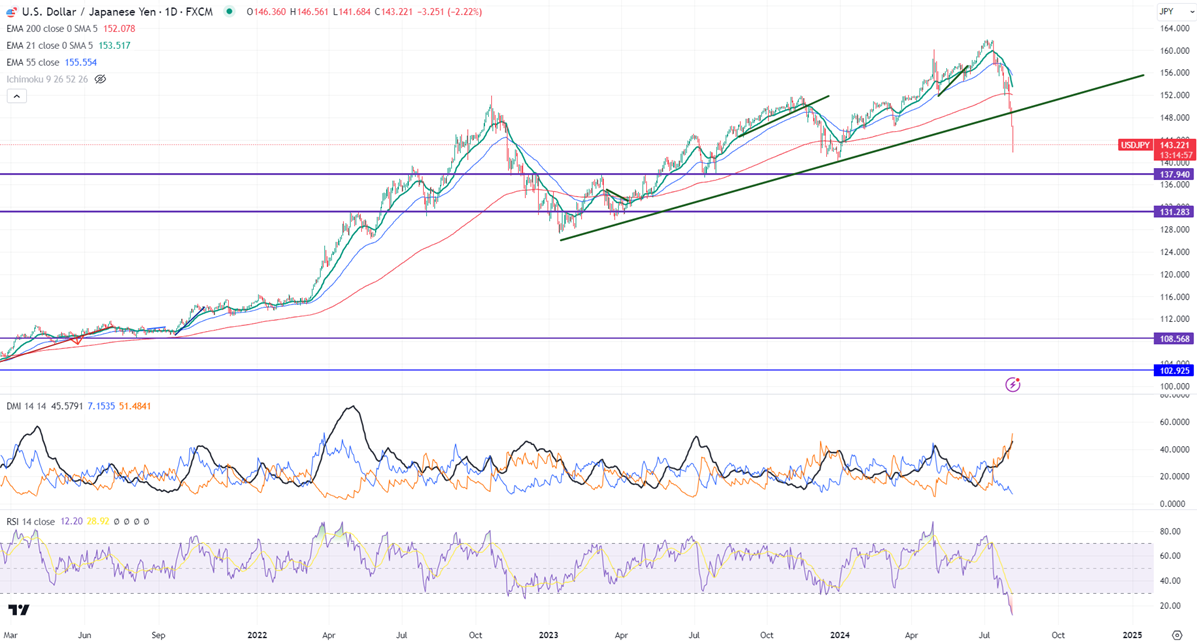
The yen gained sharply against the US dollar after the BOJ monetary policy. The Bank of Japan hiked rates by 15 bpbs unexpectedly from 0%-0.10% to 0.15%-0.25%. The central bank has reduced its bond-buying program to ¥3 trillion monthly as of Q1 of 2026.
Yen Carry trade-
Most of traders borrow yen at low interest rates and invest in other countries' assets, especially the US stock market.
JPY strengthened strongly after the BOJ rate hike. The trader started to unwind their position in the US stock market as they paid higher interest rates due to rate hikes and huge forex loss (USDJPY depreciated from 155.21 to 141.68 in the past four days.
This will increase the selling pressure on US stocks in the short term. Market eyes Middle East tension escalation, recession fears, and US political uncertainty.







