


 SoftBank Launches $11 Billion Bond Sale to Fund OpenAI Investment
  Big AI wants to slow down AI research. Is it a safety pause or a strategic retreat?
  AI is supercharging money scams – here’s what you can do to protect yourself
  Petrobras Joins Brazil Diesel Subsidy Program
  Rosenblatt Starts Nokia at Buy on AI Networking Growth
  Meta CEO Zuckerberg Backs Independent AI Safety Reviews Over Development Slowdown
  Meta Partners With Shopify to Bring Shop Pay Checkout to Muse AI
  White House Bars CNN, MS NOW and Politico Reporters
  Telix to Acquire Germany’s ITM in $1.65 Billion Radiopharma Deal
  China Reviews Broadcom Switch Use in State Data Centres
  Goldman Sachs Names Simon Lyons UK Investment Banking Co-Head
  Qualcomm Gains on $60B Amazon AI Chip Deal
  Prysmian, Rio Tinto Supply Low-Carbon Cables for Amazon Ohio Data Center
  Japan, U.S. Discuss $19 Billion GlobalFoundries Chip Plant
  FCC Approves Foreign Investment in $110B Paramount-Warner Bros. Deal
  FAA Allows Boeing to Sell 35 More 777F Freighters Beyond 2028
  SpaceX Nasdaq 100 Weight to More Than Double in Rebalance


 Add as a preferred source on Google
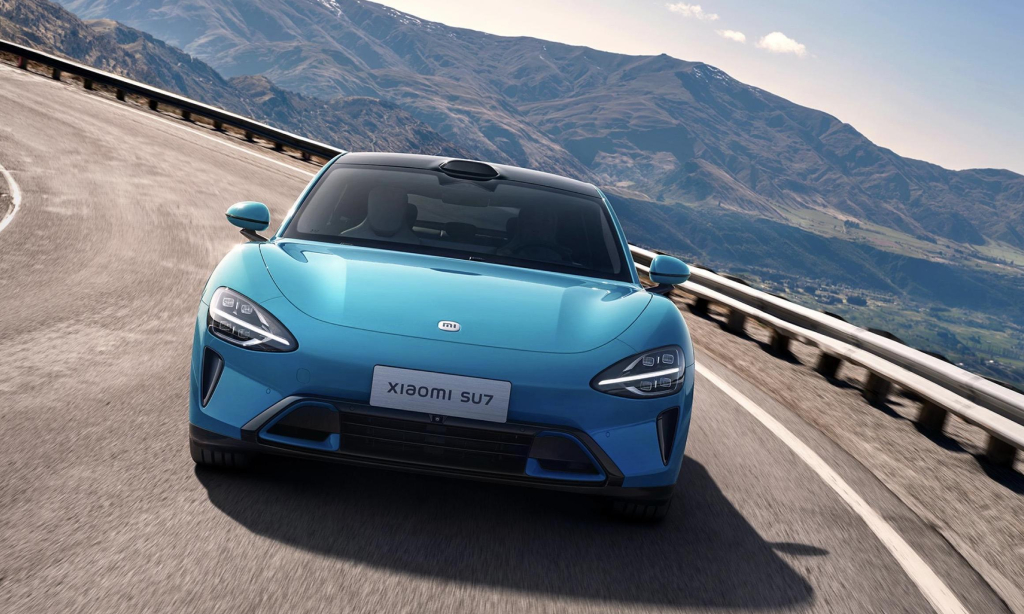
Xiaomi has surged past its delivery target for the SU7 electric vehicle, crossing 100,000 units ahead of schedule. The company has now set an aggressive goal for 2024, aiming to deliver 130,000 units amid record production levels.
Xiaomi Surpasses 100,000 SU7 EV Deliveries Ahead of Schedule
Xiaomi, a Chinese smartphone manufacturer, has revealed an even loftier goal for the delivery of its first electric vehicle (EV) model, the SU7, having already achieved it ahead of schedule for this year, CnEVPost reports.
"Xiaomi SU7 deliveries have exceeded 100,000 units, and we have achieved our full-year target ahead of schedule," wrote Lei Jun, the company's founder, chairman, and CEO, in a Weibo post today.
Xiaomi Sets Bold New Goal for 2024
In addition, Lei announced that Xiaomi will be aiming to produce 130,000 units for the entire year of 2024. After an earlier upwardly revised aim of 120,000 units, this new target represents an even more ambitious rise.
On March 28, Xiaomi formally unveiled the SU7, which comes in three variants: Standard, Pro, and Max. The Standard version starts at RMB 215,900 ($29,800), while the Pro and Max versions start at RMB 245,900 and RMB 299,900, respectively.
SU7 Production Accelerates to Meet Growing Demand
In April, shipments of the SU7 Standard and Max models started, while shipments of the SU7 Pro started in May.
During the company's earnings call for the first quarter, which took place on May 23, Xiaomi's management announced that the company would deliver 100,000 units in 2024 and even go so far as to challenge the 120,000-unit delivery target.
Just 230 days after its inception, on November 13, the 100,000th SU7 rolled off the assembly line.
Monthly Deliveries Show Consistent Growth
Xiaomi has been mum on monthly delivery figures for the past few months, stating simply that they were above 10,000 units in July–September and over 20,000 units in October.
Local media site 36kr reported on November 5 that Xiaomi's SU7 production is likely to exceed 24,000 units per month in November and December.
Beijing Plant Pushes Capacity to the Limit
The first phase of the Beijing plant that produces the SU7 has an annual capacity of 150,000 units, and a second phase is currently under construction.
Considering the SU7 delivered over 20,000 units in October, the study claimed that the capacity utilization rate of the Xiaomi EV's phase 1 facility, which has a design capacity of 12,500 units per month, was 160 percent in October.
In an effort to alleviate delivery strain, the corporation was reportedly challenging the 24,000-unit monthly production, which would indicate that capacity utilization is close to 200 percent.







