


 Petrobras Joins Brazil Diesel Subsidy Program
  US Federal Register Drops Alibaba Qwen AI Search Tool
  Goldman Sachs Names Simon Lyons UK Investment Banking Co-Head
  Paramount Skydance Faces $30 Million Film Penalty in Warner Bros. Deal
  Telix to Acquire Germany’s ITM in $1.65 Billion Radiopharma Deal
  Trump Plans Federal AI Force and AI Czar
  OpenAI Urges US-Led Global Standards for Frontier AI
  NASA, Boeing Discuss Expanding Starliner Missions
  DOJ Will Investigate AI-Related Crimes, Attorney General Blanche Says
  SK Hynix, Intel Discuss U.S. Memory Chip Production Deal
  Volkswagen Shares Slide After 2026 Profit Outlook Cut
  Westinghouse Targets $50 Billion Valuation in U.S. IPO
  SpaceX Nasdaq 100 Weight to More Than Double in Rebalance
  Apple Pay Set for India Launch With Axis Bank
  Burnham Eyes UK Leadership Role in AI Ahead of Trump Meeting
  Hyundai CEO Warns Chinese Automakers Could Disrupt US Market
  France Urges Faster AI Push Despite Safety Risks


 Add as a preferred source on Google
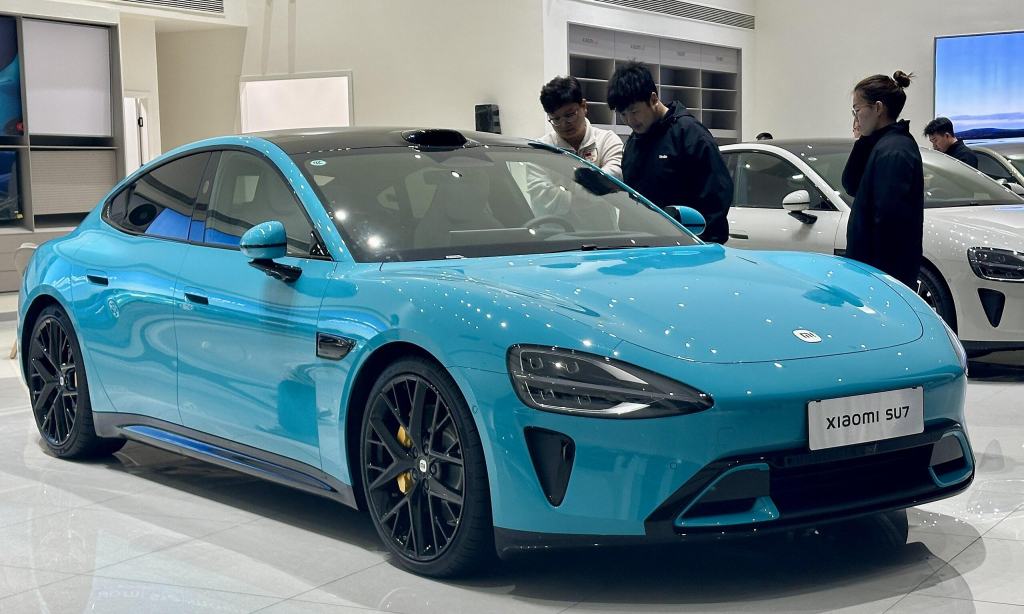
Chinese electronics giant Xiaomi achieved a significant milestone by delivering over 20,000 SU7 electric vehicles in October, accelerating its production pace to reach 100,000 units by November's end. The brand’s rapid entry into the EV market highlights its ambition to compete with industry giants.
Xiaomi Sets Ambitious EV Goals Amid Fierce Market Competition
On Tuesday, Xiaomi, a Chinese electric vehicle startup operating in a very competitive market, said that it had shipped over 20,000 SU7 EVs in October.
According to CNBC, the well-known Chinese electronics and home appliance manufacturer reaffirmed its intention to ship 100,000 SU7 cars by November's end. After initially announcing intentions to manufacture automobiles in 2020, Xiaomi started construction on a specialized factory the following year.
First Car Model Offers Competitive Edge Over Tesla
The SU7, the company's first vehicle, was released in late March in China at a price that was almost $4,000 lower than Tesla's most affordable model, the Model 3, at the time. The price of the car was later reduced by around $2,000 by Tesla. By the end of October, Xiaomi had shipped over 75,000 SU7 vehicles.
It took Tesla twelve years to manufacture 100,000 electric cars, whereas Xpeng and Nio, two of its Chinese rivals, required approximately six years.
Rising Deliveries Among Chinese EV Competitors
The recently launched, lower-cost brand Mona was responsible for almost half of Xpeng's record-breaking monthly deliveries of over 20,000 cars in September, whereas Nio has failed to maintain monthly deliveries above 20,000 automobiles, per MSN.
The electric vehicle brand Zeekr, which was started by the Chinese manufacturer Geely, boasts that it has manufactured over 100,000 units in just over 1.5 years. September saw a record-breaking 21,333 vehicle deliveries.
On Friday, we should have the numbers for the October deliveries of other Chinese electric car manufacturers.
Analysts Expect Xiaomi to be a Strong Market Player
"News of 20,000 deliveries in October confirms that [Xiaomi] is going to be a force to reckon with in the world's largest EV market," said Brian Tycangco, an analyst at Stansberry Research.
According to him, Xpeng and Xiaomi had comparable gross profit margins in August for electric cars, and since then, production has likely scaled up, so the margins have improved.
Xiaomi Expands with High-End SU7 Ultra Model
On Tuesday, Xiaomi also revealed that the high-end sports variant, the SU7 Ultra, would be available for pre-order beginning at 814,900 yuan ($114,304). The device is expected to be released in March 2025. More than 3,600 preorders, with a 10,000 yuan deposit required for each, were received within 10 minutes, according to the business.
Future Projections Show Strong Growth for Xiaomi's EVs
According to a report by Citi analysts, Xiaomi's premium SU7 Max automobile, which retails for just 299,900 yuan, is expected to see increased sales thanks to the new model and its supposedly impressive performance at the Nurburgring race track in Germany.
They are now projecting 250,000 vehicle deliveries from Xiaomi in 2025, up from 238,000 in their previous projection.







