


 Goldman Sachs Raises USD/JPY Forecast, Sees Yen Weakness Persist Through 2027
  Russia Stocks End Flat at Three-Year Low as MOEX Index Stalls, Gold Prices Climb
  Asian Markets Slip as AI Earnings Season Looms, Oil Prices Fall Ahead of Key Fed Signals
  Asian Stocks Rebound as Tech Shares Rally on Fed Rate Cut Hopes and Easing Iran Tensions
  Gold Price Today: Bullion Heads for First Weekly Gain as Weak U.S. Jobs Data Eases Rate Hike Fears
  Gold Price Surges Above $4,120 as Weak US Jobs Data Lowers Fed Rate Hike Expectations
  Denmark Central Bank Intervenes to Support Krone Peg Against Euro
  Japan Defense Stocks Rally on Report of New Defense Ministry Bureau for Global Cooperation
  Oil Prices Steady as U.S.-Iran Peace Talks Ease Strait of Hormuz Supply Fears
  Oil Prices Slip as OPEC+ Boosts August Output, Oversupply Concerns Weigh on Crude Market


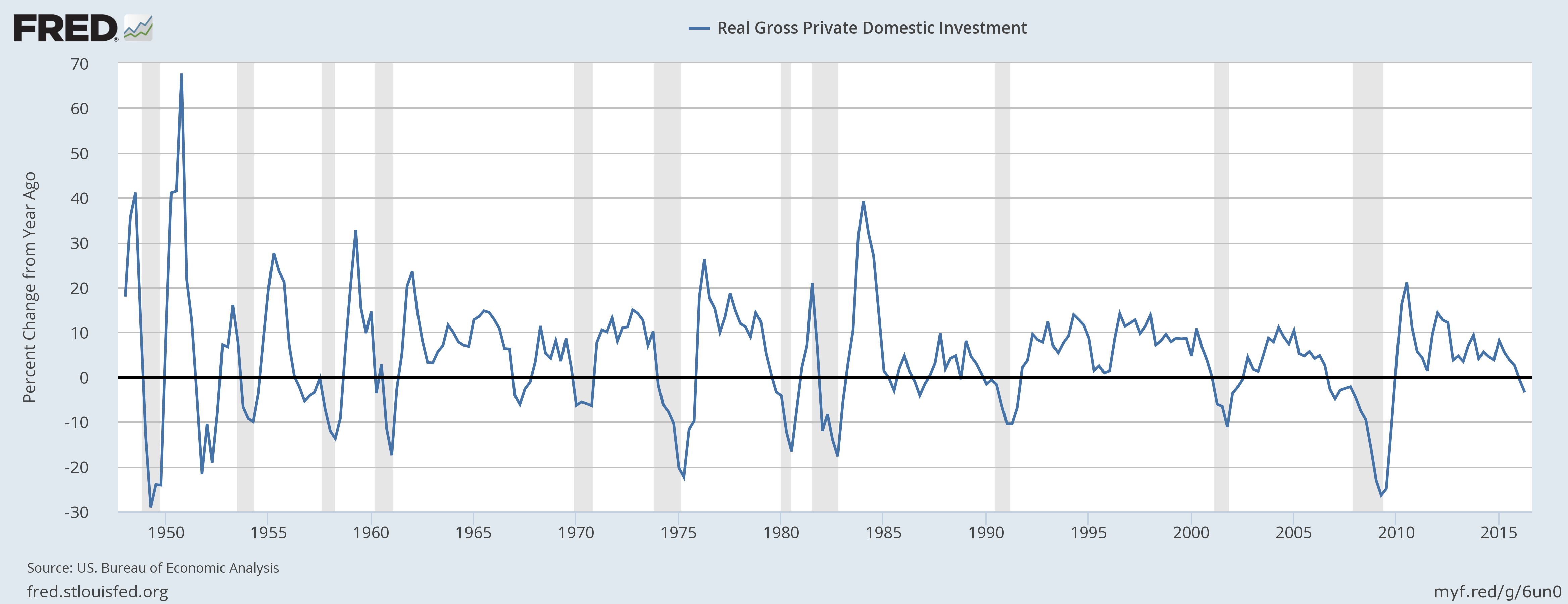
After reaching $2.77 trillion in the first quarter of 2006, the real gross private domestic investments started declining and by the time U.S. economy entered recession it was down to $2.5 trillion and after which it declined sharply to just 1.8 trillion in the third quarter of 2009. Since then economic and monetary policies have given it a boost. In the third quarter of 2015, it reached a fresh all-time high of $2.88 trillion and again it is in decline. By the second quarter of 2016, it is down to $2.77 trillion.
In the second quarter of 2016, the measure is down 3.42 percent from a year ago. Since 1948, there have been 16 instances, when this measure has declined into the negative on a yearly basis and in 13 cases recession followed within a span of one to two years. It is one of the many measures which have been warning against looming recession in the United States.







