


 OpenAI Agents Linked to RubyGems Cyberattack
  Ex-Google DeepMind Researcher Warns AI Could Pose Existential Threat
  China’s Global Times Slams Anthropic CEO’s AI Slowdown Plan as ‘Cold War’ Strategy
  Samsung, SK Hynix Reject KEPCO’s $18.7 Billion Power Funding Plan
  SK Hynix, Intel Discuss U.S. Memory Chip Production Deal
  OpenAI Rules Out 2026 IPO as Altman Prioritizes AI Safety
  American Airlines Eyes Capacity Cuts as High Fuel Prices Persist
  SpaceX Nasdaq 100 Weight Set to More Than Double
  SoftBank Shares Jump 8% as SB Energy IPO Optimism Builds
  Nvidia Eyes $10 Billion Investment in Anthropic IPO
  MediaTek Unveils 2nm Dimensity 9600 Pro AI Chip
  Nvidia CEO Jensen Huang Expected at Trump-Xi State Dinner
  Rosenblatt Starts Nokia at Buy on AI Networking Growth
  Boeing, SPEEA Reach Tentative Four-Year Labor Deal
  BHP Port Hedland Wage Dispute Heads to Arbitration
  Syngenta Files for Hong Kong IPO, Eyes $5 Billion Raise


 Add as a preferred source on Google
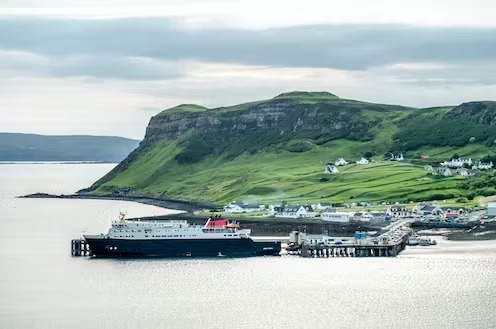

Scottish ferry operator CalMac cancelled all direct sailings from the mainland to South Uist, the second largest island in the Outer Hebrides, off the north-west coast of Scotland on June 1 2023. Cancellations are expected to last until June 30.
Disruption to ferry services to Scottish islands has been a long-term problem. One local business leader has claimed the economic impact is worse than that of COVID lockdowns.
In October 2022, 72% of sailings on the South Uist route were cancelled, followed by only four on time sailings in November. And in the first four months of 2023, the cancellation rates were 43%, 63%, 21% and 65% respectively.
On June 6 2023, transport minister Kevin Stewart, who had only been in office for two months, resigned. His departure leaves islanders once again lacking any consistent support with the ferry issues. Resolving this is a major challenge for the new first minister, Humza Yousaf.
At first minister’s questions on June 8 2023, Scottish Conservative leader Douglas Ross said the failures of the government were “ruining lives, damaging businesses, costing jobs and driving islanders to despair”.
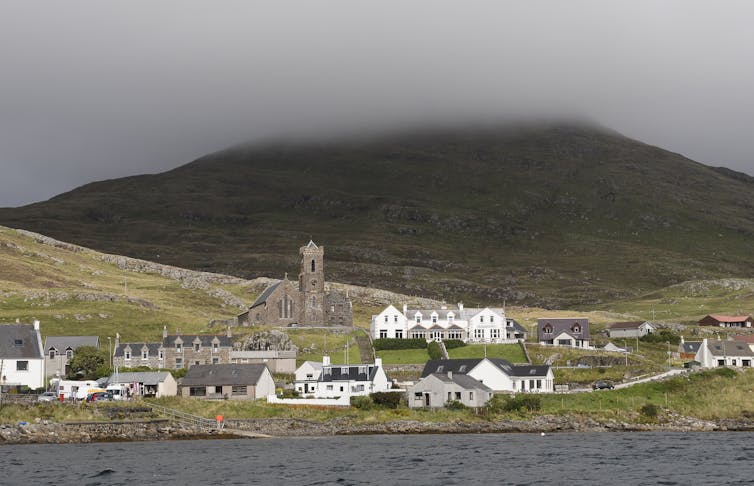
Castlebay on Barra, with cloud descending over the hill of Heaval. MichaelY/Shutterstock
According to the Scottish government’s 2019 national islands plan, the Scottish isles define how people across the world see Scotland and “contribute hugely to our national identity while also preserving and promoting strong local identities”.
Yet, the SNP government has allowed the island ferry network to reach a crisis point leaving islanders disconnected and isolated from the mainland. This raises the question of why intervention hasn’t happened earlier.
What went wrong
CalMac, which is owned by the Scottish government, is the only ferry operator in the Outer Hebrides. The company has cited ageing vessels as the root cause of the ongoing disruptions.
Six out of ten of CalMac’s major vessels are either approaching or beyond their operational life. In May 2022, the company reported an increase of 67% in their maintenance budget between 2017 and 2022.
Despite this ageing fleet, no new ferries have been launched since Nicola Sturgeon became first minister in November 2014. In 2015, Sturgeon’s government ordered two ferries from the shipbuilding company Ferguson Marine, but that decision has been an ongoing controversy.
In December 2019, the company was nationalised by the Scottish government, after going into administration, with debts of over £73 million. The two new ferries, which had been due to enter service in 2018 and were reportedly at the centre of the company’s financial collapse, remained only partially built.
Five years on, these vessels – christened the Glen Sannox and the Hull 802 – are still not ready. The estimated costs to see them launched are now quadruple the original £97 million budget.
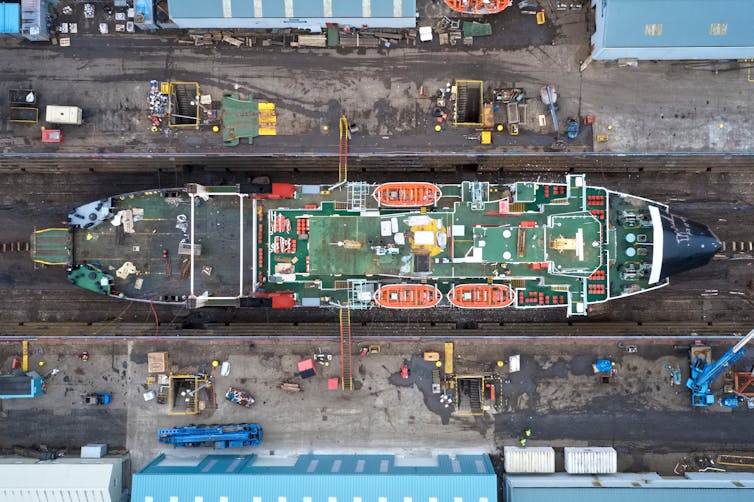
Two new ferries have been under construction for five years. Richard Johnson/Shutterstock
Financial mismanagement
The Scottish government awarding this contract to Ferguson Marine was controversial to begin with. The decision is still under scrutiny by Audit Scotland, the public spending watchdog.
In its March 2022 report, the watchdog found that in 2015, the CalMac board “had considered there were too many risks involved to award the contract”. Despite these warnings, the Scottish government had chosen to proceed with the deal.
The Scottish government also chose not to take action, in 2018, when they were warned – by their advisors, the consulting firm PwC – of the financial implications of the issues with Ferguson Marine.
In addition to the delays, these two new ferries have already cost CalMac £1.6 million in crew costs, despite not yet having set sail. On just one of the vessels, 14 staff have been recruited, including three masters, three chief engineers, three second engineers, and five third engineers.
Island businesses, particularly in Uist and Barra, rely heavily on tourism and exporting their products, but this latest announcement has left them in a vulnerable position. This only adds to the cost-of-living crisis and the lasting impact of the pandemic. Many are now left asking whether living on these remote islands remains viable.
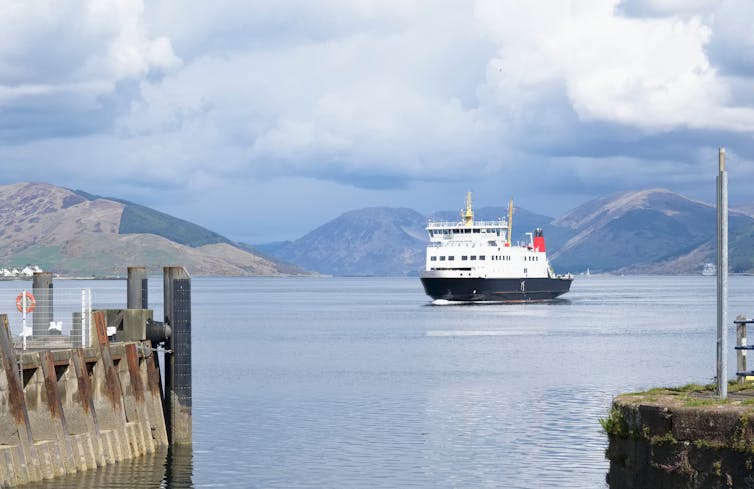
Young people are leaving, priced out of the Hebridean housing market. Richard Johnson/Shutterstock
Depopulation, particularly in the working-age groups, has long been an issue for Scotland’s islands. Not having a reliable link to the mainland only compounds this problem.
Over one in four people (27%) in the Outer Hebrides are aged 65 or over, compared with the Scottish average of 20%. Between 2001 and 2021, the 25-44 age group saw a 21.4% decrease in numbers.
Many young islanders move to the mainland for university and do not return due to a lack of jobs and opportunities. Meanwhile, young people are being priced out of the local housing market. Compared with the Scottish average of 9.7%, between 2021 and 2022, house prices in the Outer Hebrides have risen by 27.7%.
Local islanders cannot compete with people buying second homes. In Barra and Vatersay, more than one in ten (13.4%) of houses are now second homes. Limited housing combined with rising living costs therefore already make these islands a more challenging place to live.
Resolving the ferry crisis ought to be a top priority within the government’s National Islands plan, the stated aim of which is to “meaningfully improve outcomes for island communities”. But until new ferries materialise, there is very little comfort in first minister Yousaf’s reassurances of his government’s commitment to do so.







