


 Asian Stocks Sink as Apple Price Hikes Spark AI Valuation Fears, South Korea and Japan Lead Selloff
  S&P Affirms Brazil’s BB Credit Rating with Stable Outlook Amid Fiscal Challenges
  South Korea’s KOSPI Jumps Over 5% as Samsung, SK Hynix Rally on Micron Earnings Boost
  Asian Currencies Trade Mixed as Yen Hovers Near 40-Year Low, Dollar Holds Firm on Fed Outlook
  Asian Markets Rally as Micron and Qualcomm AI Outlook Lifts Global Tech Stocks
  Malaysia Central Bank Moves to Support Ringgit Amid Foreign Fund Outflows
  Gold Prices Rise Above $4,000 as Inflation Data and Weaker Dollar Boost Demand
  South Korea Remains MSCI Emerging Market Despite Reform Progress


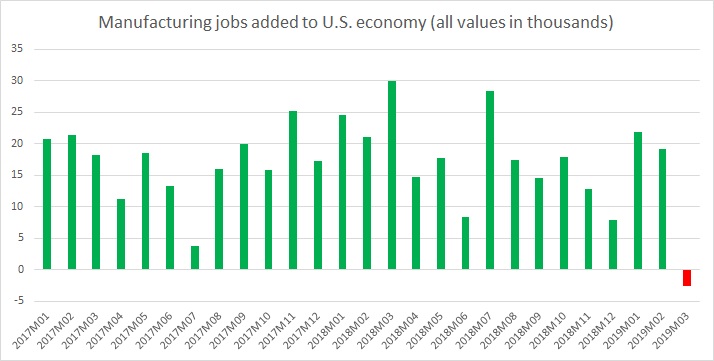
When aspiring for Presidency, then-candidate Donald Trump promised to bring back manufacturing jobs back to the United States, which according to him, left because of the unfair trade deals and practices by many countries like China, India, and the European Union.
Since becoming President, Trump has enacted policies to make the trade agreements and trade practices fairer, and so far, it has born fruits.
However, since the last quarter of 2018, the U.S. economy has slowed down and March ADP report pose concerns that the slowdown has started hurting the U.S. economy and its manufacturing sector, amid heightened trade tensions.
For the first time since president Trump took to the office, the manufacturing sector lost 2,000 jobs in March. However, under his Presidency, 456,000 jobs in the manufacturing sector, more than those created under President Obama’s second term. So, March numbers could only be a minor deviation. Nevertheless, it makes April payroll report of extreme importance to assess whether this job loss was a one-time deviation or is it a new trend?
In addition to yesterday's dismal manufacturing payroll numbers, U.S. ISM non-manufacturing index has declined 3.6 percent in March, adding to the fear of a slowdown.







