


 Pelosi Discloses Major Intel and Uber Call Option Purchases Worth Up to $6 Million
  US Delivers $13M Autonomous Maritime Drones to Philippines
  NATO Chief Tries to Ease Trump Alliance Dispute
  Lebanon Pushes Ahead With Israel Talks Despite Iran-U.S. Deal Impact
  U.S. Reviewing Potential F-35 Fighter Jet Sale to Turkey Amid S-400 Dispute
  Crimea Power Outage After Ukrainian Drone Attack, Russian Authorities Say
  Marco Rubio Reassures Gulf Allies Over U.S.-Iran Peace Deal
  Bessent Says U.S. Must Strengthen Supply Chains and Economic Security
  Trump Requests $11 Billion More in Farm Aid as Rising Costs Pressure U.S. Farmers
  ICC Judges Sue Trump Administration Over Sanctions, Calling Measures Unlawful
  Trump Highlights Manufacturing Agenda in Pennsylvania as Midterm Elections Approach
  White House Seeks $1.4 Billion to Combat Growing Ebola Outbreak
  Japan Signals Preference for Low Interest Rates as BOJ Policy Debate Intensifies
  US Mobilizes Aid After Powerful Earthquakes Devastate Venezuela
  DOJ Opens Investigation Into NYC Coffee Shop Over Anti-Goldman Social Media Post
  US Urges States and Businesses to Strengthen Taiwan Ties Amid China Pressure


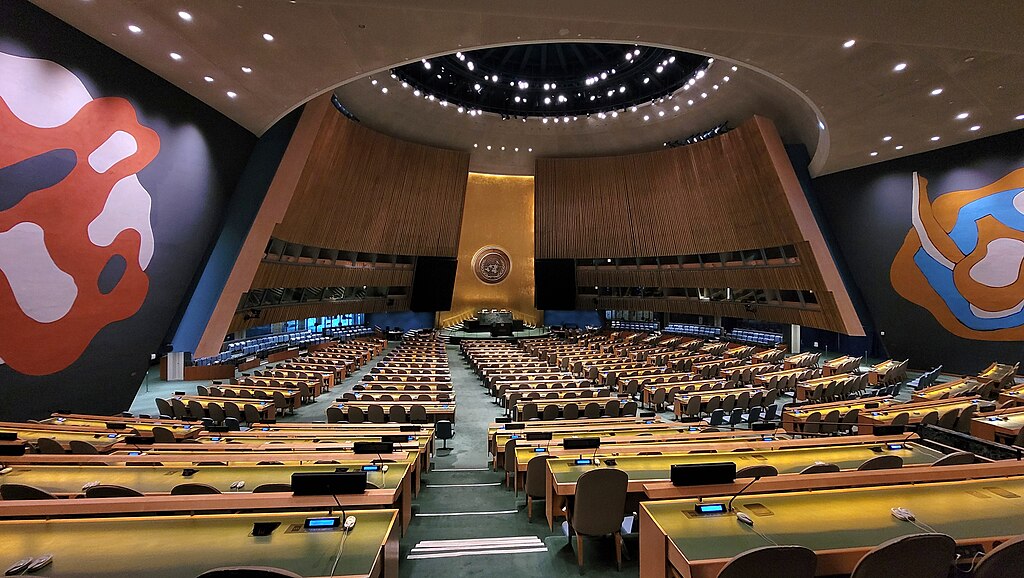
Tensions between the United States and Iran intensified at the United Nations as both countries exchanged sharp criticism over Tehran’s nuclear program and its appointment as a vice president at a key nuclear conference. The dispute unfolded during the opening of the 11th Review Conference of the Nuclear Non-Proliferation Treaty (NPT) in New York, a significant global event focused on nuclear disarmament and non-proliferation efforts.
The NPT conference, which reviews the implementation of the treaty established in 1970, selected 34 vice presidents through regional group nominations. Iran’s inclusion, backed by the Non-Aligned Movement and other states, sparked immediate backlash from U.S. officials. Christopher Yeaw, representing the U.S. Bureau of Arms Control and Nonproliferation, criticized the decision, calling it an “affront” to the treaty. He argued that Iran has consistently failed to meet its non-proliferation obligations and has not cooperated fully with the International Atomic Energy Agency (IAEA).
Iran strongly rejected these accusations. Reza Najafi, Tehran’s ambassador to the IAEA, dismissed the U.S. claims as politically motivated and unfounded. He countered by pointing out that the United States remains the only country to have used nuclear weapons and continues to modernize its arsenal, questioning Washington’s authority to judge compliance with the treaty.
The dispute comes amid heightened geopolitical tensions involving Iran, the United States, and Israel, where nuclear concerns remain central. U.S. President Donald Trump reiterated that Iran must never obtain nuclear weapons, reinforcing a long-standing U.S. policy stance. Meanwhile, Iran continues to assert its right to enrich uranium for peaceful purposes, although Western nations argue that such activities could lead to weapons development.
Adding to the complexity, Iranian officials have proposed delaying nuclear discussions until broader conflicts, including regional security and maritime disputes in the Gulf, are resolved. As diplomatic efforts continue, the clash at the UN highlights ongoing divisions over nuclear policy, global security, and the future credibility of the NPT framework.







