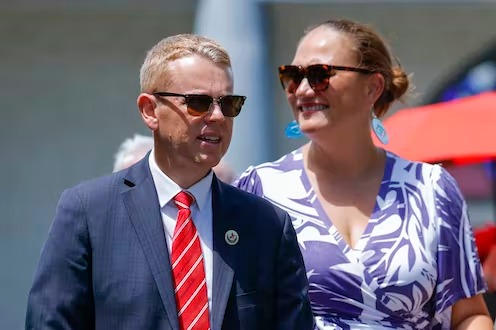
Former New Zealand Prime Minister Chris Hipkins says Labour was too slow to recognize the cost-of-living pressures facing households after the COVID-19 pandemic, as the party seeks to regain urban and middle-income voters ahead of the November 7 election.
Hipkins, 48, became Labour leader and prime minister following Jacinda Ardern’s resignation shortly before the 2023 election. Labour struggled during that campaign as inflation and household expenses climbed, allowing right-leaning parties to present themselves as stronger economic managers.
“COVID had been all-consuming,” Hipkins told Reuters, acknowledging that Labour was slow to shift its focus back toward broader governance and economic concerns.
With the New Zealand election expected to be closely contested, Labour has proposed several measures aimed at easing household costs. These include weekly public transport caps of NZ$20 in major cities and NZ$10 in smaller centres, three free doctor visits annually and initiatives supporting greater adoption of solar power.
Hipkins is also positioning economic growth as a central part of Labour’s strategy. The party wants to expand New Zealand’s technology, innovation, renewable energy and research sectors while creating more skilled jobs and strengthening rural exporters.
Labour’s platform includes a New Zealand Future Fund designed to invest in high-growth companies, infrastructure and innovation. The party is also promising additional support for apprentices and small businesses.
On government finances, Labour aims to achieve an operating surplus by 2029/30 while keeping spending and revenue at roughly 33% of gross domestic product once its proposed capital gains tax is implemented.
Hipkins has rejected criticism from the current government that Labour overspent during its previous term, arguing that strategic investment, including spending on preventative healthcare, can reduce longer-term costs.
Coalition negotiations could prove decisive after the election, with polls suggesting neither Labour nor the National Party is likely to secure enough support to govern alone.
Hipkins said his position as prime minister and Barbara Edmonds serving as finance minister would be non-negotiable in any Labour-led government. He also argued that smaller coalition partners should not be able to force through policies lacking broad public support.