


 U.S. Issues Cuba Health Alert as Illnesses Rise
  Australia Plans New Rules Giving Users Control Over Social Media Feeds
  Russian Drone Attacks Kill Four in Kyiv Region, Including Three Children
  Trump Administration Prepares Sanctions Against Entire ICC
  Judge Blocks Trump Rule Limiting Foreign Student Visas
  Zelenskiy Meets CIA Chief John Ratcliffe at Ireland’s Shannon Airport
  ICE Officer Shoots Man in Austin, Sparking Calls for Independent Probe
  Trump Open to Pezeshkian Meeting as Iran Tensions Escalate
  US Bans Canadian Alcohol, Motorcycles as Trade War Escalates
  Pentagon Restarts Testosterone Testing for US Troops
  FCC Approves Foreign Investment in $110B Paramount-Warner Bros. Deal
  SEC Seeks ISS Client Voting Records in Proxy Adviser Probe
  North Korea Fires Two Ballistic Missiles From Wonsan
  Australia Defends Social Media Algorithm Law Amid US Concerns
  Burnham Eyes UK Leadership Role in AI Ahead of Trump Meeting
  US-China Talks Target AI, Tariffs Ahead of Trump-Xi Summit
  Synthetic data could ease people’s concerns about privacy breaches. But who gets to create it?


 Add as a preferred source on Google
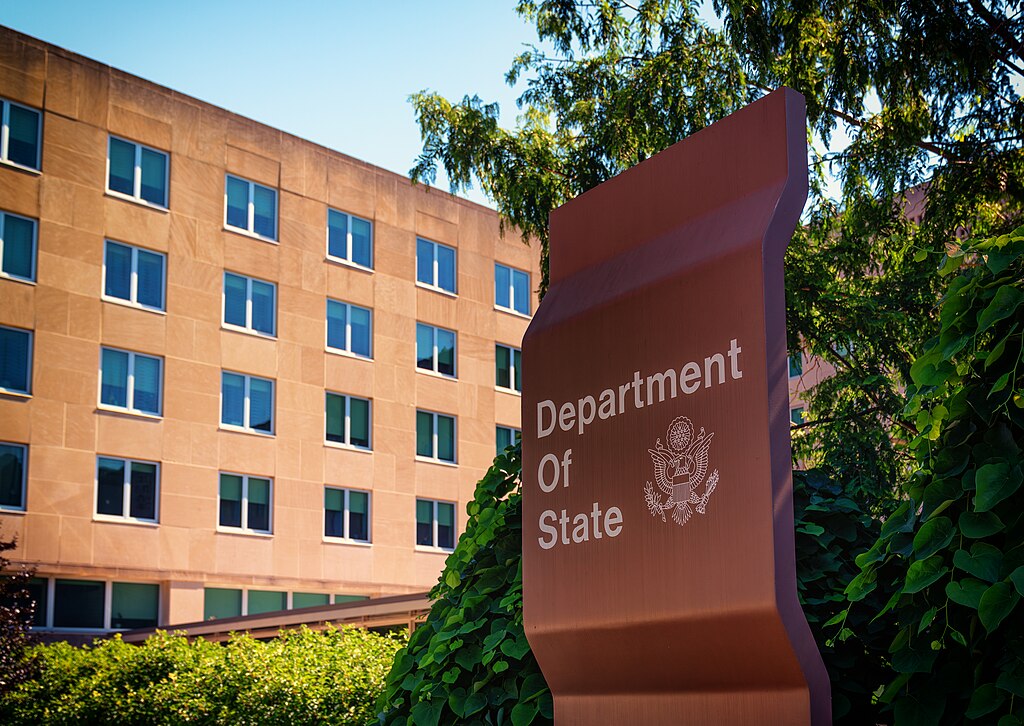
An internal watchdog report released Monday found that the U.S. State Department faced significant operational challenges after taking over billions of dollars in foreign aid programs following the closure of the U.S. Agency for International Development (USAID).
President Donald Trump ordered the shutdown of USAID shortly after returning to office in January 2025, resulting in the dismissal of more than 10,000 employees and the cancellation of thousands of aid programs. The abrupt transition disrupted U.S.-funded humanitarian and development efforts that support millions of vulnerable people worldwide.
According to the State Department’s Office of Inspector General, approximately $51.5 billion in obligated foreign assistance funds were transferred to the department while it was simultaneously undergoing its own internal reorganization. The surviving aid portfolio, known as the "Green List," included 1,504 awards covering projects in key regions such as Ukraine, Israel, the Palestinian territories, and other conflict-affected areas.
The watchdog said the rapid transfer created major administrative hurdles, with officials describing the process as moving "extremely fast" under constantly changing guidance. The report also noted that the State Department had not fully implemented earlier inspector general recommendations designed to ease the transition.
Roughly one-third of the State Department offices assigned to oversee the transferred programs had no previous experience managing foreign assistance. Although the department added 838 new positions to administer the awards, the staffing level fell well short of bureau requests.
The report also highlighted delays in issuing guidance for updating grant terms, with complete instructions not available until December. In addition, an artificial intelligence-powered data management system introduced to support the transition experienced data quality issues that complicated oversight.
Africa accounted for the largest share of transferred aid programs, with 639 awards valued at $17 billion. The Bureau of African Affairs, which assumed responsibility for most of those projects, requested 732 additional staff positions but received only 232 hires, most of whom were locally employed personnel stationed at U.S. diplomatic missions.
The State Department did not immediately respond to Reuters' request for comment. However, its management office told the inspector general that efforts to implement the watchdog’s recommendations are currently underway.







