


 France Urges Faster AI Push Despite Safety Risks
  NASA, Boeing Discuss Expanding Starliner Missions
  FxWirePro- Crypto Weekly Alpha: ETF Rebounds, L2 Rallies & Key Resistance Levels
  Big AI wants to slow down AI research. Is it a safety pause or a strategic retreat?
  Hyundai CEO Warns Chinese Automakers Could Disrupt US Market
  OpenAI Urges US-Led Global Standards for Frontier AI
  US Federal Register Drops Alibaba Qwen AI Search Tool
  MediaTek Unveils 2nm Dimensity 9600 Pro AI Chip
  Westinghouse Targets $50 Billion Valuation in U.S. IPO


 Add as a preferred source on Google
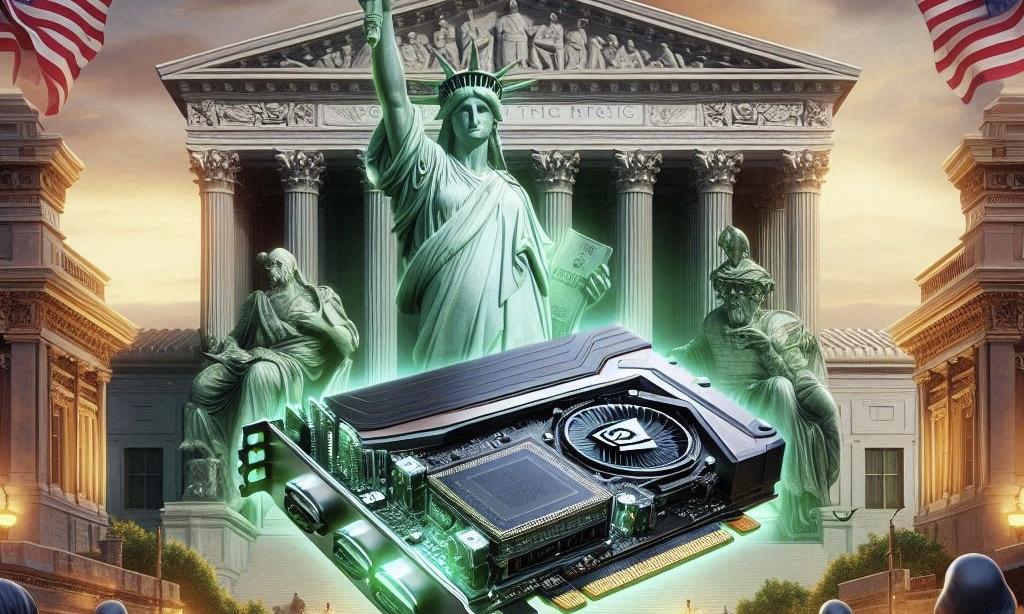
The U.S. Supreme Court will hear Nvidia's appeal in a securities fraud lawsuit alleging the company misled investors about its cryptocurrency mining revenue.
Supreme Court to Review Nvidia's Appeal in Securities Fraud Case Over Cryptocurrency Revenue Claims
The U.S. Supreme Court has consented to hear an Nvidia Corporation appeal seeking to dismiss a securities fraud lawsuit. According to CoinGape, the lawsuit alleges that the company fraudulently misled investors regarding the extent of its revenue generated from the cryptocurrency industry.
The justices heard Nvidia's appeal following the 9th U.S. Circuit Court of Appeals instance of a class action lawsuit filed by shareholders against Nvidia and its CEO, Jensen Huang.
E. Ohman J Fonder AB, a Swedish investment management company, initiated the legal action and seeks an undisclosed sum of damages.
As a result, Nvidia and its executives are accused of making fraudulent statements in 2017 and 2018 about the importance of cryptocurrency-related sales in the company's revenue.
Nvidia Accused of Violating Securities Act by Misleading Investors on Crypto Mining Revenue
The primary accusation against Nvidia was that it violated the Securities Exchange Act of 1934, and the case was initiated in 2018. The plaintiffs contended that Nvidia failed to furnish precise data regarding the proportion of its revenue generated through crypto mining, which entails using GPUs to resolve mathematical challenges in mining digital currencies like Bitcoin.
This purported omission obscured that cryptomining had a substantial and adverse impact on Nvidia's business from investors and analysts.
In 2021, the lower court had rejected the case; however, the 9th Circuit, in a 2-1 decision in the latter half of 2021, determined that the litigation could proceed. This decision was based on the plaintiffs' plausible allegations that Nvidia had made “false or misleading statements knowingly or recklessly. “
Nvidia Appeals to Supreme Court to Dismiss Crypto Mining Fraud Case Amid Ongoing Regulatory Scrutiny
Nvidia has contended that the 9th Circuit's decision may lead to "abusive and speculative litigation." Consequently, the company has requested that the Supreme Court intervene. In 2022, Nvidia was cited by the U.S. authorities and subsequently agreed to pay $5 million for failing to accurately disclose the impact of crypto mining on its gaming unit. Nevertheless, this resolution did not prevent the shareholder lawsuit from progressing to the next stage.
Furthermore, the justices have agreed to hear an additional case involving Meta Platforms Inc., in which the social media company's shareholders claim that it has misled investors about using users' data.
Earlier this month, U.S. regulators initiated an investigation into Nvidia, Microsoft, and OpenAI to assess potential antitrust concerns in the A.I. market. The Federal Trade Commission (FTC) and the Department of Justice (DOJ) are investigating market power and competition cases.
Photo: Microsoft Bing







