


 Soybean Futures Slip as Traders Await Trump-Xi Trade Signals
  Asian Currencies Mixed as Dollar Holds Near Two-Month High
  U.S. Treasury Yields Surge as 30-Year Hits 22-Year High
  European Stocks Fall as Bond Yields and Geopolitical Risks Weigh
  Asian Stocks Fall as Bond Yields Surge Ahead of Trump-Xi Summit
  Gold Holds Near $4,275 as Rising Treasury Yields Fuel Fed Rate Hike Bets
  Gold Prices Fall as Treasury Yields Rise on Fed Rate Hike Bets
  Wall Street Ends Flat as Oil, Treasury Yields and Fed Jitters Rattle Markets
  South Korea, US Discuss Warship Building Cooperation
  U.S. 10-Year Treasury Yield Hits 2007 High as Fed Rate Hike Bets Rise
  Japanese Bank Stocks Surge as Bond Yields Fuel Rate Hike Bets
  US Stock Futures Fall as Treasury Yields Surge Ahead of Trump-Xi Summit
  Asian Stocks Fall as Surging Bond Yields Rattle Markets
  Russian Envoy Dmitriev Heads to US for Ukraine Talks
  Japan Private-Sector Growth Slows as Domestic Demand Weakens
  Fed Unveils Stablecoin Rules Under GENIUS Act
  Oil Prices Jump 3% as Houthi Attack Revives Supply Fears


 Add as a preferred source on Google
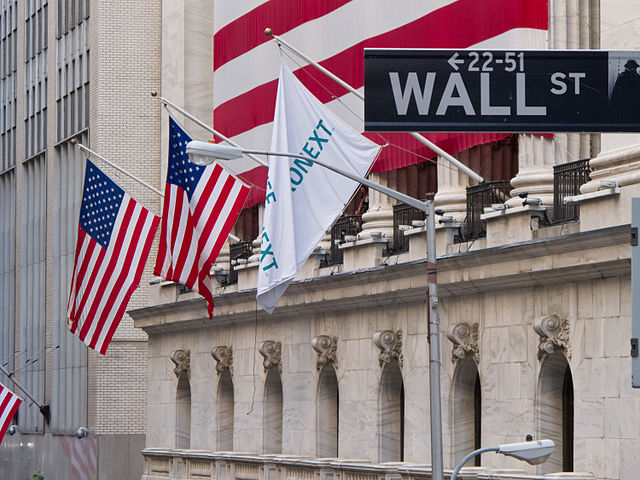
U.S. stock futures were little changed on Monday evening as investors grew cautious ahead of key economic data releases later this week, following a mostly positive close on Wall Street. Futures tied to the S&P 500 slipped about 0.1% to 6,977 points, while Nasdaq 100 futures also edged down 0.1% to 25,333.75 points. Dow Jones futures hovered slightly lower at around 50,177 points, after the blue-chip index closed at a fresh record high during regular trading.
During Monday’s session, Wall Street extended recent gains, although the pace was measured. The Dow Jones Industrial Average inched up 0.04%, marking another all-time closing high and building on momentum after recently breaking above the 50,000 level. The S&P 500 rose 0.5%, while the Nasdaq Composite outperformed with a 0.9% gain, supported by a rebound in major technology stocks.
Tech shares continued to recover from last week’s sharp sell-off, which had been driven by renewed concerns over artificial intelligence-related disruption, stretched valuations, and profit-taking. Investors appeared more comfortable re-entering the sector after Friday’s bounce, helping lift broader market sentiment. Outside of technology, however, trading remained relatively muted as market participants avoided large positions ahead of a busy calendar.
Attention is now shifting to upcoming corporate earnings and macroeconomic data. Coca-Cola is scheduled to report earnings before the market opens on Tuesday, while Spotify and Hasbro are also expected to release quarterly results, adding to near-term market catalysts.
On the economic front, investors are closely watching delayed U.S. labor market and inflation data that were postponed due to a recent government shutdown. The highly anticipated monthly U.S. jobs report is now scheduled for release on Wednesday, followed by the January consumer price index report on Friday. These reports are expected to play a significant role in shaping expectations for the Federal Reserve’s future monetary policy.
Evidence of cooling inflation or a softer labor market could strengthen market hopes for interest rate cuts later in 2026, while firmer data may reinforce the Fed’s cautious stance. As a result, markets are likely to remain range-bound until clearer signals emerge from this week’s economic releases.







