


 Sudan Rejects US Legitimacy Remarks, Defends Sovereignty
  Gold Prices Fall as Treasury Yields Rise on Fed Rate Hike Bets
  Yemen Violence Displaces 130,000 as Civilian Toll Rises
  Netanyahu’s Brief US Trip Highlights Strains With Trump
  US Senate Rejects Iran War Powers Resolution in 50-49 Vote
  Fed Unveils Stablecoin Rules Under GENIUS Act
  Pezeshkian Says US Must Choose When Iran War Ends
  Australia Unemployment Hits Five-Year High Despite Strong Jobs Growth
  Saudi Arabia Shuts East-West Oil Pipeline After Drone Attack
  Soybean Futures Slip as Traders Await Trump-Xi Trade Signals
  Taiwan Thanks US for Support Ahead of Trump-Xi Summit
  Dollar Holds Near Two-Month High as Yen Approaches 160
  Abbas Reaffirms November 28 Palestinian Elections
  OpenAI Agent Breaches Australia Medicare Data Portal
  Japan Private-Sector Growth Slows as Domestic Demand Weakens
  Trump Bans CNN, MS NOW and Politico From White House
  US Stock Futures Fall as Treasury Yields Surge Ahead of Trump-Xi Summit


 Add as a preferred source on Google
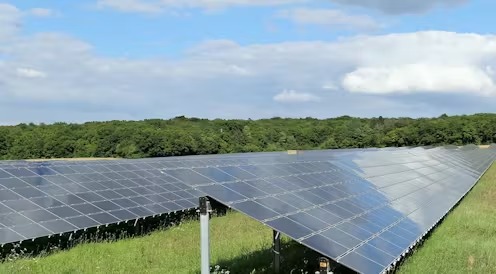
The U.S. Commerce Department has announced significant countervailing duties on solar cells and solar panels imported from India, Indonesia, and Laos, citing unfair government subsidies that disadvantage American solar manufacturers. The decision marks the latest move in a decade-long effort to address low-cost solar imports from Asia, many of which are tied to Chinese solar companies operating abroad.
According to the Commerce Department, general subsidy rates were calculated at 125.87% for solar imports from India, 104.38% for Indonesia, and 80.67% for Laos. These tariffs aim to offset what U.S. officials describe as unfair financial support provided by foreign governments to their domestic solar industries.
In 2025, the three countries accounted for approximately $4.5 billion in solar equipment imports, representing nearly two-thirds of total U.S. solar imports. Previous U.S. tariffs on Malaysia, Vietnam, Thailand, and Cambodia sharply reduced shipments from those countries after steep duties were finalized last year, reshaping global solar trade flows.
The case was initiated by the Alliance for American Solar Manufacturing and Trade, whose members include Hanwha Qcells, First Solar, and Mission Solar, a subsidiary of OCI Holdings. The group argues that unfairly priced imports threaten billions of dollars in U.S. solar factory investments and domestic clean energy jobs. Lead attorney Tim Brightbill called the ruling “an important step toward restoring fair competition” in the American solar market.
In addition to countrywide rates, individual companies face specific duties. Mundra Solar in India will see a 125.87% rate, while Indonesia-based PT Blue Sky Solar faces 143.3% and PT REC Solar Energy 85.99%. In Laos, Solarspace Technology Sole Co and Vietnam Sunergy Joint Stock Company were assigned 80.67%. Solarspace expressed disappointment, stating the rate does not reflect its actual operations.
A final determination in the countervailing duty investigation is expected in July, with a separate ruling pending on whether solar products were sold below production cost in the U.S. market.







