


 FDA Names Permanent Drug and Biologics Center Chiefs
  US Northeast Airports Resume Operations After Telecom Outage Disrupts Thousands of Flights
  US-China Talks Target AI, Tariffs Ahead of Trump-Xi Summit
  Zelenskiy Meets CIA Chief John Ratcliffe at Ireland’s Shannon Airport
  Who should own the knowledge that underpins AI technology?
  Canada Unveils Bill to Fast-Track Major Resource Projects
  US Resumes Immigrant Visa Processing for Hungary, Poland
  North Korea Fires Two Ballistic Missiles From Wonsan
  Michelle Bachelet Withdraws From UN Secretary-General Race
  DOJ Will Investigate AI-Related Crimes, Attorney General Blanche Says
  US Immigration Arrests Surge as Deportations Lag Behind
  US Plans Two New Military Bases in Greenland Under Arctic Deal
  Paramount-Warner Bros $110 Billion Deal Draws Antitrust Backlash
  Vietnam, US Trade Deal Could Be Signed Soon, To Lam Says
  Trump Plans Military Complex Inside Washington Triumphal Arch
  Lula Meets Mamdani in New York as Elections Approach
  Trump Scales Back Endangered Species Act Protections


 Add as a preferred source on Google
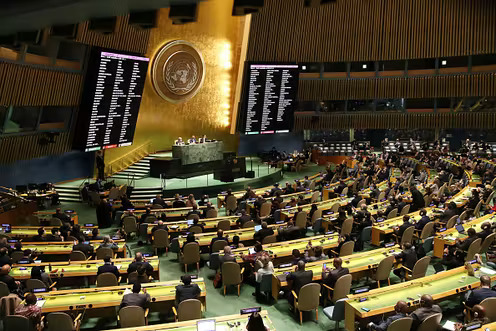
The United Nations has added Israel and Russia to its official blacklist of parties suspected of committing conflict-related sexual violence, a decision that has sparked strong international reactions and intensified diplomatic tensions. The designation appeared in the latest annual report submitted by U.N. Secretary-General António Guterres to the U.N. Security Council, highlighting allegations linked to ongoing conflicts in Gaza, the West Bank, and Ukraine.
Israel strongly rejected the decision, calling it politically motivated and disconnected from the facts. Israeli officials argued that the country has investigated allegations thoroughly and cooperated with international bodies. Following the announcement, Israel’s Foreign Ministry stated that it would suspend ties with the Secretary-General’s office until new leadership is appointed at the United Nations.
The report details multiple verified cases of sexual violence allegedly committed by Israeli armed and security forces. According to the findings, victims included men, women, and children from Gaza and the West Bank. Reported abuses ranged from rape and attempted rape to forced nudity, invasive searches, threats of sexual assault, and violence targeting victims’ genital areas. Several incidents reportedly occurred during detention, interrogation, military operations, and at checkpoints.
The U.N. also documented a significant number of cases involving Russian armed and security forces in Ukraine. Investigators verified hundreds of incidents, including rape, gang rape, genital mutilation, electric shocks, and other forms of sexual abuse. The victims included men, women, and girls affected by the ongoing conflict.
Hamas remains on the same U.N. blacklist, and Israeli officials criticized the decision to place Israel alongside the militant group. Meanwhile, Ukrainian authorities welcomed the inclusion of Russia, describing it as an important step toward accountability.
Pramila Patten, the U.N. Special Representative on Sexual Violence in Conflict, noted a dramatic global rise in verified conflict-related sexual violence cases during 2025. She warned that the documented incidents likely represent only a fraction of the actual number of abuses occurring in conflict zones worldwide.
Although inclusion on the blacklist does not automatically trigger sanctions, it can result in serious reputational consequences and may restrict participation in future U.N. peacekeeping operations. The latest report underscores growing international concern over sexual violence in armed conflicts and the need for greater accountability and protection for victims.







