


 USA at 250: the Black American struggle for life, liberty and the pursuit of happiness
  Moody’s Says Peru’s President-Elect Keiko Fujimori Could Boost Investor Confidence
  Trump Administration Declines USMCA Renewal, Opens Talks on New Trade Changes
  Mary Daly Says AI Uncertainty Clouds Fed Rate Outlook Despite Restrictive Policy
  AI can be a personal trainer in your pocket – but is it safe?
  Turkey Vehicle Sales Fall 11.4% in June as Auto Market Weakens
  Japan Signals Surprise Yen Intervention Strategy as BOJ Hawkish Stance Puts FX Traders on Alert
  Gold Price Surges Above $4,120 as Weak US Jobs Data Lowers Fed Rate Hike Expectations
  US Jobs Report Preview: June Payroll Growth Seen Slowing as Fed Rate Decision Looms
  Asian Currencies Stay Under Pressure as Dollar Holds Near 13-Month High Ahead of U.S. Jobs Report
  Gold Surges Past $4150 on Dovish Fed Signals and Weak Jobs Data; Bullish Outlook Prevails


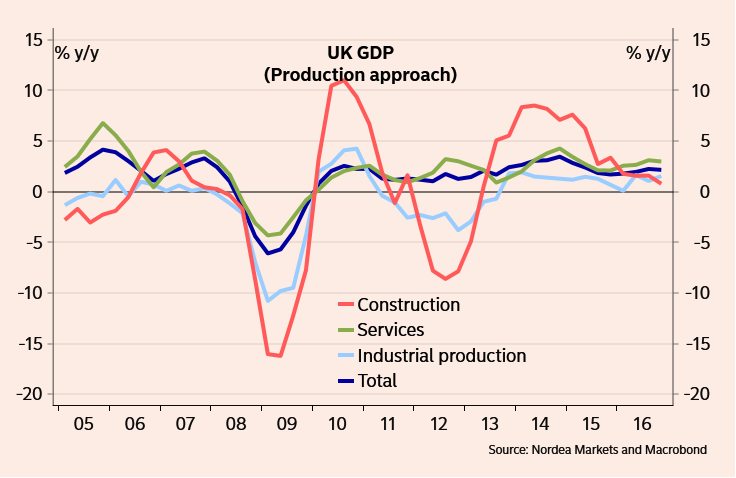
UK growth figures for Q4 confirm resilience of UK economy. Data released by the Office for National Statistics (ONS), showed preliminary estimate of UK Q4 GDP rose 0.6 percent q/q, the same growth rate as in the two previous quarters and above the 0.5 percent consensus forecast.
GDP growth was above the Bank of England’s estimate of a 0.4 percent rise in its November Inflation Report. Q4 reading taken in conjunction with Q3’s gain suggests UK economy grew faster in the six months following the Brexit vote than it did in the six months preceding the vote. Annualised GDP reads at 2.2 percent confirming the UK as one of the fastest-growing major economies in the world.
However, analysts warn weaker sterling and higher inflation will weigh on UK's economy and Britain is headed for a sharp slowdown in 2017. UK inflation is already at 2 1/2 year highs and expected to rise further. Rising inflation is likely to dampen consumer spending which has been the main momentum behind the UK’s continued growth. The Bank of England expects the weak pound to continue to raise import costs and for some of that to be passed on to consumers, squeezing their spending power.
“Looking forward, we do anticipate a slowdown in economic growth, principally because we see the post-referendum fall in the pound pushing up on import prices, in turn raising the CPI inflation rate to more than 3% later this year. That will squeeze household spending power.” said Chris Hare, economist at the bank Investec.
Britain could face a tougher time in the long-term amid “tough and prolonged” Brexit negotiations with the European Union. Last week’s speech by Prime Minister Theresa May only made it clearer that a hard Brexit is on the cards. The UK finance minister Hammond expressing his take on the Q4 GDP report said that GDP figures show fundamental strength and resilience of economy. Some uncertainty could lie ahead as the country adjusts to its new relationship with its European counterparts, Hammond added.
"The solid activity data support our view that the Bank of England will keep monetary policy on hold. Given our forecast of a slowdown in growth during 2017 we continue to expect the bank to look through an expected rise in inflation to well above the 2% target as the effect of the GDP feeds more through to consumer prices." said Nordea Bank in a report.
GBP/USD was trading at 1.2589, down 0.32 percent on the day, while EUR/GBP was at 0.8525 up 0.20 percent. FxWirePro's Hourly GBP Spot Index was at 46.799 (Neutral) at 1200 GMT. For more details on FxWirePro's Currency Strength Index, visit http://www.fxwirepro.com/currencyindex.







