


 Dollar Holds Steady Ahead of U.S. CPI as Oil Surge, Middle East Tensions Keep Markets on Edge
  US Inflation Expected to Ease in June, but Fed Rate Hike Risks Persist Amid Middle East Tensions
  Australian Business Conditions Hold Steady as Easing Cost Pressures Face New Oil Price Risks
  Oil Prices Climb as Trump Escalates Iran Pressure, Strait of Hormuz Risks Grow
  China Home Prices Fall Again in June Despite Slower Pace of Decline
  Port of Los Angeles Posts Record June Cargo Volume as Importers Rush Ahead of U.S. Tariffs
  South Korea’s KOSPI Enters Bear Market Despite Remaining 2026’s Best-Performing Major Stock Index
  South Korea Raises Interest Rates to 2.75% as Inflation and Weak Won Drive Tightening
  Oil Prices Surge as U.S.-Iran Conflict Escalates and Strait of Hormuz Risks Grow


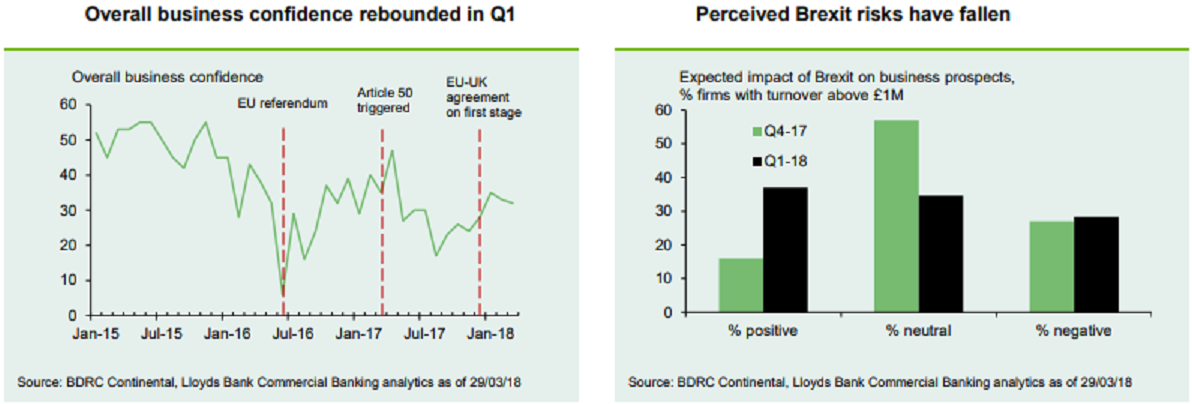
The United Kingdom’s overall business confidence – an average of firms’ own business prospects and their optimism regarding the economy – fell by 1 point in March to 32 percent. Business prospects increased by 1 point to 36 percent, while economic optimism fell by 3 points to 28 percent.
Still, for Q1 as a whole, overall confidence averaged 33 percent, compared with 26 percent in Q4 2017. The improvement over the quarter was led by the increase in economic optimism which, despite the fall in March, jumped to 30 percent in Q1 from 8 percent in the prior quarter. Business prospects, meanwhile, moved down to 37 percent in Q1 from 44 percent in Q4.
The sharp rise in economic optimism during the quarter coincided with evidence from the survey that companies were less concerned (or more positive) about the impact of Brexit for their business activity following the December agreement on the first round of negotiations.
In Q1, 37 percent of companies with a turnover above GBP1 million said that the UK’s decision to leave the EU was having a positive impact on their expectations for activity. That was a 21-point rise from 16 percent in Q4.
The share of firms reporting that Brexit was having a negative effect was almost unchanged at 28 percent in Q1, compared with 27 percent in Q4. This month’s responses were taken before the post-Brexit transitional deal was announced.
Lastly, FxWirePro has launched Absolute Return Managed Program. For more details, visit http://www.fxwirepro.com/invest







