


 Kremlin Says No Decision Yet on Putin-Trump December Summit
  Najib Razak Seeks Stay of 15-Year 1MDB Prison Sentence
  Akamai Shares Surge on $11.6B Anthropic AI Cloud Deal
  Trump, Xi Visit US National Archives After White House Summit
  Yemen Violence Displaces 130,000 as Civilian Toll Rises
  Abbas Reaffirms November 28 Palestinian Elections
  DOJ Will Investigate AI-Related Crimes, Attorney General Blanche Says
  US Backs Musk in Fight Against EU’s €120 Million X Fine
  China Tightens Fentanyl Rules Ahead of Trump-Xi Summit
  Trump Plans Federal AI Force and AI Czar
  NASA, Boeing Discuss Expanding Starliner Missions
  Ukrainian Drone Attacks Hit Russian Regions, Injuring at Least 12
  Xi Calls for Deeper U.S.-China AI Cooperation in Trump Talks
  China’s ‘Lipstick King’ Says AI Won’t Replace Livestream Hosts
  FDA Names Permanent Drug and Biologics Center Chiefs
  Microsoft Stock Upgraded as Stifel Sees Stronger Azure Growth


 Add as a preferred source on Google
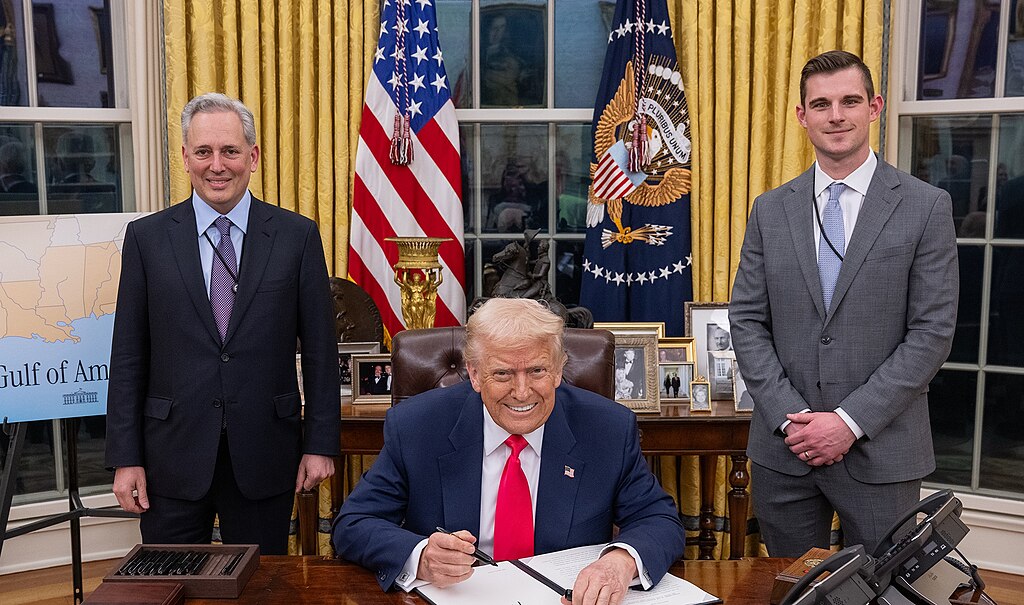
White House AI czar David Sacks warned Tuesday that excessive U.S. regulation on artificial intelligence could hinder innovation and give China a competitive edge. Speaking at the AWS Summit in Washington, Sacks dismissed fears about U.S. AI chips being smuggled to adversaries, noting the hardware’s massive scale. “These aren’t briefcase-sized devices,” he said. “They’re eight-foot server racks weighing two tons—it’s easy to track them.”
Sacks signaled a shift in the Trump administration’s AI policy, emphasizing growth and global market expansion over restrictions. He criticized former President Biden’s AI diffusion rule, which limited U.S. chip exports to certain regions, including the Middle East. “We made diffusion a bad word,” said Sacks. “But sharing our technology should be viewed positively.”
Trump recently rescinded multiple Biden-era AI regulations, including an executive order aimed at consumer protection and competition. These moves, Sacks argued, are necessary to keep the U.S. ahead in a rapidly evolving global AI race. He pointed to state-level bills and permitting issues slowing data center development as threats to progress.
Highlighting the urgency, Sacks referenced China’s rapid advancements in AI, citing the DeepSeek app’s impressive model as evidence of narrowing gaps. “China isn’t years behind,” he said. “It’s more like three to six months. If Huawei chips dominate the market in five years, we’ve lost.”
Sacks also mentioned a new U.S.-UAE plan to build the world’s largest AI campus outside the U.S., reversing Biden’s earlier export curbs to the Gulf. “If we isolate allies, we drive them to China,” he warned.
The White House clarified that while China’s AI models are close in quality, their chip technology still lags behind by one to two years.







