


 North Korea Warns South Korea Over US-Led Defense Role
  Japan Private-Sector Growth Slows as Domestic Demand Weakens
  Trump, Xi Focus on Trade and AI at White House Summit
  Fed Unveils Stablecoin Rules Under GENIUS Act
  EU Agrees €6.6 Billion Military Aid Funding for Ukraine
  Asian Currencies Mixed as Dollar Holds Near Two-Month High
  Ukrainian Drone Attacks Hit Russian Regions, Injuring at Least 12
  US Comfortable With Canada Trade Standoff as Import Bans Loom
  European Stocks Fall as Bond Yields and Geopolitical Risks Weigh
  North Korea Rejects Nuclear Test Warning, Calls Nuclear Status Irreversible
  Dollar Falls as Oil Eases, Yen Jumps on Intervention Signals
  Trump, Xi Visit US National Archives After White House Summit
  Saudi Arabia Seeks Military Support as Houthi Attacks Escalate
  Gold Prices Fall as Treasury Yields Rise on Fed Rate Hike Bets
  US 10-Year Treasury Yield at 6% Emerges as New Market Risk Threshold


 Add as a preferred source on Google
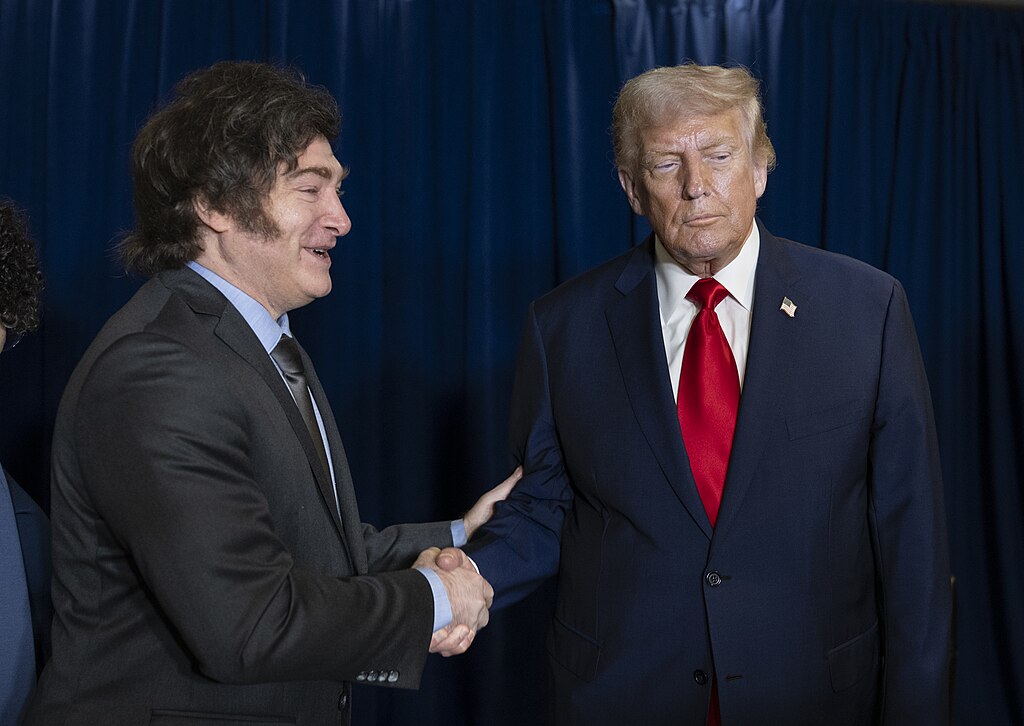
U.S. President Donald Trump met Argentine President Javier Milei at the White House this week, warning that continued U.S. financial support depends on Milei’s performance in Argentina’s upcoming midterm elections. The meeting came shortly after Washington extended a $20 billion currency swap lifeline to Buenos Aires, aimed at stabilizing the country’s economy.
Milei, a libertarian economist, has implemented aggressive “shock therapy” reforms—slashing public spending, cutting subsidies, and tightening fiscal policy—to curb inflation and achieve a rare budget surplus. These measures have boosted investor confidence and earned praise from Trump’s administration. However, many Argentines are increasingly frustrated with the austerity measures that have led to job losses and rising living costs. “If he doesn’t win, we’re gone,” Trump told reporters.
On October 26, voters will elect half of the Chamber of Deputies (127 seats) and one-third of the Senate (24 seats). Milei’s party, La Libertad Avanza, currently holds 37 deputies and six senators, far fewer than the Peronist opposition, which remains a powerful force in both chambers. Political analysts say Milei needs at least 35% of the vote to show growing support, while 40% would signal strong momentum.
A solid result could help Milei push through his economic overhaul, including planned tax cuts and labor reforms. It would also strengthen his ability to block opposition efforts to overturn presidential vetoes—a key obstacle in recent months.
Despite progress on inflation and fiscal balance, Milei’s approval rating has dropped below 40% amid corruption allegations involving close associates. Yet analysts believe his party will expand its influence nationwide compared to 2023. The main question, they say, is how far that growth will go—and whether it will be enough to secure the U.S. backing Argentina’s fragile economy depends on.







