


 Asian Stocks Fall as Surging Bond Yields Rattle Markets
  Pezeshkian Says US Must Choose When Iran War Ends
  Dollar Holds Near Two-Month High as Yen Approaches 160
  U.S. Treasury Yields Surge as 30-Year Hits 22-Year High
  Netanyahu’s Brief US Trip Highlights Strains With Trump
  Oil Prices Jump 3% as Houthi Attack Revives Supply Fears
  Yemen Violence Displaces 130,000 as Civilian Toll Rises
  Trump Asks Supreme Court to Restore Third-Country Deportations
  Kremlin Says No Decision Yet on Putin-Trump December Summit
  Trump, Xi Focus on Trade and AI at White House Summit
  Mexico-US Trade Talks Delayed to October as Tariff Negotiations Continue
  U.S. Dollar Hits Two-Month High as Oil, Treasury Yields Surge
  European Stocks Fall as Bond Yields and Geopolitical Risks Weigh
  Ghana Says Western Support Growing for Slave Trade Reparations
  Soybean Futures Slip as Traders Await Trump-Xi Trade Signals
  Russian Envoy Dmitriev Heads to US for Ukraine Talks


 Add as a preferred source on Google
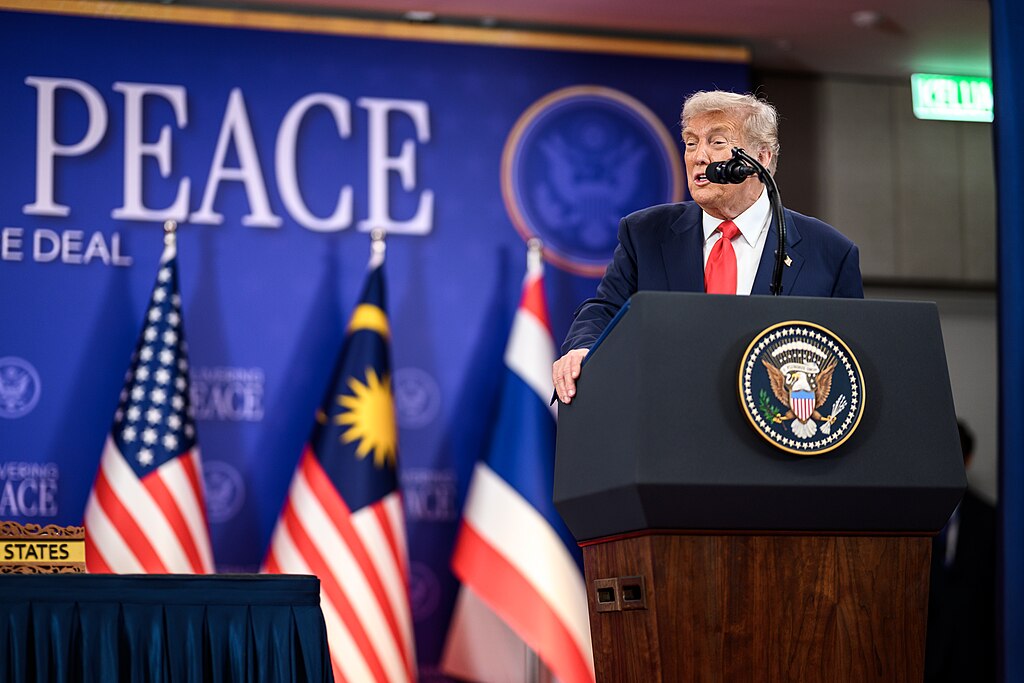
U.S.-Canada trade tensions have escalated after U.S. President Donald Trump threatened to impose a 100% tariff on all Canadian goods if Canada proceeds with closer trade cooperation with China. In a series of posts on Truth Social on Saturday, Trump warned that a deal with China would “endanger” Canada, claiming Beijing would “completely devour” the country’s economy, businesses, and social fabric.
Trump specifically accused Canadian Prime Minister Mark Carney of potentially allowing Canada to become a backdoor for Chinese goods to enter the United States and evade existing U.S. tariffs. Using inflammatory language, Trump said Canada would not be allowed to serve as a “drop-off port” for China and reiterated his opposition to any expansion of Chinese economic influence in North America.
Carney, who recently traveled to China to reset strained bilateral relations, has pushed back against the characterization of the agreement. Canadian officials clarified that Canada is not pursuing a full free trade deal with China, but rather resolving specific tariff-related issues with its second-largest trading partner after the United States. The Chinese embassy in Canada confirmed Beijing’s willingness to implement the consensus reached between the two governments.
In a video message to Canadians, Carney encouraged the public to support domestic products amid rising external economic pressure, without directly addressing Trump’s tariff threat. “We can’t control what other nations do,” Carney said, “but we can be our own best customer.”
Relations between the two leaders have deteriorated further following Carney’s criticism of Trump’s remarks about Greenland and his comments at the World Economic Forum in Davos, where he warned that the rules-based global order was eroding. Trump responded by claiming Canada “lives because of the United States,” a statement Carney firmly rejected.
If enacted, the proposed tariffs would significantly impact Canadian industries such as autos, metals, and machinery, increasing uncertainty for businesses on both sides of the border. While Trump has previously walked back similar threats during negotiations, the Canadian Chamber of Commerce urged both governments to quickly find common ground to prevent economic fallout and restore stability to the vital U.S.-Canada trade relationship.







