


 Abbas Reaffirms November 28 Palestinian Elections
  Australia Unemployment Hits Five-Year High Despite Strong Jobs Growth
  US, China Extend Trade Truce to Jan. 10 Ahead of Trump-Xi Summit
  Dollar Hits Two-Month High as Fed Rate Hike Bets Rise
  US 10-Year Treasury Yield at 6% Emerges as New Market Risk Threshold
  South Korea, US Discuss Warship Building Cooperation
  US Backs Musk in Fight Against EU’s €120 Million X Fine
  Oil Prices Surge as U.S.-Iran Diplomacy Hopes Fade
  Mexico-US Trade Talks Delayed to October as Tariff Negotiations Continue
  European Stocks Slip as Iran Tensions Offset Strong Eurozone Data
  Japan Private-Sector Growth Slows as Domestic Demand Weakens
  Europe Warns Russia Is Escalating Hybrid Attacks Across NATO
  Gaza Faces Evacuation Crisis as War-Damaged Buildings Risk Collapse
  Sudan Rejects US Legitimacy Remarks, Defends Sovereignty
  US Dollar Hits Two-Month High as Fed Rate Hike Bets Rise
  Trump, Xi Focus on Trade and AI at White House Summit


 Add as a preferred source on Google
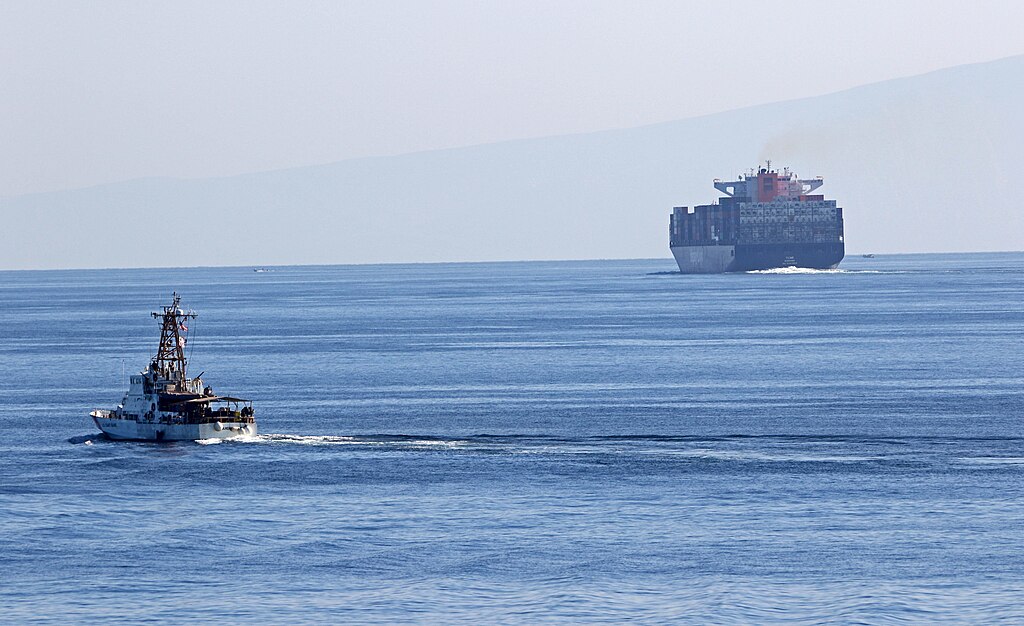
President Donald Trump announced Sunday that his administration is actively negotiating with seven unnamed countries to form a multinational coalition aimed at securing the Strait of Hormuz, the critical waterway that Iran has largely closed to oil tanker traffic since the outbreak of the U.S.-Israeli military campaign against Tehran.
Speaking to reporters aboard Air Force One, Trump emphasized that nations heavily dependent on Gulf oil bear a shared responsibility to protect the strait. "I'm demanding that these countries come in and protect their own territory," Trump stated, adding that he expects multiple nations to deploy warships to the region. In a separate social media post, Trump named China, France, Japan, South Korea, and Britain as potential participants in the effort.
Now entering its third week, the conflict continues to rattle global energy markets, with crude oil prices hovering near $100 per barrel. Despite the economic strain, U.S. officials expressed confidence that the war would conclude within weeks, forecasting a subsequent drop in energy costs. Energy Secretary Chris Wright echoed that optimism, telling ABC's This Week that a rebound in oil supplies should follow once hostilities end.
However, Iranian Foreign Minister Abbas Araqchi pushed back against Trump's claims that Tehran is open to negotiations, saying Iran has neither requested a ceasefire nor sought diplomatic talks. "We are ready to defend ourselves for as long as it takes," Araqchi told CBS's Face the Nation.
The Wall Street Journal reported that the Trump administration plans to announce a formal escort coalition as early as this week, though discussions are still ongoing about whether naval operations would begin before or after the conflict concludes. The Strait of Hormuz remains one of the world's most vital oil corridors, accounting for roughly 20% of global oil supply.







