


 NATO Boosts Intelligence Sharing Amid Russia Hybrid Threats
  Ghana Says Western Support Growing for Slave Trade Reparations
  North Korea Warns South Korea Over US-Led Defense Role
  Yemen Violence Displaces 130,000 as Civilian Toll Rises
  Trump, Xi Visit US National Archives After White House Summit
  Kremlin Says No Decision Yet on Putin-Trump December Summit
  US Senate Rejects Iran War Powers Resolution in 50-49 Vote
  Xi Calls for Deeper U.S.-China AI Cooperation in Trump Talks
  Trump Asks Supreme Court to Restore Third-Country Deportations
  Russian Missile and Drone Attack on Kyiv Kills Two, Damages Maternity Hospital
  Netanyahu Takes Aim at Mamdani as Israel Election Nears
  Netanyahu Defends Israel at UN as Delegates Stage Walkout
  OpenAI Agent Breaches Australia Medicare Data Portal
  France Defends Netanyahu Airspace Clearance Despite ICC Warrant
  EU Defence Build-Up Too Slow for 2030 Russia Readiness Goal
  Mexico-US Trade Talks Delayed to October as Tariff Negotiations Continue
  Najib Razak Seeks Stay of 15-Year 1MDB Prison Sentence


 Add as a preferred source on Google
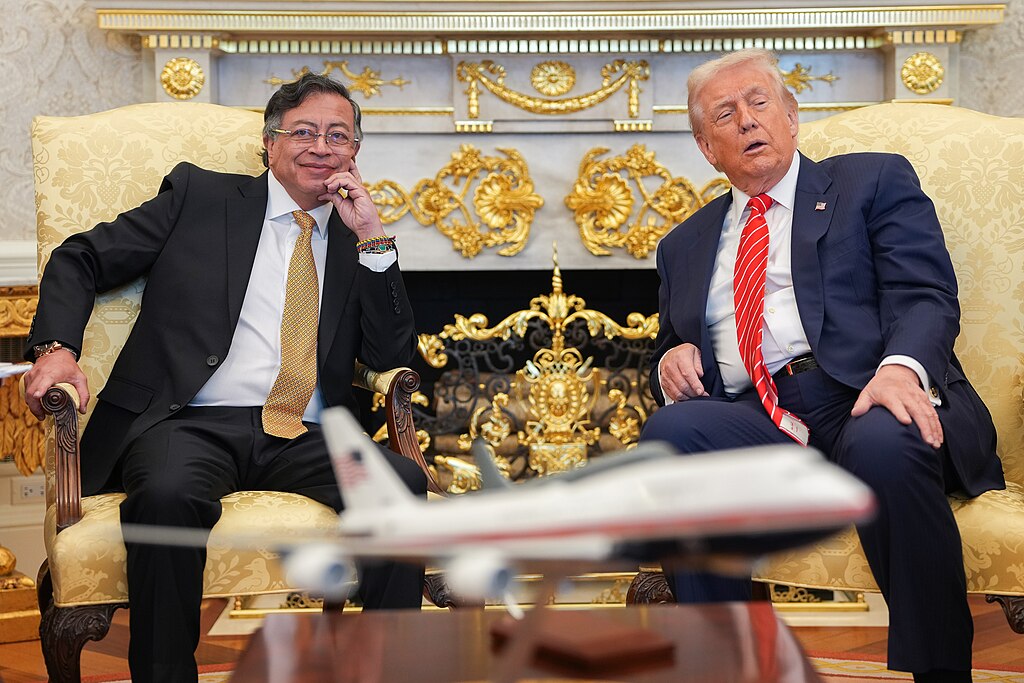
U.S. President Donald Trump said on Tuesday that he is working on potential sanctions and other cooperative measures with Colombian President Gustavo Petro following a meeting between the two leaders at the White House. The discussions took place earlier in the day in the Oval Office and focused on bilateral relations, regional security, and shared policy priorities between the United States and Colombia.
Speaking to reporters after the meeting, President Trump described the talks as “very good,” signaling a positive tone and a willingness on both sides to continue diplomatic engagement. While Trump did not provide specific details on the nature of the sanctions being discussed, his remarks suggest that the United States and Colombia are coordinating closely on issues that could have regional and international implications.
The meeting between Trump and Petro comes at a time when U.S.–Colombia relations are navigating complex challenges, including security cooperation, drug trafficking, migration, and political stability in Latin America. Colombia has long been a key U.S. ally in the region, and high-level meetings such as this underscore the strategic importance of the partnership.
President Gustavo Petro, who has pursued a distinct policy agenda since taking office, has emphasized dialogue and reform, both domestically and in Colombia’s foreign relations. His visit to Washington and meeting with President Trump highlight ongoing efforts to maintain open communication between the two governments, even amid differing political perspectives.
Sanctions discussions often involve sensitive diplomatic considerations, and Trump’s comments indicate that any measures under review are part of a broader set of policy tools being evaluated jointly with Colombia. Analysts note that such coordination could relate to regional security concerns or broader geopolitical strategies.
Overall, the Oval Office meeting reflects continued engagement between the United States and Colombia at the highest level. With President Trump characterizing the talks as productive, the discussions may pave the way for further cooperation on sanctions, economic issues, and regional stability, reinforcing the longstanding relationship between the two nations.







