


 Ukrainian Drone Attacks Hit Russian Regions, Injuring at Least 12
  Ghana Says Western Support Growing for Slave Trade Reparations
  Wall Street Ends Flat as Oil, Treasury Yields and Fed Jitters Rattle Markets
  Russian Missile and Drone Attack on Kyiv Kills Two, Damages Maternity Hospital
  Gold Holds Near $4,275 as Rising Treasury Yields Fuel Fed Rate Hike Bets
  US Backs Musk in Fight Against EU’s €120 Million X Fine
  France Defends Netanyahu Airspace Clearance Despite ICC Warrant
  Fed Unveils Stablecoin Rules Under GENIUS Act
  Trump, Xi Focus on Trade and AI at White House Summit
  U.S. 10-Year Treasury Yield Hits 2007 High as Fed Rate Hike Bets Rise
  NATO Boosts Intelligence Sharing Amid Russia Hybrid Threats
  Asian Stocks Fall as Surging Bond Yields Rattle Markets
  Soybean Futures Slip as Traders Await Trump-Xi Trade Signals
  North Korea Warns South Korea Over US-Led Defense Role
  Mexico-US Trade Talks Delayed to October as Tariff Negotiations Continue
  Japanese Bank Stocks Surge as Bond Yields Fuel Rate Hike Bets
  South Korea, US Discuss Warship Building Cooperation


 Add as a preferred source on Google
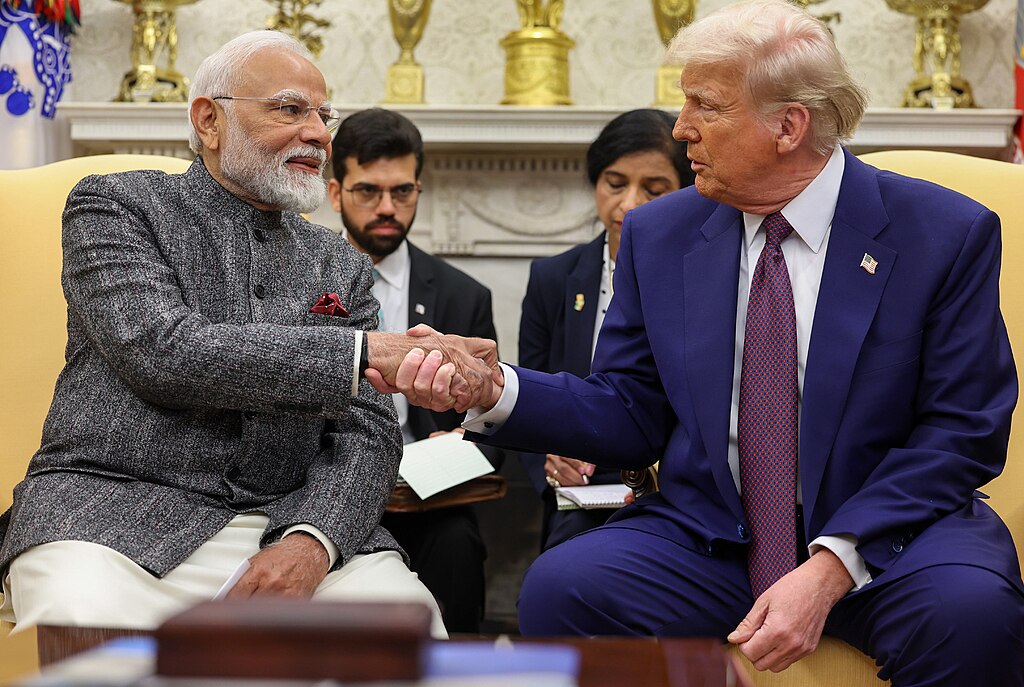
U.S. President Donald Trump announced a major U.S.–India trade deal on Monday that significantly reduces U.S. tariffs on Indian goods to 18% from a previous combined rate of 50%. The agreement, revealed after a phone call with Indian Prime Minister Narendra Modi, is aimed at reshaping trade relations, energy sourcing, and market access between the two countries while pressuring India to halt its purchases of Russian oil.
According to Trump, India has agreed to stop buying Russian crude and instead source more oil from the United States, with potential purchases from Venezuela also under consideration. A White House official confirmed that Washington would rescind an additional punitive 25% duty imposed over India’s Russian oil imports, which had been stacked on top of a 25% reciprocal tariff. While the announcement sparked optimism, key implementation details such as timelines, enforcement mechanisms, and legal proclamations have yet to be released.
Financial markets reacted positively to the news. U.S.-listed Indian stocks rallied sharply, with Infosys, Wipro, and HDFC Bank posting strong gains, while the iShares MSCI India ETF climbed about 3%. The announcement also lifted broader U.S. market sentiment, adding to gains in semiconductor and artificial intelligence stocks.
Trump said India committed to “BUY AMERICAN” at a much higher level, including more than $500 billion worth of U.S. energy products such as oil and coal, as well as technology, agricultural goods, and other exports. He also stated that India would work toward reducing tariffs and non-tariff barriers on U.S. goods to zero, a claim that has drawn both interest and skepticism from trade experts.
Indian leaders welcomed the deal. Modi thanked Trump publicly, highlighting the reduced tariff rate on “Made in India” products, while Trade Minister Piyush Goyal said the agreement would strengthen economic ties, boost exports, and improve access to U.S. technology. Economists noted that aligning India’s tariffs with other Asian economies could ease pressure on exports and the rupee after months of market underperformance.
Despite enthusiasm, U.S. business groups urged caution, noting that tariffs remain far higher than pre-2024 levels. With India also finalizing a landmark trade deal with the European Union, the U.S.–India agreement marks a pivotal moment in global trade dynamics, even as many details remain unresolved.







