


 Zelenskiy Meets CIA Chief John Ratcliffe at Ireland’s Shannon Airport
  Diana’s Brother Backs Security for Harry and Meghan
  Paramount-Warner Bros $110 Billion Deal Draws Antitrust Backlash
  Hyundai CEO Warns Chinese Automakers Could Disrupt US Market
  Burnham Eyes UK Leadership Role in AI Ahead of Trump Meeting
  Pentagon Restarts Testosterone Testing for US Troops
  US-China Talks Target AI, Tariffs Ahead of Trump-Xi Summit
  DOJ Will Investigate AI-Related Crimes, Attorney General Blanche Says
  Europe can’t achieve space sovereignty alone. Here’s why
  Guterres Urges Stronger Global AI Safeguards Ahead of UN Assembly
  Trump Sets High-Stakes UN Meetings With Zelenskiy, Gulf Leaders
  White House Bars CNN, MS NOW and Politico Reporters
  US Plans Two New Military Bases in Greenland Under Arctic Deal
  US, Japan and South Korea Back Taiwan Ahead of Trump-Xi Summit
  CNN, MS NOW and Politico Sue Trump Over White House Media Ban
  AfD Wins German State Election as Merz’s CDU Hits Historic Low
  US Bans Canadian Alcohol, Motorcycles as Trade War Escalates


 Add as a preferred source on Google
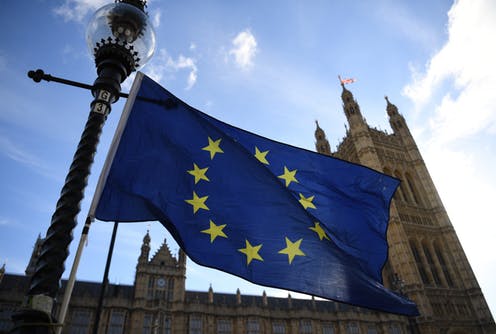
President Donald Trump announced Friday that the United States will launch a Section 301 investigation into the European Union’s penalties against American technology companies, escalating trade tensions after Google was hit with another major antitrust fine.
In a post on Truth Social, Trump accused the EU of unfairly targeting U.S. tech giants through what he described as discriminatory and excessive fines. He argued that the bloc has repeatedly singled out leading American companies, including Apple, Meta, Amazon, and Google.
According to Trump, Apple has faced roughly $15 billion in EU penalties, Meta about $3 billion, Amazon $2.5 billion, while Google has now accumulated more than $18 billion in fines following its latest sanction.
"The United States is not a 'PIGGYBANK' for Europe," Trump wrote, adding that his administration would immediately begin a Section 301 investigation into what he called the EU’s practice of "robbing" American companies and taxpayers.
Trump also warned that the European Union could face significant consequences if the investigation concludes that its actions unfairly burden U.S. commerce. He said the administration expects the penalties imposed on American firms to be reversed and indicated that substantial tariffs could be introduced against the EU.
The latest dispute follows the European Commission’s decision on Thursday to fine Google €460 million for favoring its own services in search results and an additional €430 million for restricting developers from directing users to alternative payment options outside Google Play.
The action adds to a series of high-profile EU enforcement measures against major U.S. technology firms. Recent penalties include a €2.95 billion fine against Google in September 2025 over advertising technology practices, a €500 million fine on Apple in April 2025 related to anti-steering rules for music streaming, a €200 million penalty against Meta over its advertising and tracking model, and a €120 million fine imposed on X in December 2025 for transparency violations.
A Section 301 investigation is a U.S. trade enforcement tool that examines whether foreign government policies unfairly restrict American commerce. If violations are found, the U.S. government can impose retaliatory measures, including tariffs, to pressure trading partners to change their practices.







