


 Europe Warns Russia Is Escalating Hybrid Attacks Across NATO
  US Officials Split Over Response to Israeli West Bank Settlements
  Sudan Rejects US Legitimacy Remarks, Defends Sovereignty
  Judge Orders Trump to Restore White House Access for CNN, MS NOW and Politico
  Abbas Reaffirms November 28 Palestinian Elections
  North Korea Warns South Korea Over US-Led Defense Role
  US Senate Rejects Iran War Powers Resolution in 50-49 Vote
  South Korea, US Discuss Warship Building Cooperation
  Russian Envoy Dmitriev Heads to US for Ukraine Talks
  Kremlin Says No Decision Yet on Putin-Trump December Summit
  France Defends Netanyahu Airspace Clearance Despite ICC Warrant
  US Invites Putin to Miami G20, Opening Door to Trump Summit
  Pezeshkian Says US Must Choose When Iran War Ends
  Netanyahu Takes Aim at Mamdani as Israel Election Nears
  Mexico-US Trade Talks Delayed to October as Tariff Negotiations Continue
  Trump, Xi Focus on Trade and AI at White House Summit
  NATO Boosts Intelligence Sharing Amid Russia Hybrid Threats


 Add as a preferred source on Google
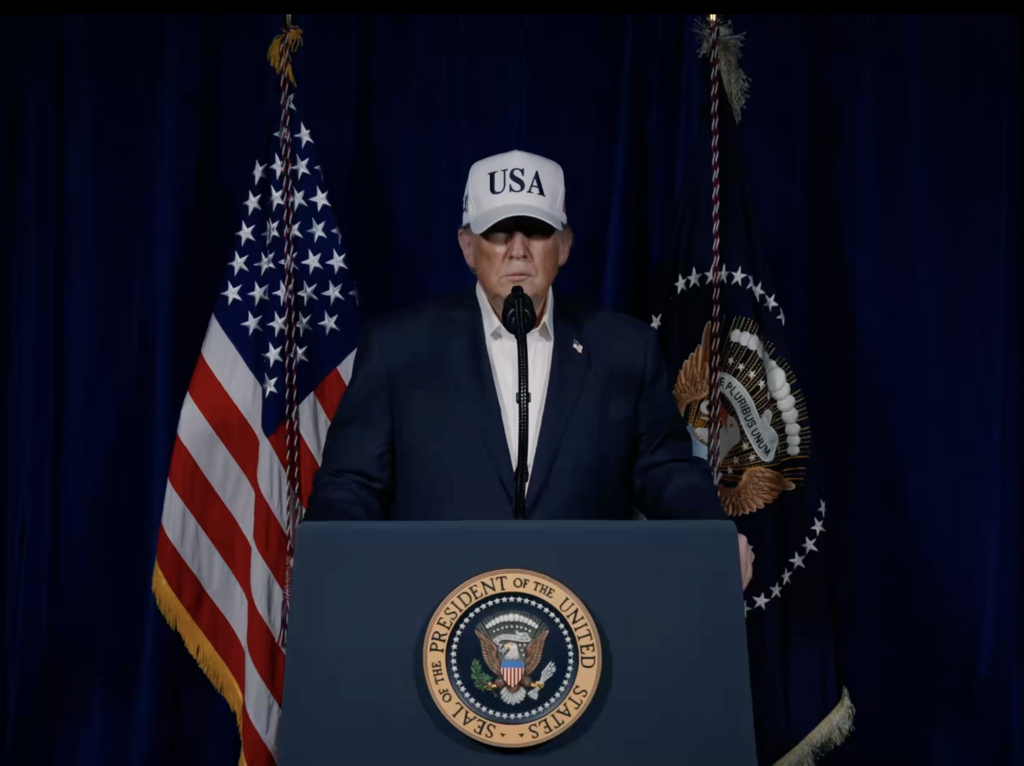
President Donald Trump took to prime-time television Wednesday night to defend the ongoing U.S.-Israeli military campaign against Iran, now entering its second month. In a 19-minute White House address, Trump claimed significant military progress while simultaneously issuing fresh threats — a combination that left markets unsettled and many Americans unconvinced.
Trump asserted that U.S. forces had dismantled Iran's navy, air force, and ballistic missile capabilities, with nuclear infrastructure largely neutralized. He indicated that operations would continue at high intensity for another two to three weeks, though he declined to offer a concrete end date — a gap in clarity that analysts say undermines confidence both at home and in global markets. Following the speech, oil prices climbed, stocks slipped, and the dollar strengthened, reflecting investor anxiety over the conflict's uncertain trajectory.
A central flashpoint remains the Strait of Hormuz, the critical waterway controlling roughly one-fifth of global oil and gas shipments. Iran's continued grip on the strait has triggered an unprecedented energy shock worldwide. Trump deflected responsibility for reopening it, urging oil-dependent nations to take the lead — though Western allies, excluded from pre-war consultations, have shown little appetite for involvement.
On Iran's nuclear stockpile, Trump reversed his earlier demand for a handover, stating the deeply buried uranium was now being monitored by satellite. Critics noted that Iran's government, despite losing senior leaders including Supreme Leader Khamenei, remains functionally intact under harder-line successors.
The political cost at home is mounting. Trump's approval rating has dropped to 36%, its lowest since his return to office, driven largely by surging gasoline prices and public unease over a large-scale military engagement — one that contradicts his campaign pledges to avoid foreign entanglements. With midterm elections approaching, Republican lawmakers face growing pressure as economic frustration builds among voters.







