


 Trump, Xi Visit US National Archives After White House Summit
  Judge Orders Trump to Restore White House Access for CNN, MS NOW and Politico
  Trump, Xi Focus on Trade and AI at White House Summit
  Ukrainian Drone Attacks Hit Russian Regions, Injuring at Least 12
  US Backs Musk in Fight Against EU’s €120 Million X Fine
  Xi Calls for Deeper U.S.-China AI Cooperation in Trump Talks
  Saudi Arabia, Turkey and Pakistan Plan Urgent Defence Talks Over Houthi Attacks
  Ghana Says Western Support Growing for Slave Trade Reparations
  France Defends Netanyahu Airspace Clearance Despite ICC Warrant
  NATO Boosts Intelligence Sharing Amid Russia Hybrid Threats
  Najib Razak Seeks Stay of 15-Year 1MDB Prison Sentence
  What ‘Taiwan Independence’ Means as Xi Presses Trump on US Policy
  EU Defence Build-Up Too Slow for 2030 Russia Readiness Goal
  South Korea, US Discuss Warship Building Cooperation
  Russian Missile and Drone Attack on Kyiv Kills Two, Damages Maternity Hospital
  Abbas Reaffirms November 28 Palestinian Elections
  North Korea Warns South Korea Over US-Led Defense Role


 Add as a preferred source on Google
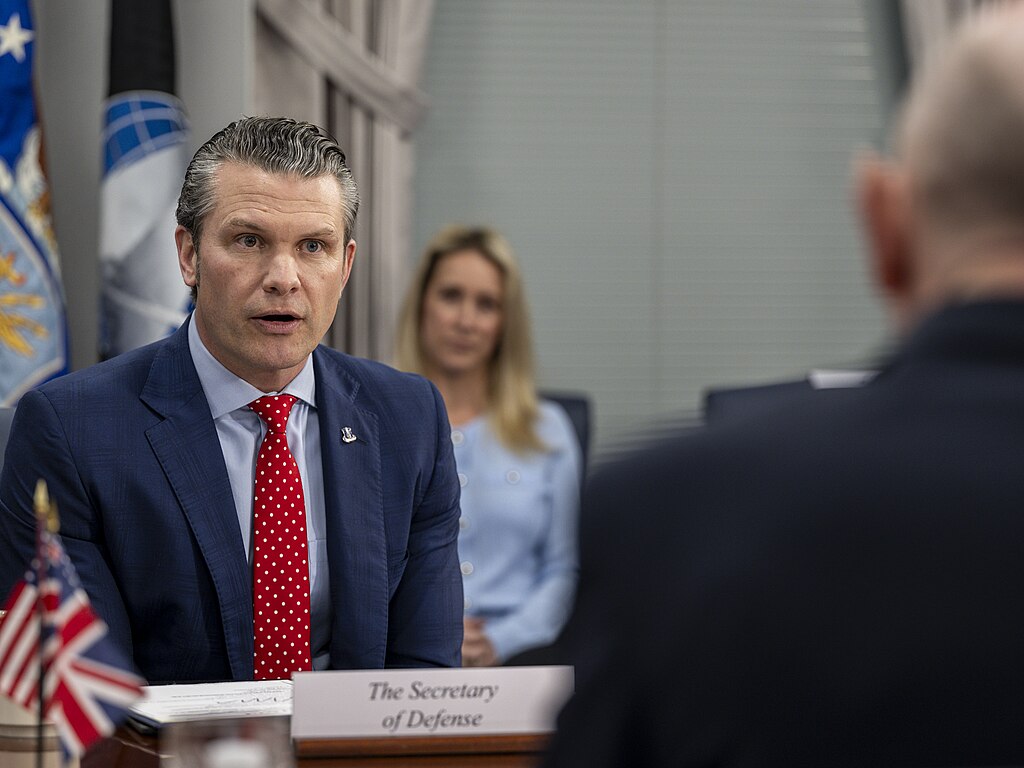
U.S. Defense Secretary Pete Hegseth is not expected to attend a key NATO defence ministers’ meeting in Brussels next month, according to two sources familiar with the matter. This marks the second consecutive time a senior Trump administration official has skipped a major gathering of the military alliance, raising fresh questions about the United States’ long-term commitment to NATO.
The Feb. 12 meeting at NATO headquarters will reportedly be missed by Hegseth, according to a U.S. official and a NATO diplomat. The sources did not provide a reason for his absence. Both the Pentagon and NATO declined to comment. Last December, U.S. Secretary of State Marco Rubio also did not attend a NATO foreign ministers’ meeting, adding to concerns among allies.
President Donald Trump has long had a strained relationship with NATO, frequently criticizing member states over defence spending and burden-sharing. Tensions have intensified recently following Trump’s renewed interest in acquiring Greenland, a semi-autonomous territory belonging to NATO member Denmark. Analysts say such disputes make high-level engagement with NATO more important than ever.
Oana Lungescu, a former NATO spokesperson and current Distinguished Fellow at the Royal United Services Institute, warned that Hegseth’s absence could send a negative signal. She said it would deepen European allies’ concerns about U.S. reliability at a particularly sensitive moment for transatlantic relations.
The development comes as the Trump administration weighs potential actions against Iran, including targeted military strikes, according to multiple sources. At the same time, Washington has outlined a shift in its global defence posture. A newly released National Defense Strategy states that in Europe and other regions, allies will increasingly take the lead in addressing threats, with the U.S. providing more limited support.
Diplomats expect Elbridge Colby, the Pentagon’s policy chief and a key architect of the new strategy, to attend the NATO meeting in Hegseth’s place. Former NATO official Jamie Shea said the defence secretary’s absence would be particularly unfortunate given recent discussions between Trump and NATO Secretary General Mark Rutte on expanding the alliance’s role in Arctic security.
Historically, it has been rare for a U.S. cabinet-level official to miss NATO ministerial meetings. As NATO’s largest military power, the United States has traditionally played a central leadership role, making the repeated absences notable for allies and observers alike.







