


 Lula and Flavio Bolsonaro Tied in Brazil Runoff Poll
  Trump Administration Plans Faster FDA Reviews for Smoke-Free Nicotine Products
  Burnham Eyes UK Leadership Role in AI Ahead of Trump Meeting
  China Tightens Fentanyl Rules Ahead of Trump-Xi Summit
  Trump to Press Xi on Release of US Nuclear Expert Held in China
  Taiwan Vows to Advance US Arms Sales Ahead of Trump-Xi Meeting
  Kremlin Says No Grounds Yet for Ukraine Peace Talks
  Sudan Rejects US Legitimacy Remarks, Defends Sovereignty
  Europe Warns Russia Is Escalating Hybrid Attacks Across NATO
  Iran Vows ‘Crushing’ Response as US Talks Continue
  Zelenskiy Warns Russia Preparing Major Attack on Ukraine
  US, China Extend Trade Truce to Jan. 10 Ahead of Trump-Xi Summit
  South Korea, US Discuss Warship Building Cooperation
  Macron Challenges Trump’s Gaza Peace Claims at UN
  Canada Unveils Bill to Fast-Track Major Resource Projects
  Scott Bessent Eyed as Trump’s New AI Czar
  Trump Says ‘Freedom’ Is Coming to Cuba


 Add as a preferred source on Google
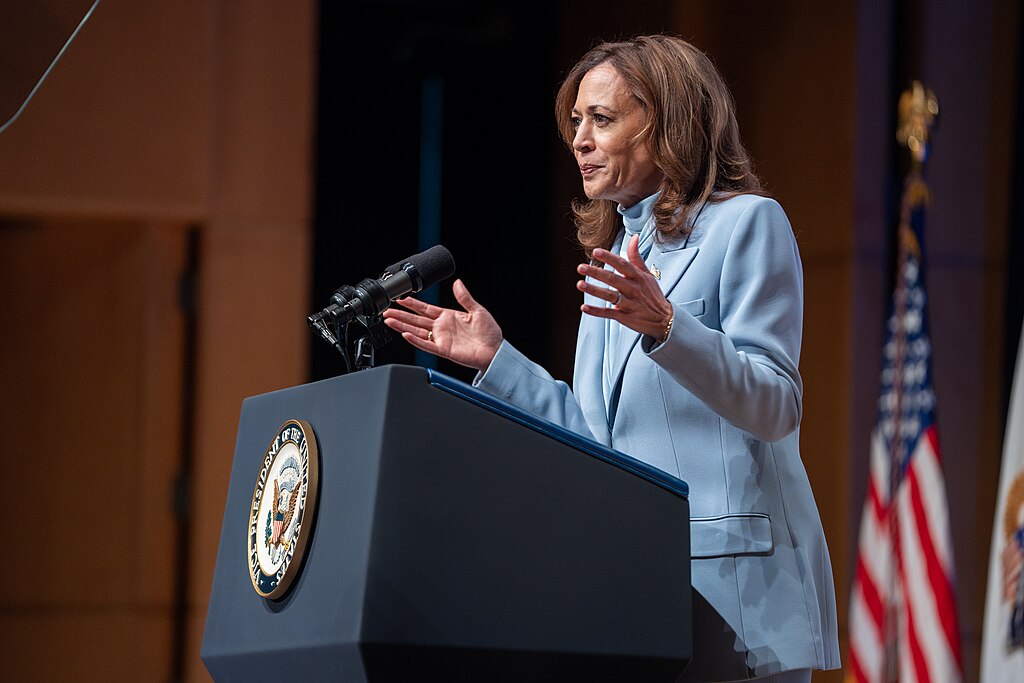
Conservative commentator Tomi Lahren is sparking controversy yet again with a tweet claiming that the recent election loss of Kamala Harris was "stolen" by a surprising coalition. In her fiery statement, Lahren pointed fingers at a diverse array of voters, including Black men, Hispanics, white women, young people, truck drivers, union workers, the unvaccinated, and even “legal immigrants.” Ending her tweet with “WE THE GARBAGE PEOPLE OF AMERICA!!!!!” Lahren’s remarks have ignited a firestorm across social media, dividing her audience and drawing intense responses from both supporters and critics.
Lahren Points Fingers at Unexpected Coalition
In her statement, Lahren insinuated that Harris’ election defeat wasn’t due to a lack of support from typical voter blocs, but rather because of an unexpected coalition of Americans from various backgrounds. By calling out groups often not associated with conservative voting patterns, including Black men, Hispanics, and union workers, she suggested a shift in voter dynamics that played a key role in the election’s outcome.
Lahren’s use of the phrase “We the Garbage People of America” is particularly controversial, capturing the frustration she says is felt by working-class Americans who feel overlooked by elites and mainstream media. The language was divisive, with some praising her for “speaking truth” and others accusing her of demeaning entire communities. Critics argue that her characterization of these groups as “garbage people” reflects a broader issue of political discourse that vilifies voters based on race, occupation, or health status.
Mixed Reactions and Strong Online Backlash
Social media users were quick to respond to Lahren’s tweet, with reactions reflecting the deep divide in the nation’s political landscape. Supporters echoed her sentiments, sharing anecdotes of disenfranchised Americans who they believe feel “ignored” by the political establishment. Many conservatives and “everyday Americans,” as Lahren’s fans call themselves, have long held that their voices aren’t adequately represented, and some interpreted her tweet as a rallying cry for the “forgotten.”
However, backlash quickly followed. Critics argued that Lahren’s statement was not only divisive but harmful, accusing her of using inflammatory language to attack various communities. “Calling us garbage because we didn’t vote for Harris? This kind of rhetoric is dangerous,” one Twitter user replied. Others pointed out the irony in Lahren’s choice of groups, noting that some of the demographics she listed, like Black men and Hispanics, are often targeted by conservative policies.
Political analysts have weighed in, noting that Lahren’s approach represents a broader trend in conservative media: tapping into the disillusionment of working-class Americans across racial and social boundaries. By highlighting perceived “outsiders” as a formidable voting bloc, Lahren seems to be underscoring the idea that traditional political identities are breaking down in today’s polarized climate.
Does Lahren’s Tweet Reflect a Shift?
Lahren’s remarks may also signal a notable shift in voter loyalties. Some analysts believe the election results suggest that discontented voters, regardless of race or background, may be aligning themselves less with traditional party lines and more with issues that directly impact their lives, like the economy, healthcare, and job security. The presence of union workers and truck drivers in her list of “garbage people” may hint at a shifting loyalty among these groups, who may be increasingly willing to cross party lines.
In the days following Lahren’s tweet, the term “Garbage People of America” trended across social media, with some users embracing it ironically and others condemning it. The controversy underscores the growing complexities of American voter demographics, where identity politics intersects with class, occupation, and broader societal values.
As of now, Lahren has not responded to the backlash or clarified her statement. However, her tweet has undeniably added another layer to the conversation about America’s divided political landscape, with implications for future elections and the ongoing cultural dialogue surrounding political identity in the U.S.







