


 Trump Administration Bars U.S. Travelers From Congo Flights Amid Ebola Outbreak
  AstraZeneca, Bristol Myers Squibb Explore Mega Merger Worth Nearly $400 Billion
  Venezuela Earthquake Health Risks Rise as Disease Monitoring Intensifies
  Moderna Wins FDA Approval for mFLUSIVA mRNA Flu Vaccine for Adults 50+
  Alcohol is one of the most dangerous drugs, yet its presence is ubiquitous in social settings and celebrations
  Eli Lilly Eyes AtaiBeckley Acquisition to Expand Psychedelic Mental Health Pipeline
  FDA Approves Mirum’s Atebrioz for Rare Bone Disorder FOP
  Trump Signs Order to Cut Routine Childhood Vaccines
  Novo Nordisk Raises 2025 Outlook Despite Wegovy Pill Miss and CagriSema Setback
  Novartis Shares Plunge After Muscle Drug Fails Phase III Trial
  France Keeps Top Health Alert as Officials Brace for Another Heatwave
  SK Biopharmaceuticals Secures Global Rights to Biohaven Epilepsy Drug Opakalim
  GSK Unveils $2.52 Billion Cost-Cutting Plan to Accelerate Drug Pipeline


 Add as a preferred source on Google
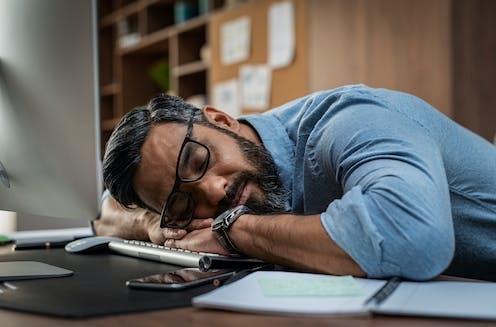

What determines how generous a person you are? Could it be how much money you have? How kind you are? Or maybe it comes down to your values. These all seem reasonable assumptions, but a new study from Berkeley University suggests something that feels as trivial as how well you’ve slept lately can also affect how willing you are to help other people on any given day. It found sleep deprivation leads to a reduction in generosity.
The researchers tested how kind people were when they were tired in three different ways. In the first study, they deprived 21 volunteers of sleep for 24 hours, then asked them how willing they would be to help in a range of scenarios such as helping a stranger carry their shopping bags.
They asked the participants to repeat the altruism questionnaire after a normal night’s sleep. The researchers also studied the 21 participants’ brain activity levels using fMRI imaging.
Next, 171 volunteers recruited online kept a diary of their sleep before doing the same questionnaire. For both experiments the researchers found that tired participants scored lower on the altruism questionnaire. This was the case regardless of participants’ empathy traits and whether the person they were supposed to help was a stranger or someone familiar to them.
Finally, the researchers analysed over 3.8 million charity donations made in the US before and after the clocks were changed for summer, which causes everyone to loose an hour’s sleep. Donations decreased by 10% in the days after the clocks changed compared to the weeks before and after the transition.
The fMRI imaging analysis found sleep deprivation seems to be connected to reduced activity in the area of the brain linked to social cognition, which regulates our social interactions with others. The change in brain activity was not related to sleep quality, only to quantity. The good news is this effect is short lived, and disappears once we return to our normal sleep pattern.
What the research says
It’s long been established that sleep is critical to many aspects of our health and wellbeing. This was famously demonstrated in 1959, when the American DJ Peter Tripp stayed awake to broadcast live from New York’s Time Square for 201 hours continuously. Peter’s record was beaten in 1964 by Randy Gardner, a teenager who stayed awake for 260 hours (nearly 11 days) for a school science fair project.
Randy and Peter appeared well throughout their experiences. But as the challenge progressed they began to slur their speech, were confused at times and struggled to complete simple tasks such as reciting the alphabet.
Both also had vivid hallucinations. Peter saw cobwebs in his shoes and believed a desk drawer had burst into flames.
We now know that sleep deprivation is linked to mental health problems including hallucinations and psychosis. Peter and Randy seemed to recover from their ordeals, but research shows that severe long term sleep deprivation can lead to lasting neurological problems.
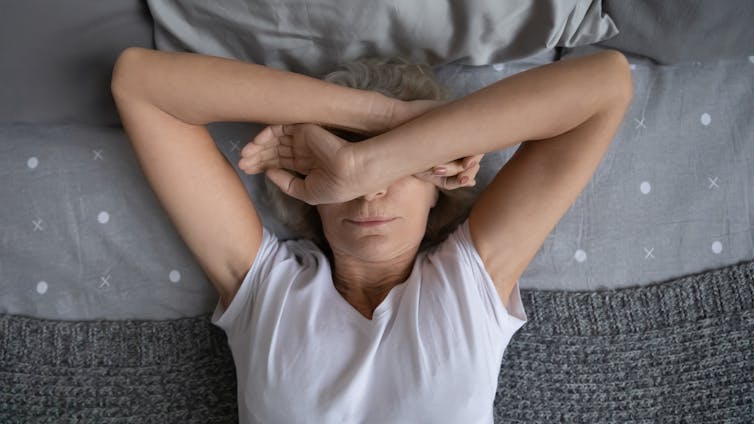
A lack of sleep can hit your basic cognition. fizkes/Shutterstock
Since Peter and Randy’s stunts, research has found sleep deprivation affects most aspects of our behaviour, not least our basic thinking skills, like memory and decision making. Back in 1988, the Association of Professional Sleep Societies published a report in the journal Sleep, warning that poor sleep leads to an increased risk of having an accident, such as a road collision or a DIY mishap at home.
A study in 2015 compared the number of fatal traffic accidents in the US straight after the clocks changed to summer time when clocks go forward and we lose one hour’s sleep and found a significant increase in the number of accidents the day afterwards.
It all makes sense
Psychologists believe kindness and generosity are part of our social cognition, a complex set of processes which control how we interact with others and how we make decisions about our behaviour towards them.
These decisions are based on many factors. Each of these factors is affected by how well we sleep; our memory, all aspects of memory of previous situations, the quality of our decisions, how impulsive we are and especially our emotions and how well we can regulate them. It’s only to be expected that the amount of money we are willing to donate would also be sensitive to sleep.
So next time a friend asks you to donate to their marathon fundraiser, sleep on it.







