


 Republican Lawmakers Urge National Guard Role for World Cup Drone Security
  Trump Draws Cheers at Ryder Cup as U.S. Trails Europe After Opening Day
  Trump Signs Executive Order Targeting Big-Money College Athlete Payouts
  NBA Returns to China with Alibaba Partnership and Historic Macau Games
  Apple Eyes U.S. Formula 1 Broadcast Rights in Major Sports Streaming Push
  Trump to Host UFC Event at White House on His 80th Birthday
  FIFA Faces Investigation Over 2026 World Cup Ticket Pricing and Seat Allocation Issues
  U.S. Eases Iran Team Travel Restrictions Ahead of Seattle World Cup Match
  U.S. Plans $115 Million Counter-Drone Investment to Secure FIFA World Cup and Major National Events
  Marco Rubio Says U.S. Will Block IRGC-Linked Individuals From Iran World Cup Delegation
  Trump Plans New Executive Order to Address Rising NIL Costs in College Sports
  Spying, Southampton and economic pressure cooker of the ‘richest match in football’
  US Reviewing Visa Denial for Venezuelan Little League Team Barred from World Series
  JD Vance to Lead U.S. Presidential Delegation at Milano Cortina Winter Olympics Opening Ceremony
  Trump Threatens Stadium Deal Over Washington Commanders Name
  Los Angeles Mayor Says White House Must Reassure Fans Ahead of FIFA World Cup
  Trump Booed at Club World Cup Final, Praises Pele as Soccer’s GOAT


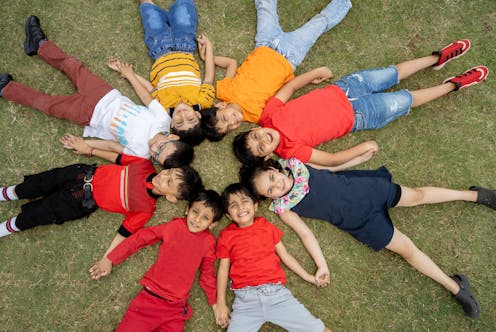


Almost 350,000 people live with autism spectrum disorder (ASD) in Pakistan. Many face exclusion from education and social activities and opportunities for education and sports are rare for them. In addition, social stigma leads to further discrimination and social exclusion.
ASD is a complex developmental disability that includes a broad spectrum of conditions. It is characterized by difficulties in social communication and interactions, along with restricted and repetitive behaviours, interests or activities.
The Lahore-based Kafka Welfare Organization, founded by the lead author of this article, uses adapted sports, games and physical activities to support the social development of youth and children with ASD from low-income areas.
The project aimed to break barriers that excluded children with disabilities from participating in sports and addressed the lack of sporting opportunities for them. It also offers some valuable lessons for supporting accessible and inclusive sports in Canada.
How it all started
The project was inspired by Sport for Development and Peace, an international movement that started in the 2000s and aims to use sport to achieve social gains such as education, health and peace.
Running from January 2021 to December 2022, the project was a collaboration between the Kafka Welfare Organization, the Children Library Complex in Lahore, and students from the Physical Education and Sports Sciences department at Government College University Lahore.
The project operated on a voluntary basis and was continued by the Special Education project at the Children Library Complex after its completion in 2022.
The project used adaptive sports, games and physical activity to engage children and youth with disabilities. Adaptive sports modify traditional sports to include individuals with intellectual and physical disabilities.
Activities included individual football sessions for children and youth uncomfortable with group settings, colourful tools and games to appeal to those drawn to vibrant colours, and controlled environments for those sensitive to noise. The aim was to improve participants’ mental and physical health, teach life skills and provide fun, stress-relieving activities.
Sport for social inclusion
The project provided weekly sport sessions for children and youth with ASD to improve their health, social, motor, life and communication skills through organized and goal-oriented adapted sports and physical activities.
These sessions attracted 10 to 15 participants, many of whom returned each week.
A group of coaches/instructors were trained in inclusive coaching techniques by the lead author. These techniques focused on understanding the needs of individuals, the importance of clear communication and how to organize activities for individuals or small groups.
Given the unique needs of children and youth with ASD, the program maintained a ratio of one coach for every one to two children. A large team was needed to work with 10 to 20 children at a time.
Some children and youth needed time to adjust to their environment, and each had unique needs that needed to be addressed. This required the program to take a flexible and inclusive approach.
The bond between coaches/instructors and the children took time to establish, particularly considering the sensitivity of children with ASD. Understanding each child’s needs allowed coaches to select activities that were relevant and beneficial to each individual. The project welcomed not only children and youth with ASD, but also those with other disabilities or developmental challenges.
Additionally, a team of psychologists from the Children Library Complex assessed the needs of the children and youth when they joined the program. These experts communicated the needs of participants to the coaches/instructors so they were better able to involve the program participants.
How sport can change lives
The project provided autistic children and youth with an inclusive environment, autonomy in playing sports and a safe space to play freely without external constraints. Initially, some children were hesitant to participate or interact with coaches/instructors, but later they all gradually became more comfortable and relaxed.
Throughout the project, the participants became more enthusiastically engaged in activities, and their parents expressed gratitude for the positive impact on their lives. Notable improvements were observed in the children’s communication, motor skills and behaviour over the six-month period.
Participation in sport and physical activity provides numerous benefits for children and youth, including better cognitive performance, problem solving and decision-making skills, and executive functioning. Additionally, regular physical activity promotes inclusion by improving social communication.
The project yielded several key lessons, including the importance of implementing adaptive sports, training coaches on inclusive sports and creating welcoming, safe spaces for children and youth with disabilities to be physically active.
In Canada, children with ASD face similar barriers, including limited access to inclusive programs and a lack of specialized training for coaches. Canada’s first-ever physical activity report card for children and youth with disabilities gave a grade of D for overall physical activity, meaning there is much room for improvement.
By adopting the lessons from this initiative, Canadian sports programs can enhance their inclusivity and provide better opportunities for children with ASD to participate and thrive in sports.







