


 OpenAI to Preview GPT-6 Cyber AI Model for Cybersecurity
  US Backs Musk in Fight Against EU’s €120 Million X Fine
  Solidigm Eyes $150 Billion IPO as SK Hynix Expands AI Storage Push
  Hanmi Pharm Soars 30% on $2.3 Billion Genentech Obesity Drug Deal
  SK Biopharmaceuticals Secures Global Rights to Biohaven Epilepsy Drug Opakalim
  Novo Nordisk Eyes Turnaround as Oral Wegovy Challenges Eli Lilly in Weight-Loss Drug Race
  Xi Calls for Deeper U.S.-China AI Cooperation in Trump Talks
  FDA Weighs Safety Standards for Psychedelic Therapies
  SpaceXAI to Double Nvidia Chips at Colossus 2 by Year-End
  3 clinical-grade skincare creams you really shouldn’t buy online
  Meta Found Liable in New Mexico Facebook Data Privacy Case
  Meta Connect Spotlights Camera-Free Smart Glasses Amid Privacy Concerns
  BlackBerry Shares Rise as Q2 Earnings, Revenue Beat Estimates
  U.S. Issues Cuba Health Alert as Illnesses Rise
  Alcohol is one of the most dangerous drugs, yet its presence is ubiquitous in social settings and celebrations
  France Battles Mediterranean Wildfires as Heatwave Fuels Fire Risk
  Trump Signs Order to Cut Routine Childhood Vaccines


 Add as a preferred source on Google
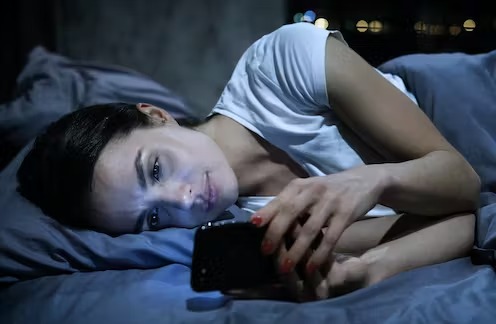



Technology is supposed to make our lives easier. Smart phones provide a palm-size window to the world, enabling us to do almost anything at the touch of a button. Smart homes look after themselves, and virtual meetings mean that for many, time spent commuting is a thing of the past.
So we should have more free time. Time which is now spent sleeping, relaxing or simply doing nothing – right?
If the idea that you have more time than ever before is making you choke on your coffee, you are not alone. There is growing evidence that while digital technology may help us to save some time, we end up using that time to do more and more things.
We recently interviewed 300 people across Europe to understand how they used digital devices in day-to-day life. This research showed that people want to avoid empty periods of time in their lives, so they fill those periods performing tasks, some of which wouldn’t be possible without technology.
Whether it was waiting for a bus, waking in the morning, or lying in bed at night, our participants reported that time which would previously be “empty” was now filled with brain training apps, creating lists of things they should do or try based on their social media feed, and other life admin.
It seems that quiet moments of people watching, imagining and daydreaming are now filled with tech-based tasks.
The growth in digital tasks is happening, in part, because technology appears to be changing our perception of what free time is for. For many people, it is no longer enough to simply eat dinner, watch TV or maybe do an exercise class.
Instead, in an attempt to avoid wasting time, these activities are performed while also browsing the web in search of the ingredients for a more perfect life and trying to develop a sense of achievement.
On the face of it some of these tasks may seem like examples of tech saving us time. In theory, online banking should mean I have more time because I no longer need to go to the bank in my lunch break. However, our research suggests that this is not the case. Technology is contributing to a denser form of life.
Social media may at times inspire, motivate or relax people. But our research suggests people often feel a sense of guilt, shame and regret after filling their free time with online activities. This is because they perceive online activities to be less authentic and worthwhile than real-world activities.
It seems that people still see going for a walk or actually being with friends as more valuable than being online. Maybe if we put down the phone a little more, we would have the time to actually cook those recipes we watch online.
Why is technology creating work?
Changing working patterns are also thought to be intensifying work. Home and hybrid working, enabled by video conference technology, have blurred the boundaries between work time and personal time. Now that the office is in the spare room, it is all too easy to think: “I’ll just pop into the study and finish up after putting the kids to bed.”

Scared of your inbox? It could be communication overload. alphaspirit.it/Shutterstock
Digital technologies are speeding up the pace of life. Take email and online meetings. Before they existed we had to wait for responses to voicemails and letters, or travel to places to speak to one another. Instead, we now have back-to-back online meetings, sometimes without enough time in between to even nip to the toilet.
And email creates exponential growth in communications, which means more work to read and respond to it all. Poorly designed technology can also force us to do more work because of the inefficiency that it creates. We’ve all been there, entering information into system A only to learn that because system A and B don’t talk to each other, we have to enter it all twice.
By doing more, we may end up achieving less and feeling worse. As time becomes more pressured, stress, exhaustion and burnout all increase, resulting in greater absence from work.
How do we slow down and take back our time?
Reclaiming the time “saved” by technology may require a shift in the way in which we proportion time. To break free of the habit of filling time with more and more tasks, we must first accept that sometimes it is OK to do little or nothing.
In the work environment, employers and employees need to create an environment in which disconnection is the norm and not the exception. This means having realistic expectations about what can and should be achieved in a normal working day.
But developing legislation that enshrines the right to disconnect may be the only way to ensure that technology stops taking over our time. Several European countries such as France and Italy already have right to disconnect legislation.
This specifies that employees are under no obligation to be contactable outside of their working hours, and that they have the right to refuse to take digital work home with them.
It is also possible that technology itself may hold the key to reclaiming our time. Imagine if, rather than telling you stand up and move around (yet another task), your smart watch told you to stop working because you’d completed your contracted hours. Maybe when technology starts to tell us to do less, we will finally regain time.







