


 NATO Boosts Intelligence Sharing Amid Russia Hybrid Threats
  Yemen Violence Displaces 130,000 as Civilian Toll Rises
  Venezuela Promises Elections as Delcy Rodriguez Pledges Democratic Transition
  France Defends Netanyahu Airspace Clearance Despite ICC Warrant
  South Korea, US Discuss Warship Building Cooperation
  Netanyahu Defends Israel at UN as Delegates Stage Walkout
  North Korea Rejects Nuclear Test Warning, Calls Nuclear Status Irreversible
  US, China Extend Trade Truce to Jan. 10 Ahead of Trump-Xi Summit
  Trump, Xi Focus on Trade and AI at White House Summit
  Russian Missile and Drone Attack on Kyiv Kills Two, Damages Maternity Hospital
  Europe Warns Russia Is Escalating Hybrid Attacks Across NATO
  Trump Administration Plans Faster FDA Reviews for Smoke-Free Nicotine Products
  Judge Orders Trump to Restore White House Access for CNN, MS NOW and Politico
  US Invites Putin to Miami G20, Opening Door to Trump Summit
  US Backs Musk in Fight Against EU’s €120 Million X Fine
  Mexico-US Trade Talks Delayed to October as Tariff Negotiations Continue
  Trump Asks Supreme Court to Restore Third-Country Deportations


 Add as a preferred source on Google
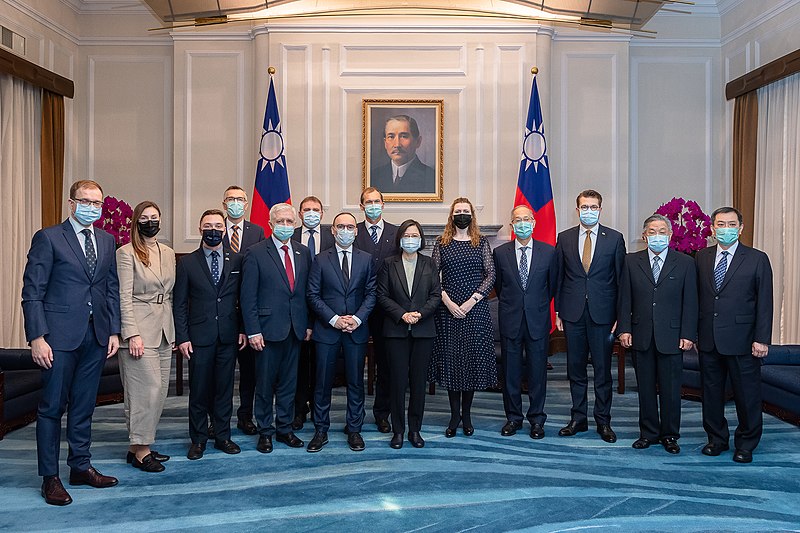
Taiwan has announced the start of operations of Lithuania’s office in Taipei this week. The opening of the Lithuanian office in the island’s capital comes amidst tensions with China.
Senior Taiwanese diplomat Remus Chen of the foreign ministry’s department of European Affairs told reporters Tuesday that Lithuania’s office in Taipei has opened and started its operations.
The new representative, Paulius Lukauskas, arrived earlier this month and formally applied for accreditation Monday. Chen added that the Lithuanian office was essentially now operational, but office equipment is still being installed.
This comes as China retaliated against Lithuania by downgrading diplomatic relations between the two countries while pressuring others to sever ties with Lithuania after it allowed the island nation to open a de facto embassy in the country. China has repeatedly opposed Lithuania’s engagement with the island nation, which Beijing claims as its territory.
Beijing said Taiwan is one of its provinces with no right to the features of a state. Taiwan’s democratic government has also strongly rejected China’s claims of control over the island.
Back in August, China sanctioned Lithuanian deputy transport and communications minister Agne Vaiciukeviciute for visiting Taiwan. Beijing has also opposed visits by other foreign governments to the island nation, which has since increased following the visit by US House Speaker Nancy Pelosi in the same month.
Taiwan has strong bipartisan support in the US Congress. The United States is legally bound by treaty to provide the island nation with arms.
Reuters reports that Washington is considering sanctioning China as it considers options for a sanctions package for Beijing to deter it from potentially invading Taiwan, according to sources familiar with the matter. The European Union is also facing pressure from Taiwan to do the same.
According to the sources, the discussions being lobbied by envoys of Washington and Taipei to the bloc were both at an early stage amidst fears of a potential military invasion of Taiwan by China.
Both discussions were about taking sanctions beyond the measures that the West has already made to restrict some trade and investment with China surrounding sensitive technologies such as chips and telecommunications equipment.







