


 SoftBank Plans Record $6.3 Billion Bond Sale to Fund OpenAI Investments
  Google Expands Gemini Enterprise With AI Tools for Legal Sector
  Nvidia AI Server Prices Set to Rise as Memory Costs Surge
  Nvidia Reportedly Eyes $13 Billion Hugging Face Acquisition
  US PCE Inflation Holds at 3.7% as Fed Rate Decision Looms
  Japan Eyes Tax Changes to Curb Condo Speculation
  Asian Currencies Mixed as Aussie Dollar Rises on Hot Inflation
  The ghost of Robodebt – Federal Court rules billions of dollars in welfare debts must be recalculated
  Dollar Steady Ahead of Jackson Hole as Yen Holds Firm
  Nvidia Eyes Perplexity Investment at $30 Billion Valuation
  The Beauty Beneath the Expressway: A Journey from Self to Service
  How to support someone who is grieving: five research-backed strategies
  Gold Prices Rise Toward $4,650 Ahead of Warsh’s Jackson Hole Speech
  Shein Hong Kong IPO to Raise $1.7 Billion at $26.5 Billion Valuation
  Salesforce Shares Surge as AI Demand Powers Q2 Earnings Beat


 Add as a preferred source on Google
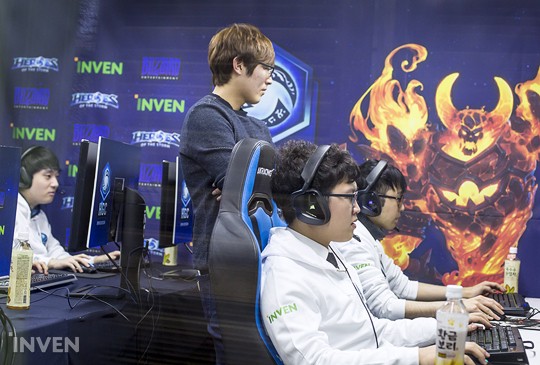
South Korea's high-speed internet infrastructure like the fifth-generation (5G) network service gives it great potential for success in the cloud gaming industry, according to senior Google official, Sami Kizilbash.
The relatively large number of South Korean gamers also lends support to the country’s game developers, Kizilbash added.
Out of a population of 50 million, South Korea has 33 million gamers. That gives South Korea the fourth-largest number of gamers in the world, just trailing China with 685 million, the US with 191 million, and Japan with 75 million.
The Google official said along with South Korea, the Asia-Pacific (APAC) region is leading the global gaming market, whose revenue is expected to reach US$340 billion by 2027.
He added that APAC is expected to hold the largest market share in the gaming industry by 2027, led by China, Japan, South Korea, and India.







