


 Australia Unemployment Hits Five-Year High Despite Strong Jobs Growth
  Oil Prices Jump 3% as Houthi Attack Revives Supply Fears
  European Stocks Fall as Bond Yields and Geopolitical Risks Weigh
  UK PM Burnham to Unveil Economic Vision at Labour Conference
  Fed’s Hammack Says Bond Yield Surge Is Not Driven by Inflation Fears
  Canadian Dollar Faces Pressure as Fed-BoC Policy Gap Widens
  Oil Prices Fall on U.S.-Iran Hormuz Deal Hopes
  Soybean Futures Slip as Traders Await Trump-Xi Trade Signals
  Asian Currencies Mixed as Dollar Holds Near Two-Month High
  U.S. Dollar Hits Two-Month High as Oil, Treasury Yields Surge
  US 10-Year Treasury Yield at 6% Emerges as New Market Risk Threshold
  Asian Stocks Fall as Bond Yields Surge Ahead of Trump-Xi Summit
  China Agrees to Buy 20 Million Tons of U.S. Coal
  Dollar Holds Near Two-Month High as Yen Approaches 160
  RBI Uses $10 Billion Currency Swaps to Drain Excess Rupee Liquidity
  Japanese Yen Rebounds as Trump Flags Currency Weakness


 Add as a preferred source on Google
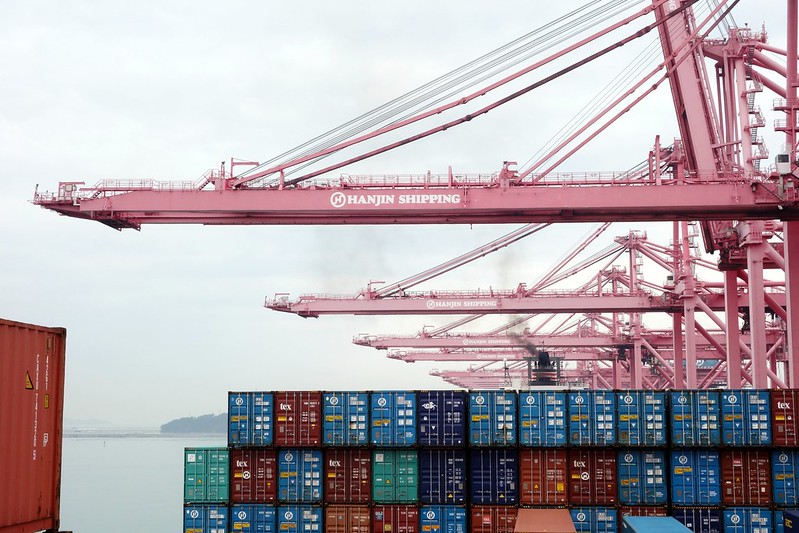
South Korea’s exports rebounded in June, rising 4.3% year-over-year to $59.80 billion, driven by solid global demand for semiconductors and electric vehicles, according to trade data released Tuesday. The uptick follows a 1.3% drop in May, marking the first export increase in two months. However, the figure came in slightly below economists’ expectations of a 4.7% rise, as shipments to key partners—the U.S. and China—remained subdued amid ongoing tariff concerns.
Exports to the United States declined for a third consecutive month, falling 0.5%, while shipments to China dropped 2.7%—both hit by uncertainty over U.S. President Donald Trump’s tariff policies. In contrast, exports to the European Union surged 14.7%, and Southeast Asia saw a 2.1% increase, reflecting a broader diversification in South Korea’s trade strategy.
Semiconductor exports—South Korea’s largest export category—rose 11.6% in June, extending their recovery for a fourth straight month, though at a slower pace. Auto exports increased 2.3%, with robust electric vehicle demand in Europe offsetting weaker U.S. sales. Imports climbed 3.3% to $50.72 billion, resulting in a trade surplus of $9.08 billion, the largest since September 2018.
Industry and Trade Minister Ahn Duk-geun noted that volatility surrounding U.S. tariffs and global economic uncertainty is expected to persist through the second half of the year. Seoul is pushing to extend a 90-day U.S. tariff freeze, set to expire next week, as negotiations continue with Washington.
As Asia’s fourth-largest economy and a global trade bellwether, South Korea’s export performance remains closely watched, especially amid geopolitical tensions and shifting global supply chains. The June rebound signals resilience in key sectors but highlights ongoing vulnerabilities tied to the U.S.-China trade landscape.







