


 Petrobras Joins Brazil Diesel Subsidy Program
  Hyundai CEO Warns Chinese Automakers Could Disrupt US Market
  LVMH-Hermès Dispute Deepens Over Secret 2002 Share Deal
  Novo Nordisk Weighs Direct NYSE Listing to Boost U.S. Profile
  Meta Partners With Shopify to Bring Shop Pay Checkout to Muse AI
  FAA Allows Boeing to Sell 35 More 777F Freighters Beyond 2028
  Westinghouse Targets $50 Billion Valuation in U.S. IPO
  US Federal Register Drops Alibaba Qwen AI Search Tool
  NASA, Boeing Discuss Expanding Starliner Missions
  Apple Pay Set for India Launch With Axis Bank
  SpaceX Nasdaq 100 Weight to More Than Double in Rebalance
  FCC Approves Foreign Investment in $110B Paramount-Warner Bros. Deal
  Goldman Sachs Names Simon Lyons UK Investment Banking Co-Head
  Telix to Acquire Germany’s ITM in $1.65 Billion Radiopharma Deal
  White House Bars CNN, MS NOW and Politico Reporters
  OpenAI Urges US-Led Global Standards for Frontier AI


 Add as a preferred source on Google
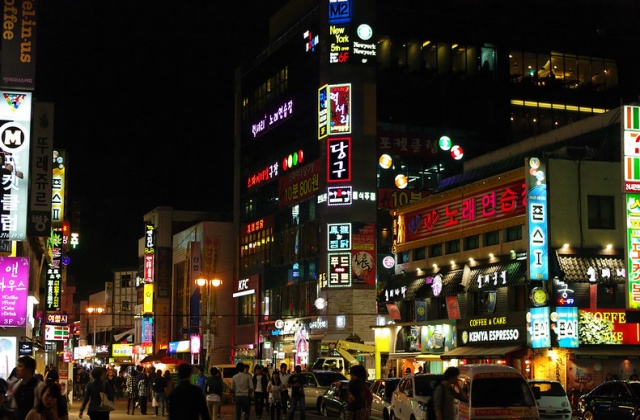
A group of small business owners in South Korea recently filed a case against the government for their financial losses. They have become more determined to sue as the social distancing measures in the country were extended starting Jan. 4.
Reason for the legal action of the business owners
As per the Korea Joongang Daily, some lawyers said that over 500 individuals have banded together and filed lawsuits to seek compensation as their businesses are not able to continue or earn enough because of the implemented stricter rules on COVID-19.
As social distancing and other protocols are implemented, few people are going out to buy or visit stores. While this is for everyone’s wellness, small businesses are suffering since they are not earning anything for the lack of customers.
It was said that hundreds more have expressed their interest in joining the lawsuit. Some of the businesses that are suing the government include indoor gyms, private cram schools, fitness centers, taekwondo schools, and more. These were badly affected due to business restrictions that were put into effect in the past weeks as the cases of COVID-19 surge again in South Korea.
In any case, the government announced the past weekend that three main cities, including Incheon, Seoul, and Gyeonggi, will maintain the social distancing scheme and were given the highest level of restriction. This stricter protocol will be in effect until Jan. 17, and small businesses fear they will not have anything left once the scheme is lifted.
Currently, fitness centers were forced to close, and training halls can only open with a very limited number of students, with nine as the maximum count. Review schools or Hagwon should also maintain the nine-person limit. Eating in internet cafes is also banned, and they are only allowed to open at certain times.
The legal action taken
Now, as reported by Korea Joongang Daily, at least 187 hagwon owners filed a lawsuit against the government in December, and last week, 163 more have joined. Each of them is asking for KRW5 million or $4,600 in compensation for their losses.
On Jan. 6, 153 indoor gym owners and fitness centers have also come forward and sued the government and demanding the same amount as the hagwon owners. Internet cafe and indoor golf range owners are said to be preparing to file a case as well.
“For small business owners like us, it’s a matter of life or death,” Nam II, head of a kickboxing center, said. “Government officials are just going around slapping us with business shutdown orders without considering the reality.”
Meanwhile, similar cases were also filed in the U.S. already. A lawyer sued New York on behalf of small businesses in the city. The New Yorker reported that Atty. James Mermigis already filed over half-dozen lawsuits against NY, NY city mayor, and the governor. He sued them as businesses were forced to close during the pandemic.







