


 Gold Prices Slip as Strong Dollar and Hawkish Fed Pressure Bullion
  Oil Prices Rise as U.S.-Iran Talks Fuel Diplomacy Hopes
  France Debt-to-GDP Ratio Seen Hitting Record 119.3% in 2026
  Asia Stocks Rise on AI Demand as Oil Eases
  U.S. Stock Futures Rise Ahead of Trump-Xi Summit, Middle East Risks Weigh
  Yen Weakens as Dollar Gains on Widening US-Japan Rate Gap
  US, Japan and South Korea Back Taiwan Ahead of Trump-Xi Summit
  Asian Currencies Muted as Dollar Firms Ahead of Trump-Xi Summit
  Oil Prices Extend Losses as U.S.-Iran Talks Ease Supply Fears
  US Stock Futures Rise as Meta Muse Fuels AI Rally
  Gold Prices Hold Steady Ahead of Trump-Xi Summit, Middle East Risks
  Asian Stocks Mixed Ahead of Trump-Xi Meeting
  US-China Talks Target AI, Tariffs Ahead of Trump-Xi Summit
  European Stocks Slip as Iran Tensions Offset Strong Eurozone Data


 Add as a preferred source on Google
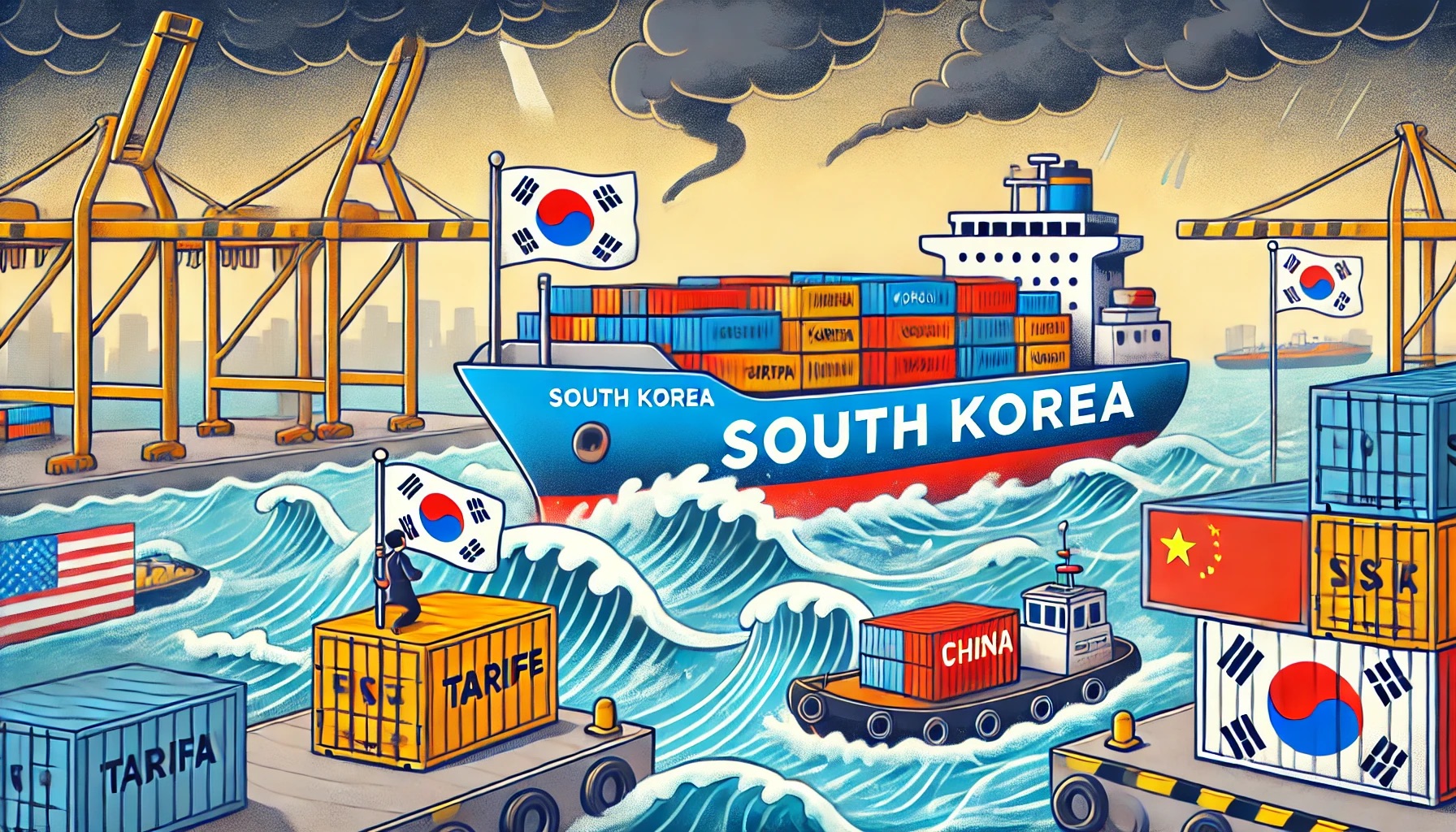
South Korea’s export growth slowed to its weakest pace in 14 months, climbing only 1.4% in November. Declining shipments to the United States and China, driven by mounting tariff uncertainties, underline intensifying trade pressures on the South Korean economy.
Tariff Uncertainty Clouds South Korea's Export Outlook
According to trade data released on Sunday, South Korea's export growth declined for four consecutive months in November, reaching its worst level in fourteen months. This was due to a decline in exports to both the US and China, driven by uncertainty surrounding tariffs, Reuters explains.
Following a 4.6% increase in October, exports from Asia's fourth-largest economy increased by 1.4% year-on-year in November, reaching $56.35 billion.
Annual export growth continued for the fourteenth month in a row, albeit at the slowest rate in the series thus far, falling short of economists' consensus predictions of a 2.8% gain (as reported in a Reuters poll).
In a recent statement, the soon-to-be president of the United States, Donald Trump, promised to levy a 25% tariff on goods imported from Mexico and Canada—a move that is likely to have an impact on South Korean businesses—and "an additional 10% tariff, above any additional tariffs" on China, the country's largest trading partner.
US and China Shipments Decline Sharply
After eight straight months of growth, shipments to China were down 0.6%, while shipments to the US plummeted 5.1%, marking their first decline since July 2023. The increase in exports to the EU was 0.9%.
Due to strikes at key auto parts suppliers and shipping delays caused by severe weather, automobile sales dropped 13.6%, their worst loss since June 2020, while semiconductor sales grew 30.8%, the smallest growth in 11 months, Investing.com points out.
"The government will team up with the private sector and utilise all available resources to export even a dollar more by the end of the year," said Ahn Duk-geun, Trade Minister.
South Korea's Imports See First Decline in Five Months
The 2.4% decline to $50.74 billion in imports was in contrast to the 1.7% increase the previous month and the 0.4% gain predicted by analysts. The drop occurred after a five-month absence.
In November, the nation's trade surplus widened to $5.61 billion, from $3.15 billion in October.







