


 Australia Unemployment Hits Five-Year High Despite Strong Jobs Growth
  Asian Stocks Fall as Surging Bond Yields Rattle Markets
  China’s ‘Lipstick King’ Says AI Won’t Replace Livestream Hosts
  Oil Prices Fall on U.S.-Iran Hormuz Deal Hopes
  Japanese Bank Stocks Surge as Bond Yields Fuel Rate Hike Bets
  European Stocks Fall as Bond Yields and Geopolitical Risks Weigh
  US Comfortable With Canada Trade Standoff as Import Bans Loom
  Fed’s Hammack Says Bond Yield Surge Is Not Driven by Inflation Fears
  Japan Private-Sector Growth Slows as Domestic Demand Weakens
  U.S. Treasury Yields Surge as 30-Year Hits 22-Year High
  Gold Holds Near $4,275 as Rising Treasury Yields Fuel Fed Rate Hike Bets
  Gold Prices Fall as Treasury Yields Rise on Fed Rate Hike Bets
  Trump, Xi Focus on Trade and AI at White House Summit
  U.S. Dollar Hits Two-Month High as Oil, Treasury Yields Surge
  Oil Prices Jump 3% as Houthi Attack Revives Supply Fears


 Add as a preferred source on Google
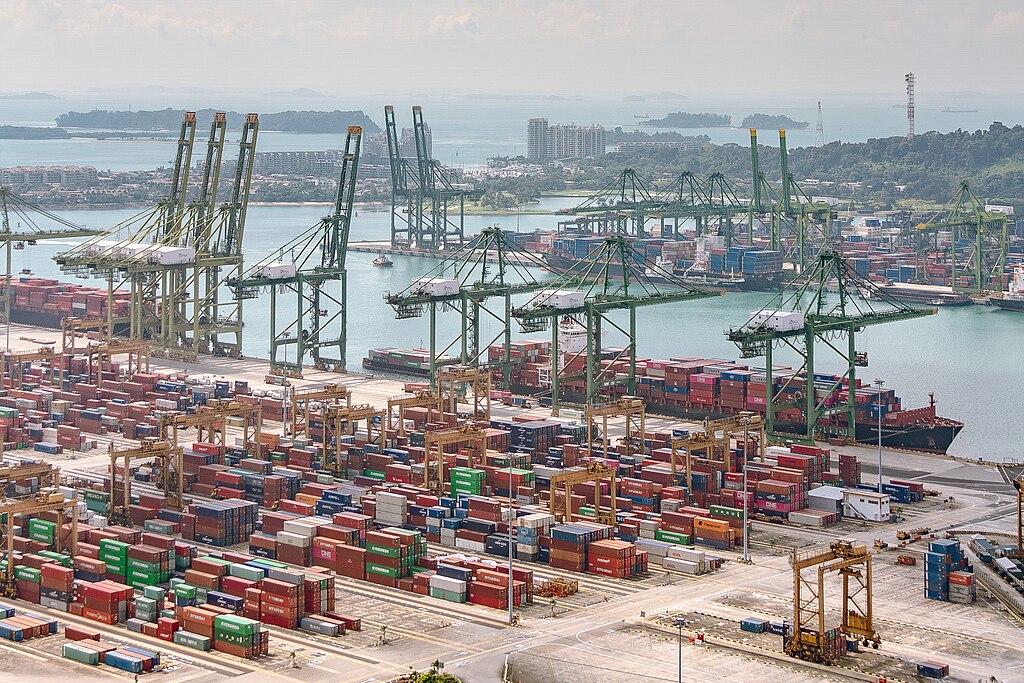
Singapore’s non-oil domestic exports (NODX) dropped 11.3% year-on-year in August, according to official data released Wednesday. The decline was sharper than analysts’ expectations of a 1.0% increase, following a revised 4.7% fall in July. Both electronic and non-electronic exports registered declines, highlighting the pressure on the city-state’s trade sector.
Enterprise Singapore reported that exports to Indonesia, the United States, and China fell, while shipments to the European Union, Taiwan, and South Korea saw growth. Exports to the U.S. were hit hardest, plunging 28.8% in August after a steep 42.8% drop in July. The slump comes despite Singapore’s free-trade agreement with Washington, as its goods remain subject to a 10% tariff rate.
Economists noted that Singapore’s economy outperformed in the first half of the year as businesses rushed to front-load shipments ahead of U.S. tariffs. However, authorities now warn of slowing momentum in the second half of 2025. Enterprise Singapore recently projected annual NODX growth of just 1% to 3%, cautioning that global demand remains uncertain.
Trade and Industry Minister Gan Kim Yong emphasized that Singapore is also indirectly affected by tariffs imposed on its key trading partners. “Our exports to other countries, which will be made into products to ship to the U.S., they will be facing higher tariffs. In turn, demand will slow, and our exports to these countries will slow down,” he explained at a recent business forum.
The latest figures underscore the vulnerability of Singapore’s highly trade-dependent economy to external shocks, particularly escalating trade tensions. With declining demand from major economies and persistent tariff pressures, analysts expect Singapore’s export performance to remain volatile in the months ahead.







