


 US Court Approves airBaltic Chapter 11 Restructuring
  China Home Prices Fall Again as Property Slump Drags on Growth
  Asian Bank Stocks Slide as BofA Warning and Rising Yields Hit Sentiment
  US Futures Fall as Fed Meeting, Oil Surge Rattle Markets
  Saudi Arabia Raises Security Alerts as Houthi Attacks Threaten Oil Routes
  Ares Names James Garforth Principal for Asia Direct Lending
  Nvidia CEO Jensen Huang Expected at Trump-Xi State Dinner
  Vietnam, U.S. Firms Plan 29 Deals Across Energy, Tech and Aviation
  Hyundai Delays In-House ADAS, Turns to Nvidia
  Finland Raises 2026 Growth Forecast as Exports and Investment Surge
  Asian Tech Stocks Slide as AI Concerns and Rising Bond Yields Hit Chipmakers
  Samsung Heavy Wins $1.22 Billion LNG Carrier and Tanker Deal
  Asian Stocks Fall as AI Fears and Oil Surge Hit Markets
  UK Wage Growth Slows as BoE Rate Decision Looms
  US Stocks Rise Ahead of Fed Rate Decision
  China’s Slower Loan Growth Becomes ‘New Normal’ as Credit Demand Weakens
  Qualcomm Gains on $60B Amazon AI Chip Deal


 Add as a preferred source on Google


You are walking through the bustling centre of Bo, Sierra Leone’s third largest city.
Following the crowd, you turn off the main road onto a narrower thoroughfare and find yourself in an open-air market. Shelters constructed from timber and sheet-metal roofing line each side of the narrow, unpaved walkway. A foul smell hits your nose. The source? A young woman is raising an axe over the carcass of a duiker, a type of small antelope, laid out on a butcher’s block at the edge of the pathway.
As you pass by, you are sprayed with the animal’s fluids. Others near you look down to inspect their clothes, but do not react to what appears to be a regular and expected inconvenience.
Nearby, bushmeat traders wash meat in pots of water fetched from hand pumps outside the market in the morning and reused throughout the day.
Wild animal carcasses yet to be butchered are stacked haphazardly on benches and leak blood and fluids onto the floor where some of the traders’ children are playing.
Dirty water and waste from the butchery process are thrown onto the busy footpath and pool with rainwater to form a potentially hazardous microbial soup.
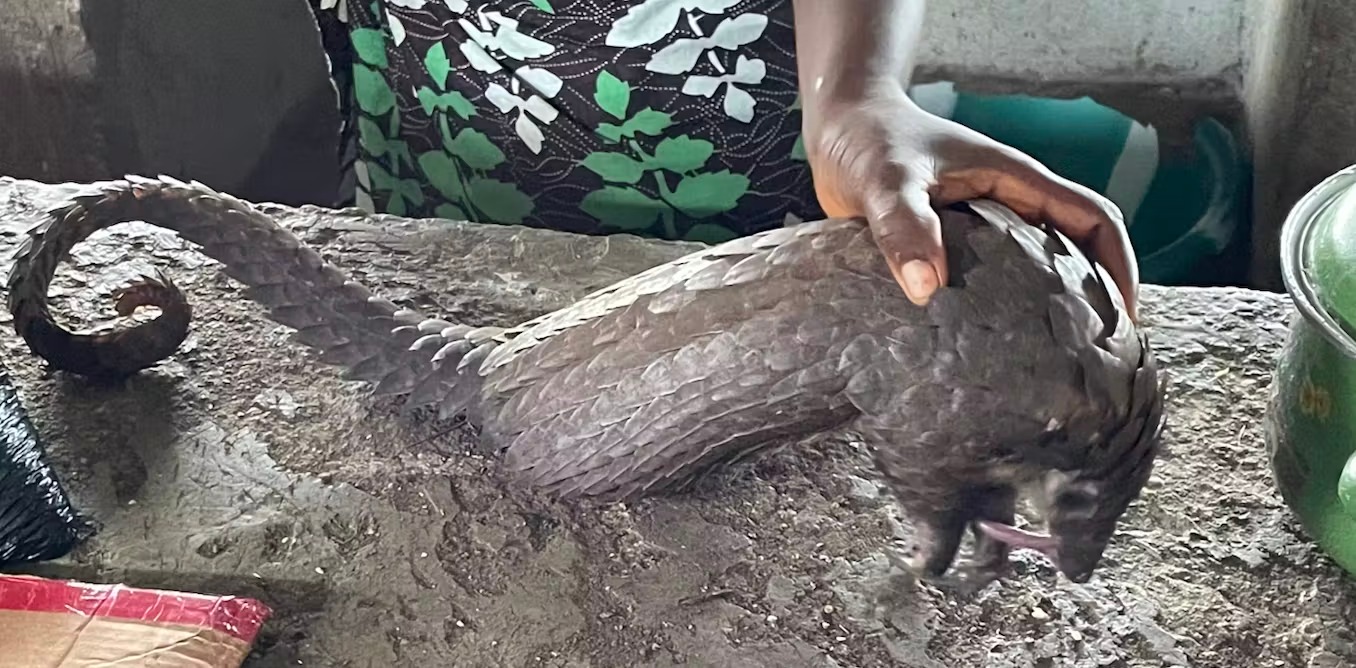
These are typical scenes in Sierra Leone’s many informal bushmeat markets, where animals including primates, antelopes, rodents, reptiles and feline species are sold.
While precise figures on employment and economic value generated by the markets are elusive due to the informal nature of the bushmeat trade, they are unquestionably important sources of food and vital economic hubs. Unfortunately, they are also potential sources of the next global public health disaster.
The search for the truth about what caused the COVID-19 pandemic thrust zoonotic diseases (those spread between animals and humans) and the threats posed by markets where wild animals are sold to the forefront of global news coverage and scientific discourse.
In the wake of the disaster some called for outright bans on bushmeat trading and markets. But this is unfeasible given the cultural, nutritional and economic importance of bushmeat in the west and central African regions.
For these reasons, a bushmeat ban failed in Sierra Leone during the Ebola epidemic, only pushing the trade underground.
We spent more than six months observing everyday practices in Bo’s bushmeat markets to understand the risks they pose and how they arise. Our investigation revealed that bushmeat traders, along with the wider public, face substantial and underappreciated risks of exposure to zoonotic diseases. These risks are exacerbated by the markets’ poor sanitation, lack of effective regulation, and the absence of basic protective measures.
Reducing risk requires moving beyond heavy-handed solutions like banning bushmeat, and instead focusing on making markets safer through infrastructure investments, community engagement and support for traders to adopt less hazardous practices.
In an era when COVID-19 has highlighted the potentially devastating global consequences of unchecked zoonotic spillover, these insights couldn’t be more urgent.
On the ground
We wanted to understand the trade better, to learn what risks are present in markets and how they are managed.
We spent more than six months observing daily practices within two bushmeat markets in Bo, a city that is home to over 200,000 people. At the markets where we worked, bushmeat traders and butchers are regularly exposed to the blood and bodily fluids of wild animals. Risks also extend to other market users including pedestrians and traders’ children.
Our key findings revolved around safe practices, enforcement and the way the market is run.
Safe practices: Previous public health research often assumes that bushmeat traders’ inadequate knowledge is the root cause of unsafe practices and resulting risks of disease emergence. This is a misreading of the situation, and it also risks blaming traders’ ignorance for disease risks that are outside their control.
We found traders were often acutely aware of the regulations they were supposed to follow. They expressed a willingness to make use of protective equipment such as gloves, face masks or aprons. But given their slim profit margins they couldn’t incur additional costs.
Profits we get from the trade are {so} small that we cannot afford to buy the items for ourselves, but if anyone could provide these items, we can use them.
Enforcement: Potential penalties were often only threatened by enforcement agents, or easily circumvented, weakening incentives to comply. As one trader explained:
{Sometimes} instead of them taking {meat} away we can negotiate and give them some cash … {so} they allow us to keep selling it.
Working conditions: The organisation of bushmeat traders’ places of work makes it difficult if not impossible to comply with regulations or to work in ways that are biosafe. Informal market facilities typically lack water sources and waste disposal facilities, forcing traders to reuse contaminated water and dump animal waste unsafely, putting communities at risk. For example, in one of the markets we studied dirty water from the butchering process was often discarded onto a busy footpath, and in the other untreated animal waste was routinely dumped in a nearby swamp.
Solutions
The conditions observed in the bushmeat markets of Bo are not unique to this region. The lessons learned from Sierra Leone’s bushmeat markets can inform strategies for reducing zoonotic disease risks in similar settings around the world.
Bushmeat markets pose real and significant disease risks, but they can be reduced.
Installing basic sanitation infrastructure like running water and waste disposal at markets would greatly improve conditions. So too would providing traders with protective gear like gloves and aprons.
But this cannot simply be an order handed down by mistrusted authorities. It requires putting resources into improving market conditions and building trust with wary traders, many of whom are suspicious of public health officials and were initially reluctant to speak with researchers. Engaging local community leaders, and associations of market traders and women, could open new avenues for change.
Our findings suggest that, rather than repeating past mistakes, strategies aimed at reducing public health risks in these markets should be based on using positive measures and support rather than relying solely on punitive measures such as enforcement and penalties.
Devastating consequences can arise when diseases jump from animals to humans, hence there is an urgent need to address the underlying factors that enable this to happen. By investing in market infrastructure, building trust with traders, and encouraging compliance, we may be able to stop the next pandemic before it starts.







